
• Skip to main content
  • Skip to secondary menu
  • Skip to primary sidebar
  • Skip to secondary sidebar
  • Skip to footer

  • Opinion
  • Health IT
    • Behavioral Health
    • Care Coordination
    • EMR/EHR
    • Interoperability
    • Patient Engagement
    • Population Health Management
    • Revenue Cycle Management
    • Social Determinants of Health
  • Digital Health
    • AI
    • Blockchain
    • Precision Medicine
    • Telehealth
    • Wearables
  • Life Sciences
  • Investments
  • M&A
  • Value-based Care
    • Accountable Care (ACOs)
    • Medicare Advantage

Cleveland Clinic Abu Dhabi Performs UAE’s First Robotic SEEG for Epilepsy

by Jasmine Pennic 02/04/2026 Leave a Comment

  • LinkedIn
  • Twitter
  • Facebook
  • Email
  • Print

What You Should Know

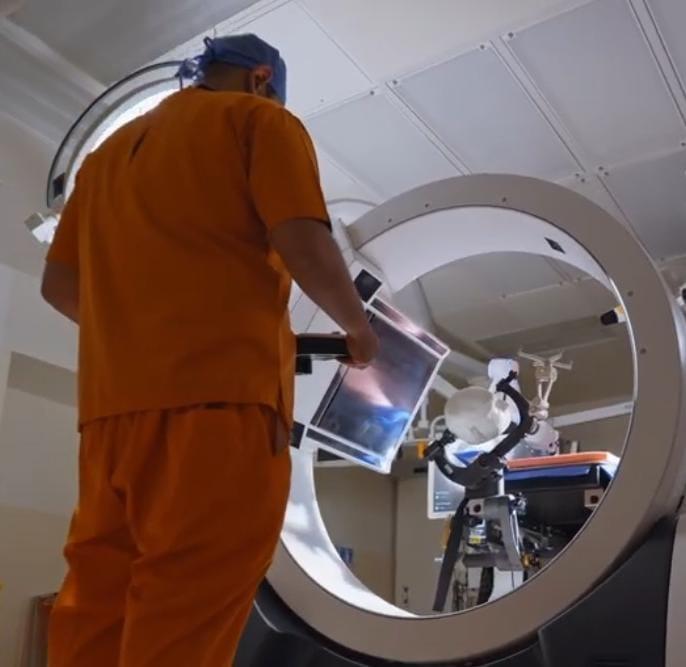
  • The Milestone: Cleveland Clinic Abu Dhabi has successfully performed the UAE’s first robotic-assisted stereoelectroencephalography (SEEG) procedures, a major leap forward from the manual, frame-based methods used previously.
  • The Tech: Traditionally, epilepsy diagnostics required bolting a rigid metal frame to the patient’s skull. The new robotic system allows for frameless, millimetric precision, significantly reducing patient discomfort and surgery time.
  • The Impact: This technology is critical for patients with drug-resistant epilepsy. By implanting thin electrodes deep into the brain with robotic accuracy, doctors can pinpoint the exact origin of seizures that standard scans (MRI, PET-CT) miss, paving the way for curative surgery.

Why “Robotic” Matters in Brain Surgery

The procedure is designed for patients with drug-resistant epilepsy, where standard scans like MRI or scalp EEG fail to identify the seizure’s origin. In these cases, surgeons must place electrodes deep inside the brain to “listen” for the electrical storm that triggers a seizure.

The difference between the old way and the new way is stark:

  • The Old Way (Frame-Based): Required a bulky head frame for stability.
  • The New Way (Robotic): A robotic arm guides the insertion of thin electrodes along pre-planned trajectories. This allows for a “frameless” experience that is faster, less invasive, and more accurate.

Since adopting the technology, the hospital has already completed three procedures, signaling that this is now an active clinical service line, not just a one-off experiment.

“Bringing the robotic SEEG procedure to the UAE is more than just adopting new technology,” said Dr. Georges-Pascal Haber, CEO of Cleveland Clinic Abu Dhabi. “We are giving people with epilepsy access to safer, more precise diagnostics that can change the course of their care.”

A Level 4 Capability

This advancement cements Cleveland Clinic Abu Dhabi’s status as the UAE’s first Level 4 Epilepsy Center—the highest designation for epilepsy care. Dr. Florian Roser, Chief Medical Officer, led the procedure alongside a specialized team including Dr. Tanmoy Maiti, Dr. Mohamad Ayman Haykal, and Dr. Eugene Achi.

“The Robotic SEEG procedure represents a smarter and smoother approach,” said Dr. Roser. “It allows us to tailor our approach to each patient’s unique brain anatomy… improving accuracy and efficiency.”

  • LinkedIn
  • Twitter
  • Facebook
  • Email
  • Print

Tap Native

Get in-depth healthcare technology analysis and commentary delivered straight to your email weekly

Reader Interactions

Primary Sidebar

Subscribe to HIT Consultant

Latest insightful articles delivered straight to your inbox weekly.

Submit a Tip or Pitch

Featured Insights

Aligning IT & Clinical Teams: How to Reduce Friction and Improve Communication

Most-Read

Aidoc Secures $150M to Accelerate Enterprise-Scale Clinical AI Across 2,000 Hospitals

OpenAI Launches ChatGPT for Clinicians: Free AI Documentation and Research Tool for Verified Physicians

OpenAI Launches ChatGPT for Clinicians: Free AI Documentation and Research Tool for Verified Physicians

IKS Health Acquires TruBridge for Rural EHR and RCM Solutions Expansion

IKS Health Acquires TruBridge for Rural EHR and RCM Solutions Expansion

UT Austin is Building the Nation's First 'AI-Native' Hospital, Backed by $750M

Why UT Austin is Building an ‘AI-Native’ Hospital from Scratch

The Medtech Pitch Deck Casino: Why Hype Still Wins, and How Scrutiny Could Improve Everyone’s Odds

The Casino Model: Why Medtech VCs Are Betting Billions on Unproven AI

Oracle Lays Off 539 Kansas City Employees as Focus Shifts to AI Data Centers

Oracle Lays Off 539 Kansas City Employees as Focus Shifts to AI Data Centers

SAMHSA and ONC Invest $20M in Behavioral Health IT Initiative

HHS Reverses 2024 Tech Reorganization: Why HHS Just Stripped AI and Cyber Operations Out of the ONC

How Small Medical Practices Can Build HIPAA-Aligned DevSecOps Without Enterprise Budgets

How Small Medical Practices Can Build HIPAA-Aligned DevSecOps Without Enterprise Budgets

Insilico Medicine and Eli Lilly Form $2.75B AI Drug Discovery Collaboration

Insilico Medicine and Eli Lilly Form $2.75B AI Drug Discovery Collaboration

Microsoft Copilot Health, Integrates Apple Health, Oura, and 50,000 EHRs in New AI Push

Microsoft Launches Copilot Health, Integrates Apple Health, Oura, and 50,000 EHRs in New AI Push

Secondary Sidebar

Footer

Company

  • About Us
  • 2026 Editorial Calendar
  • Advertise with Us
  • Reprints and Permissions
  • Op-Ed Submission Guidelines
  • Contact
  • Subscribe

Editorial Coverage

  • Opinion
  • Health IT
    • Care Coordination
    • EMR/EHR
    • Interoperability
    • Population Health Management
    • Revenue Cycle Management
  • Digital Health
    • Artificial Intelligence
    • Blockchain Tech
    • Precision Medicine
    • Telehealth
    • Wearables
  • Startups
  • Value-Based Care
    • Accountable Care
    • Medicare Advantage

Connect

Subscribe to HIT Consultant Media

Latest insightful articles delivered straight to your inbox weekly

Copyright © 2026. HIT Consultant Media. All Rights Reserved. Privacy Policy |