
What You Should Know
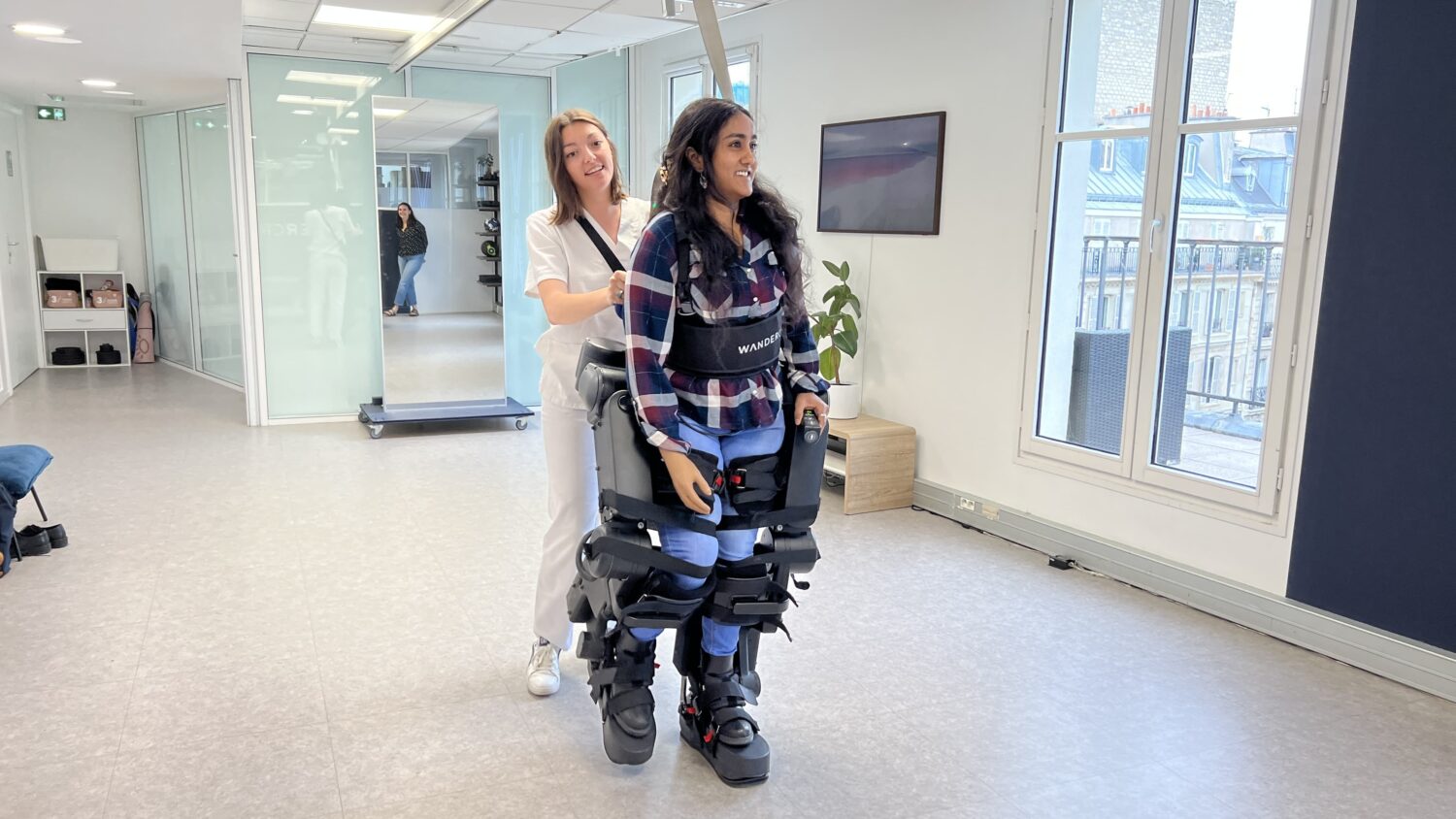
- The News: Wandercraft has enrolled the first patient in a groundbreaking clinical trial at Brigham and Women’s Hospital (a Harvard Medical School teaching hospital) to test its self-balancing exoskeleton in the ICU.
- The Goal: The study aims to determine if the Atalante X robot can safely mobilize fragile thoracic surgery patients days earlier than current standards, potentially improving cardiorespiratory function and mental well-being.
- The Implications: Beyond patient health, the trial addresses a critical operational bottleneck: mobilizing an ICU patient currently requires 2-3 staff members. This technology could allow a single therapist to mobilize a patient safely, reducing burnout and injury risk for hospital staff.
Investigating the “Mobilization Gap”
Thoracic surgery patients are uniquely vulnerable. Recovering from operations on the lungs or chest cavity, their cardiorespiratory function is compromised. Standing up is often impossible without significant assistance.
“Early mobilization is one of the most effective and underused tools we have to improve outcomes after thoracic surgery,” said Raphael Bueno, MD, Chief of the Division of Thoracic Surgery at BWH. “This trial allows us to explore whether an exoskeleton can help us mobilize patients earlier, safer, and more consistently than is possible today.”
The “prospective, interventional pilot trial” will measure not just if it can be done, but if it improves vital sign stability and psychological well-being. The hypothesis is that by getting patients upright sooner, the “downward spiral” of immobility—which leads to digestive issues, anxiety, and depression—can be arrested.
The Self-Balancing Advantage
Why now? Robotic exoskeletons have existed for years, but most require the patient to use crutches or walkers for stability. A post-surgical ICU patient, often tethered to IVs and monitors, lacks the upper-body strength to manage crutches.
The Atalante X is distinct because it is self-balancing and hands-free.
- No Crutches: The device supports the patient’s weight and maintains equilibrium automatically.
- 12 Powered Joints: It mimics natural gait patterns, allowing even weakened patients to “walk” without exerting immense physical effort.
“We founded Wandercraft to expand what mobility can mean for those who need it most,” said Maria Ida Iacono, Global Chief Regulatory Officer at Wandercraft. “Partnering with a world-leading institution like Brigham and Women’s Hospital… reinforces why we do this work.”
Solving the Staffing Equation
While the primary focus is patient safety, the secondary implication is operational. The healthcare workforce is currently facing a burnout crisis, and the physical demand of mobilizing ICU patients is a major contributor to nurse injury.
The trial will explicitly evaluate whether the exoskeleton can “reduce the staffing burden required to mobilize critically ill patients.” If a single therapist can strap a patient into the Atalante X and mobilize them with the push of a button—rather than recruiting a team of nurses for a manual lift—the ROI for hospital systems becomes undeniable.
From Rehab to Real World
Wandercraft has already deployed the Atalante X in over 100 rehabilitation centers globally for spinal cord injuries and stroke recovery. However, moving “upstream” into the ICU represents a significant expansion of the technology’s utility.
This medical trial runs parallel to Wandercraft’s aggressive expansion into other sectors. In 2025, the company announced Calvin-40, a humanoid robot for industrial manufacturing developed with Renault Group. The underlying IP—self-balancing, autonomous movement—is identical. Whether mobilizing a patient in Boston or assembling a car in Paris, Wandercraft is betting that the future of robotics is bipedal, balanced, and autonomous.
