
What You Should Know
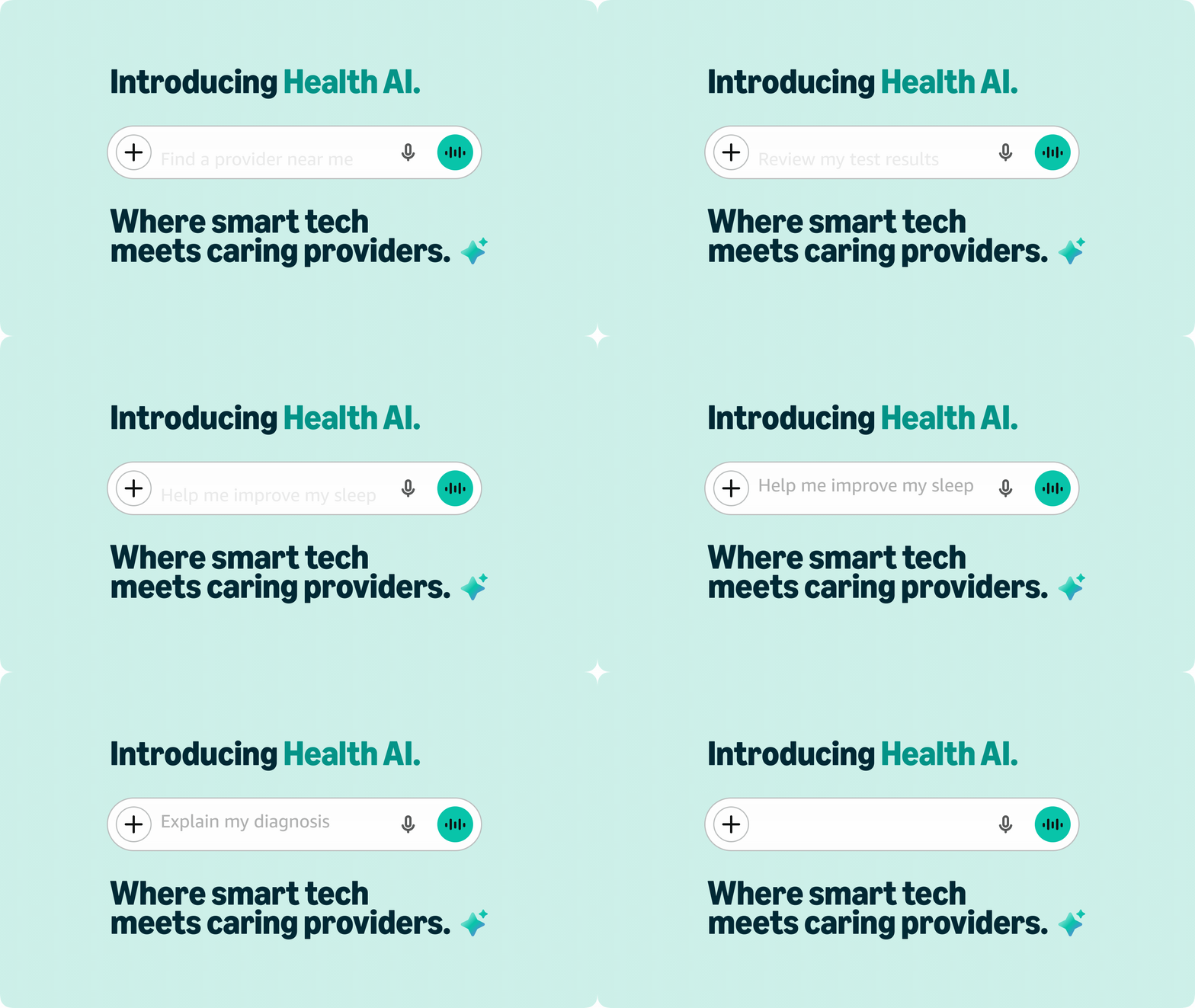
– Amazon One Medical has launched Health AI, an agentic assistant integrated into the One Medical app that provides 24/7 personalized health guidance grounded in a member’s unique medical history.
– The tool goes beyond generic search by explaining lab results, managing medications, and booking appointments, while utilizing clinical guardrails to seamlessly connect members to human providers when medical expertise is required.
The Technical Stack: Agentic AI on AWS Bedrock
The assistant is powered by models on Amazon Bedrock, an AWS service designed for building scalable generative AI applications.
- 24/7 Functional Support: The assistant can answer complex questions about lab results, offer guidance on symptoms, and help patients choose between virtual, in-person, or urgent care visits.
- Workflow Automation: Members can use the tool to renew medications (often fulfilled via Amazon Pharmacy) and book same-day or next-day appointments with their One Medical provider.
- Clinical Guardrails: Co-developed with One Medical’s clinical leadership, the AI is programmed to recognize when a query requires human clinical judgment. In these cases, it triggers an immediate connection to the care team via messaging or video call.
Privacy and Security: The HIPAA “Redline”
Amazon Health Services maintains a strong stance on data integrity to combat the “Big Tech” trust deficit:
- HIPAA Compliance: The assistant operates under strict administrative, physical, and technical safeguards.
- Data Sovereignty: Conversations with the Health AI are not automatically added to the permanent medical record, and Amazon explicitly states they do not sell members’ personal data.
- Member Control: Users who prefer a traditional experience can opt-out by navigating to the standard app home screen.
The Quadruple Aim Assessment
Patient Experience: High Impact. By providing immediate explanations of labs and 24/7 guidance, the tool removes the “fragmentation” where patients often feel they only have pieces of their health puzzle.
Health Outcomes: Positive. Personalized coaching encourages adherence to health programs, while “pre-clinical” summaries help surface care gaps before an appointment even begins.
Reducing Costs: Tangible. By triaging low-acuity concerns (like asthma renewals or pink eye for children) toward virtual options, the system reduces high-cost ED utilization.
Clinician Experience: Friction Reduction. When used alongside native EHR tools like AWS HealthScribe, the AI reduces administrative burden by up to 40%, allowing providers to focus on “eye contact” rather than typing notes.
The C-Suite Takeaway
For Chief Medical Officers (CMOs) and CIOs, Health AI represents the “Consumerization of Healthcare” at scale. It transforms the app from a passive booking portal into an active “Health Assistant” that leverages Longitudinal Medical Records to drive high-value actions. As primary care continues its shift toward value-based models, tools that improve patient engagement between visits will become the defining competitive advantage.
“Even as AI capabilities expand, the patient-clinician relationship—built over time and rooted in shared humanity—remains crucially important and irreplaceable,” said Dr. Andrew Diamond, chief medical officer at One Medical. “Our Health AI enhances this relationship by helping members understand their health information and manage their routine health tasks, coaching them to stick to their health program, and quickly connecting them to their trusted providers when they need the care and expertise of a human clinician.”
