
• Skip to main content
  • Skip to secondary menu
  • Skip to primary sidebar
  • Skip to secondary sidebar
  • Skip to footer

  • Opinion
  • Health IT
    • Behavioral Health
    • Care Coordination
    • EMR/EHR
    • Interoperability
    • Patient Engagement
    • Population Health Management
    • Revenue Cycle Management
    • Social Determinants of Health
  • Digital Health
    • AI
    • Blockchain
    • Precision Medicine
    • Telehealth
    • Wearables
  • Life Sciences
  • Investments
  • M&A
  • Value-based Care
    • Accountable Care (ACOs)
    • Medicare Advantage

KronosRx: How Cedars-Sinai is Using AI ‘Avatars’ to Replace Animal Testing”

by Fred Pennic 01/16/2026 Leave a Comment

  • LinkedIn
  • Twitter
  • Facebook
  • Email
  • Print
Nicholas Tatonetti, PhD KronosRx: How Cedars-Sinai is Using AI 'Avatars' to Replace Animal Testing"
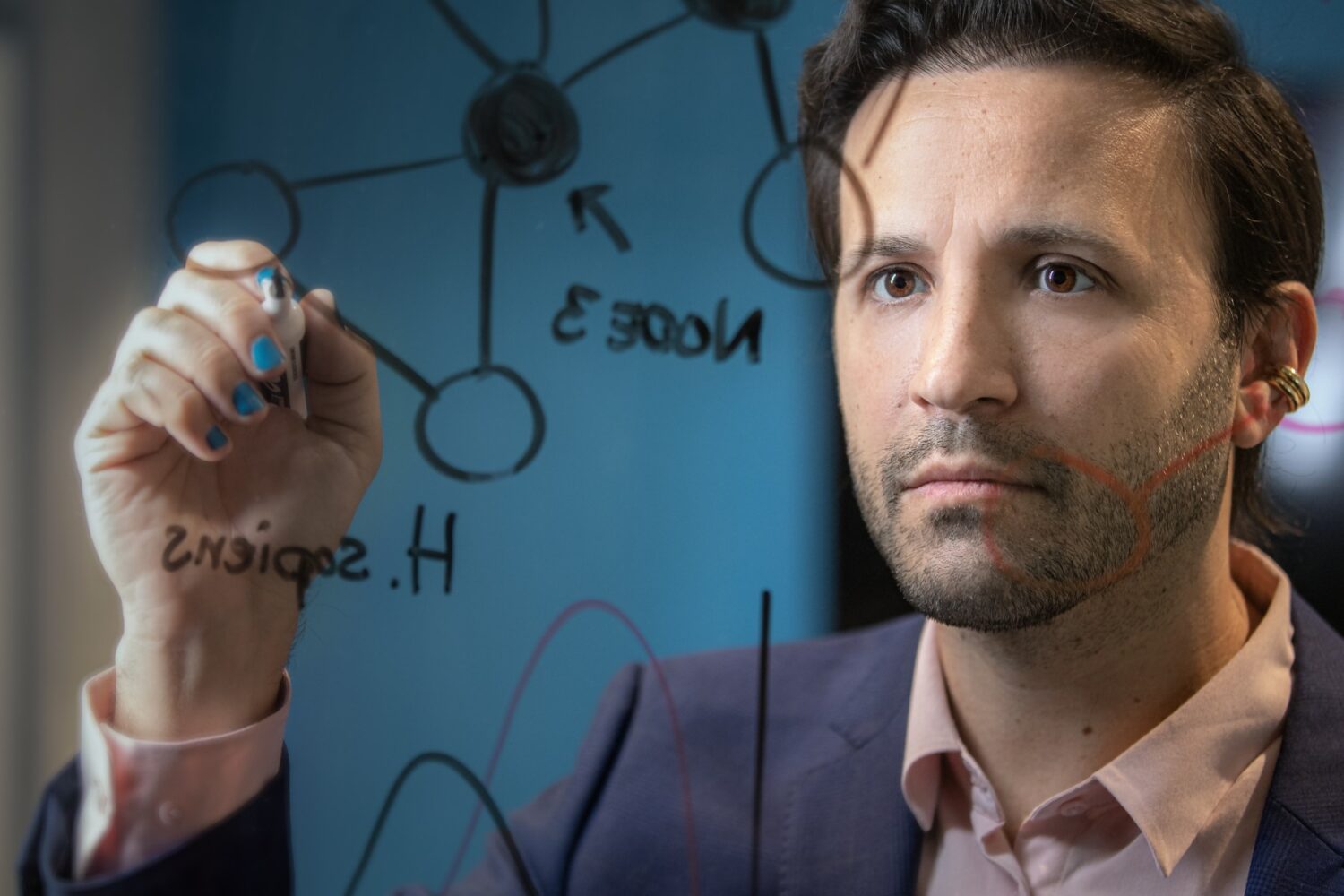
Nicholas Tatonetti, PhD, Vice Chair of Computational Biomedicine at Cedars-Sinai (image credit)

What You Should Know

– Cedars-Sinai has secured a $5.05M ARPA-H contract to build KronosRx, an AI platform that predicts drug toxicity by pairing millions of electronic health records with “patient avatars”—human stem-cell-derived organoids. 

– The strategic initiative aims to solve the 30% failure rate of clinical trials caused by adverse drug reactions that animal models fail to detect, potentially slashing drug development costs and accelerating patient access to safe therapies.

Combatting the “Valley of Death” in Drug Development

The “valley of death” in drug development is often paved with promising molecules that looked perfect in a lab rat but proved toxic in a human. Today, Cedars-Sinai announced a major offensive against this billion-dollar bottleneck. Under an up to $5,054,235 contract from the Advanced Research Projects Agency for Health (ARPA-H), the institution is developing KronosRx, a platform designed to replace animal proxies with “patient avatars” and deep-learning computational models.

The stakes are high. Current estimates suggest that more than 30% of clinical trials fail solely due to adverse drug reactions (ADRs). By the time these toxicities are discovered in Phase I or II human trials, pharmaceutical companies have often already spent hundreds of millions of dollars.

The Technical Architecture: Avatars Meets Big Data

KronosRx isn’t just another predictive algorithm; it is a multi-modal integration of biological hardware and computational software.

  • The Hardware (Patient Avatars): Utilizing induced pluripotent stem cells (iPSCs), the team creates organoids and organ-on-chip systems. These “avatars” are tiny, functioning cellular models of human organs—such as the heart and brain—that mimic real-time responses to experimental drugs.
  • The Software (AI & EHR Integration): These biological responses are fed into AI models trained on millions of longitudinal, anonymous data points from Cedars-Sinai’s vast Electronic Health Record (EHR) network.

According to Nicholas Tatonetti, PhD, the project’s lead investigator and Vice Chair of Computational Biomedicine at Cedars-Sinai, the goal is “dynamic” modeling. Unlike static animal tests, KronosRx accounts for variables like age, comorbidities, and polypharmacy (how a drug interacts with other medications a patient is already taking).

The Team Behind the Tech

The project brings together a “who’s who” of regenerative and computational medicine:

  • Clive Svendsen, PhD: Focusing on neurotoxicity using stem cell technology.
  • Arun Sharma, PhD: Utilizing cardiac organoids to assess cardiotoxicity (a leading cause of drug withdrawal).
  • Graciela Gonzalez-Hernandez, PhD: Managing the complex task of mining unstructured text in EHRs to find “molecular phenotypes.”

“Each year, many promising drugs fail in trials because animal tests and short-term lab studies cannot predict how medicines behave in real people over time,” said Nicholas Tatonetti, PhD, vice chair of Computational Biomedicine at Cedars-Sinai and the project’s lead investigator. “These failures delay lifesaving treatments and drive up drug development costs.”

  • LinkedIn
  • Twitter
  • Facebook
  • Email
  • Print

Tagged With: Artificial Intelligence

Tap Native

Get in-depth healthcare technology analysis and commentary delivered straight to your email weekly

Reader Interactions

Primary Sidebar

Subscribe to HIT Consultant

Latest insightful articles delivered straight to your inbox weekly.

Submit a Tip or Pitch

Featured Research Report

2026 Best in KLAS Awards: The Full List of Software & Services Winners

Most-Read

The "Platform" Squeeze: Epic Releases Native AI Charting, Putting Venture-Backed Scribes on Notice

The “Platform” Squeeze: Epic Releases Native AI Charting, Putting Venture-Backed Scribes on Notice

Analysis: Oracle Cerner’s Plans for a National EHR

Oracle May Cut 30k Jobs and Sell Cerner to Fund $156B OpenAI Deal

The $1.9B Exit: Why CommonSpirit is Insourcing Revenue Cycle and Tenet is Betting Big on Conifer AI

The $1.9B Exit: Why CommonSpirit is Insourcing Revenue Cycle and Tenet is Betting Big on Conifer AI

KLAS 2026 Rankings: Aledade and Guidehealth Named Top VBC Enablement Firms

KLAS 2026 Rankings: Aledade and Guidehealth Named Top VBC Enablement Firms

Beyond the Hype: New KLAS Data Validates the Financial and Clinical ROI of Ambient AI

Beyond the Hype: New KLAS Data Validates the Financial and Clinical ROI of Ambient AI

Anthropic Debuts ‘Claude for Healthcare’ and Opus 4.5 to Engineer the Future of Life Sciences

Anthropic Debuts ‘Claude for Healthcare’ and Opus 4.5 to Engineer the Future of Life Sciences

OpenAI Debuts ChatGPT Health: A ‘Digital Front Door’ That Connects Medical Records to Agentic AI

OpenAI Debuts ChatGPT Health: A ‘Digital Front Door’ That Connects Medical Records to Agentic AI

From Genes to Hackers: The Hidden Cybersecurity Risks in Life Sciences

From Genes to Hackers: The Hidden Cybersecurity Risks in Life Sciences

Utah Becomes First State to Approve AI System for Prescription Renewals

Utah Becomes First State to Approve AI System for Prescription Renewals

NYC Health + Hospitals to Acquire Maimonides in $2.2B Safety Net Overhaul

NYC Health + Hospitals to Acquire Maimonides in $2.2B Safety Net Overhaul

Secondary Sidebar

Footer

Company

  • About Us
  • 2026 Editorial Calendar
  • Advertise with Us
  • Reprints and Permissions
  • Op-Ed Submission Guidelines
  • Contact
  • Subscribe

Editorial Coverage

  • Opinion
  • Health IT
    • Care Coordination
    • EMR/EHR
    • Interoperability
    • Population Health Management
    • Revenue Cycle Management
  • Digital Health
    • Artificial Intelligence
    • Blockchain Tech
    • Precision Medicine
    • Telehealth
    • Wearables
  • Startups
  • Value-Based Care
    • Accountable Care
    • Medicare Advantage

Connect

Subscribe to HIT Consultant Media

Latest insightful articles delivered straight to your inbox weekly

Copyright © 2026. HIT Consultant Media. All Rights Reserved. Privacy Policy |