

What You Should Know
– Headlamp Health has launched Lumos AI, an analytical decision-support layer specifically engineered to solve the “Complexity Gap” in neuroscience drug development.
– Unlike tools focused on trial logistics, Lumos AI utilizes longitudinal real-world data and clinical logic to identify patient subtypes most likely to respond to a therapy, aiming to bring the precision-based success of oncology to the field of psychiatry.
The Failure of ‘One-Size-Fits-All’ Neuroscience
Historically, neuroscience drug development has trailed oncology because it lacks well-characterized biological markers. While oncology relies on molecular subtypes, neuroscience often reduces patient variability to “averages,” resulting in high trial failure rates due to subjective symptom reporting and strong placebo effects.
Lumos AI addresses this structural failure by:
- Identification of Responders: Moving beyond the industry-standard definition of a “responder”—which can mean a patient is simply “50% less miserable”—to focus on actual remission.
- Trajectory Insights: Modeling how patients change over time using continuous data rather than episodic assessments.
- Trial De-Risking: Refining study design and enrollment strategies earlier in the development lifecycle to ensure the right patient populations are targeted.
How Lumos AI Works: Clinical Logic Meets Pattern Recognition
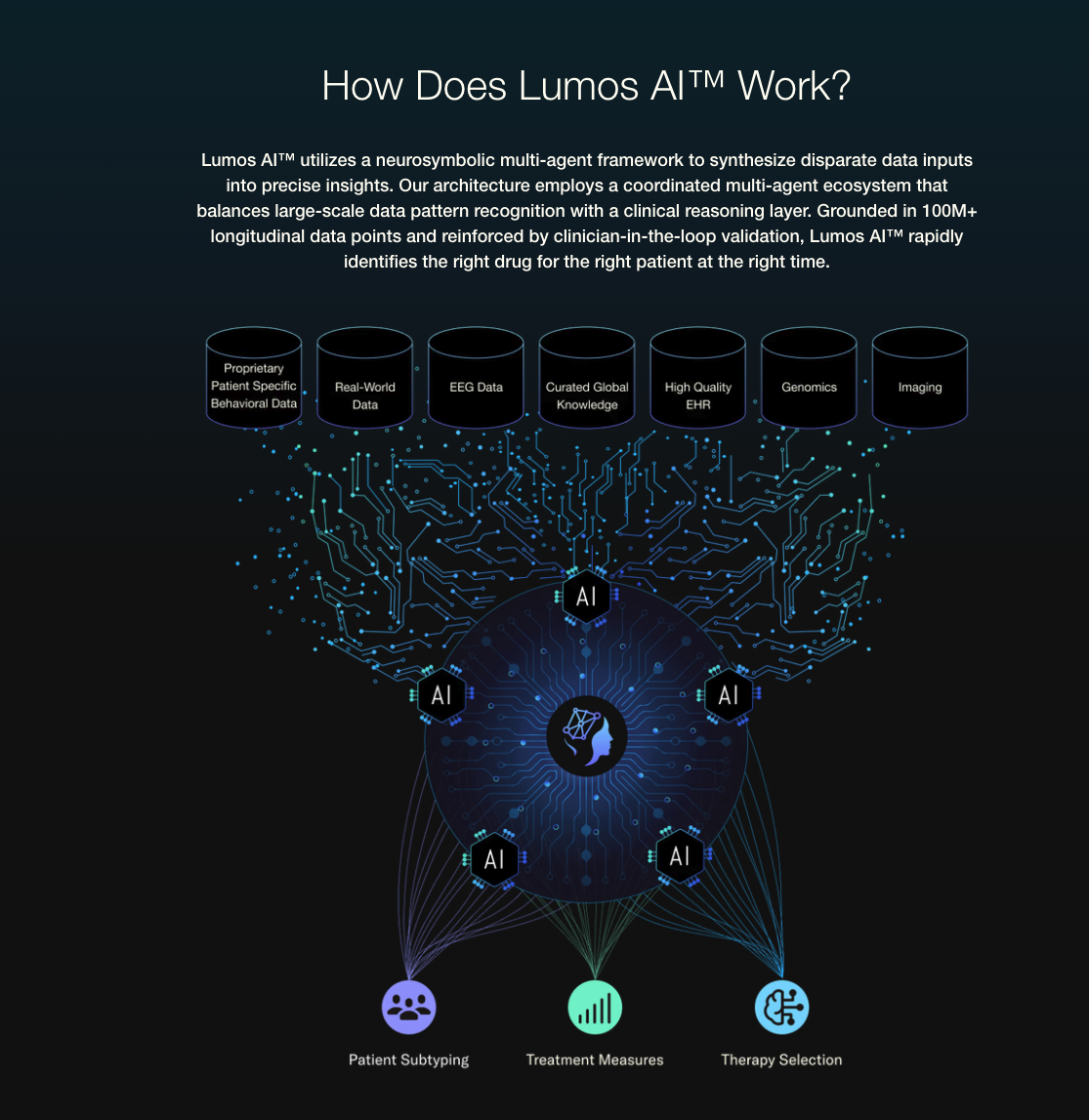
Lumos AI positions itself as a decision-support layer rather than a workflow automation tool—a distinction that matters for understanding both its functionality and its target users. The platform doesn’t streamline trial operations or manage site logistics. Instead, it applies pattern recognition and clinical logic to biological, behavioral, and clinical signals to inform strategic decisions earlier in development.
The system’s core capability centers on responder and non-responder identification. By analyzing longitudinal patient data—including symptom trajectories, treatment response patterns, and behavioral signals—Lumos AI helps development teams identify which patient subtypes are most likely to benefit from a given therapeutic mechanism. This moves beyond simple demographic stratification into more nuanced biological and behavioral phenotyping.
“We built Lumos AI to address two fundamental questions,” explained Erwin Estigarribia, CEO of Headlamp Health. “Which patients are most likely to benefit from a given therapy, and which new or existing therapies are most likely to work for a given patient subtype. Lumos AI helps pharmaceutical development teams ask better questions earlier by understanding variability rather than relying on volume alone.”
