
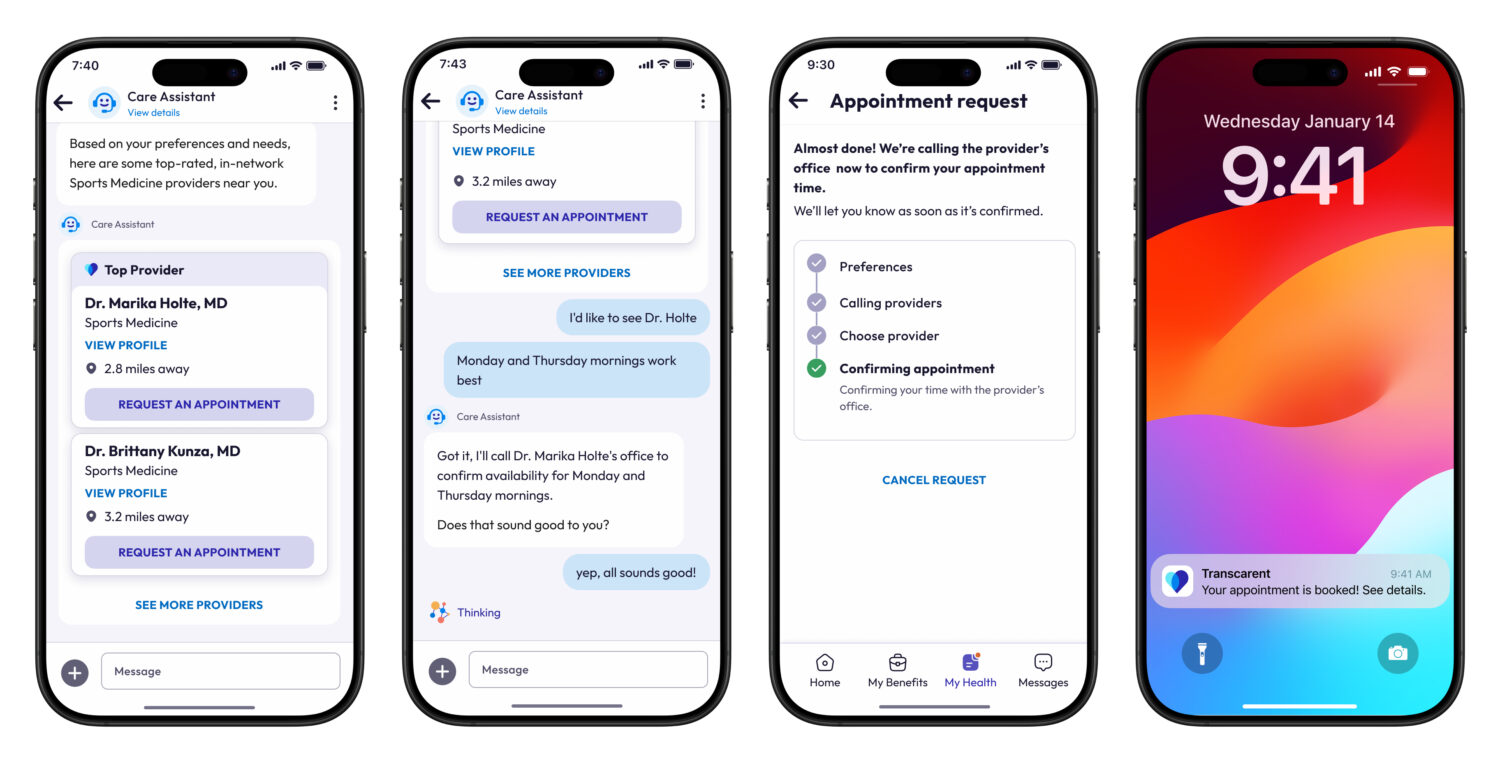
What You Should Know
– Transcarent has officially launched WayFinding 2.0, marking a strategic shift from the “chat assistant era” to the “agentic action era” in healthcare.
– By integrating autonomous AI agents that can schedule appointments, triage symptoms, and manage follow-ups via a proprietary Total Recall Memory Engine, the platform aims to eliminate the chronic administrative friction that currently defines the American healthcare experience.
The Death of the Chatbot: Entering the ‘Agentic’ Era
For the past three years, healthcare “innovation” has been dominated by large language models (LLMs) that act as sophisticated search engines. Glen Tullman, CEO of Transcarent, is declaring that era over. “We’ve officially moved beyond the ‘chat assistant era’ into the ‘agentic action era’,” Tullman noted during the CES 2026 announcement.
Unlike traditional generative AI, which requires a human to prompt it for every step, agentic AI systems autonomously plan, reason, and execute multi-step tasks. In the WayFinding 2.0 ecosystem, this means the AI doesn’t just tell you that you need a doctor; it finds an in-network, high-quality provider, checks your preferences, and books the appointment.
Technical Architecture: The ‘Total Recall’ Memory Engine
The standout feature of WayFinding 2.0 is its Total Recall Memory Engine, a longitudinal memory layer that learns a member’s specific preferences, past medical history, and behavioral patterns.
- Persistent Reminders: The system recalls past doctor’s orders to deliver specific next steps and support medication adherence.
- Personalized Health Paths: AI agents shape a “health path” informed by a network of doctors and therapists, recommending preventive measures and screenings unique to each individual.
- Clinician-In-The-Loop: To avoid the “hallucination” risks common in generic LLMs, Transcarent’s models are informed by millions of interactions with doctors from its affiliated medical groups.
Moving from Pilots to Platforms
Industry analysts project healthcare generative AI investments will triple by 2026. Transcarent’s move suggests that the “winners” will be those who move from “chatting” to “doing.” For the 1,700 employers and 35 health plans currently partnering with Transcarent, WayFinding 2.0 represents a shift from “piloting AI” to “deploying an autonomous workforce”. In a market where 11 million health workers will be in shortage by 2030, agentic AI is no longer a luxury—it is an operational necessity.
