
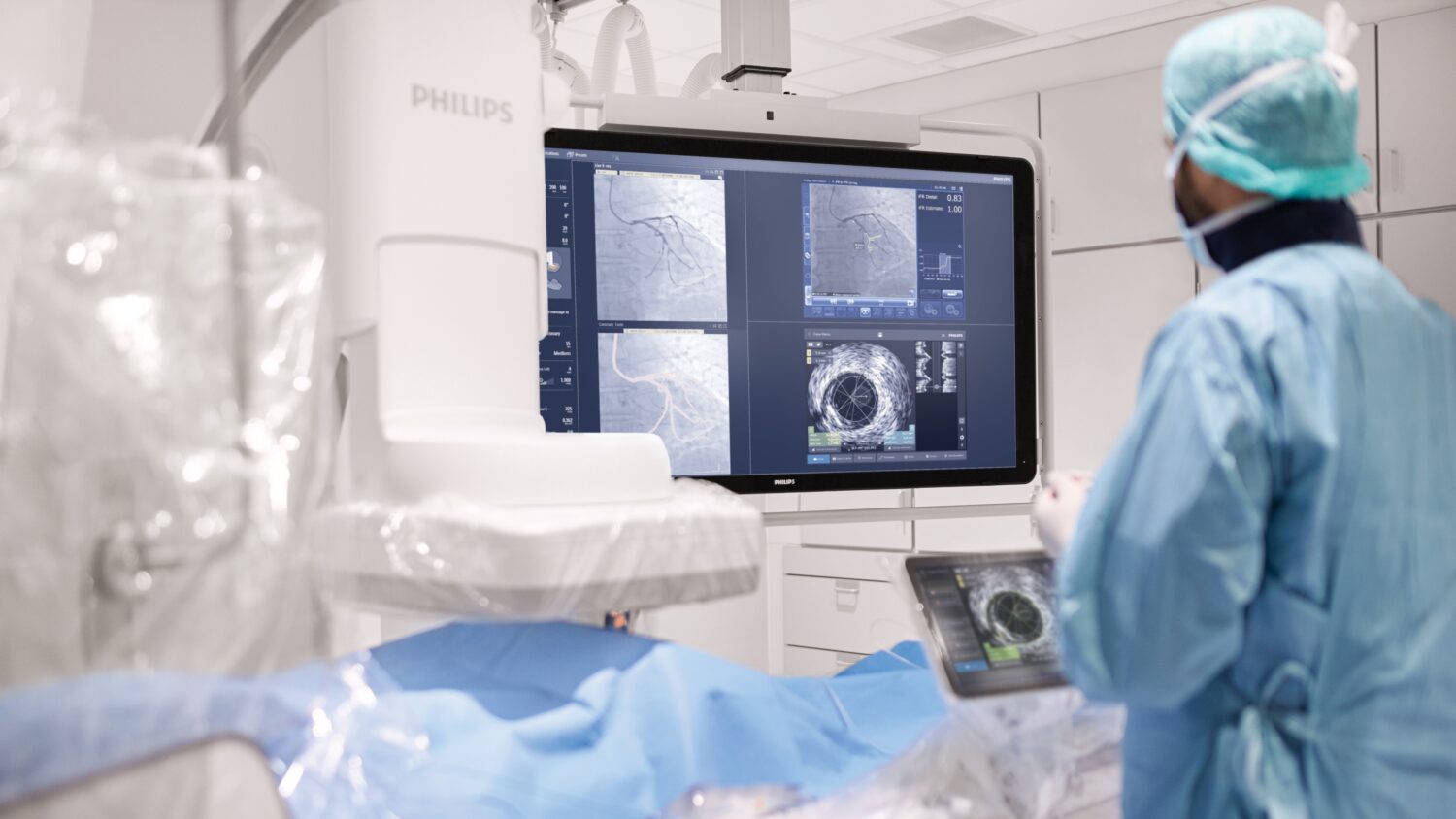
What You Should Know:
– Philips has agreed to acquire SpectraWAVE, Inc., a move designed to bolster its leadership in image-guided therapy by integrating SpectraWAVE’s AI-powered coronary imaging and physiology assessments into the Philips Azurion platform.
– The acquisition adds critical next-generation capabilities, including DeepOCT (optical coherence tomography) and wire-free Fractional Flow Reserve (FFR), to Philips’ existing portfolio.
– The strategic expansion aims to improve outcomes for the 300 million people worldwide affecting by coronary artery disease by giving clinicians a more comprehensive, single-platform toolkit for interventions.
Philips Bets Big on AI-Driven Cardiac Imaging with SpectraWAVE Acquisition
In the high-stakes world of interventional cardiology, seconds matter, and image clarity is the currency of survival. Today, Royal Philips (NYSE: PHG) signaled a significant consolidation of that currency, announcing its acquisition of SpectraWAVE, Inc., a Bedford, Massachusetts-based innovator in intravascular imaging.
While financial terms remain undisclosed, the strategic intent is crystal clear: Philips is moving to lock down the coronary intervention market by plugging SpectraWAVE’s AI-driven sensing technology directly into its ubiquitous Azurion platform.
For industry watchers, this is more than a bolt-on acquisition. It represents a shift toward “multimodality” in a single setting—bringing structure, composition, and physiology data together to treat the world’s most common heart disease.
Doubling Down on the Azurion Ecosystem
Roy Jakobs, CEO of Royal Philips, described the move as “doubling down on image-guided therapy.” This is not hyperbole. Philips’ Azurion platform is already used to treat over 7.6 million patients annually across 80 countries. By acquiring SpectraWAVE, Philips is addressing a specific gap in the high-definition imaging space.
Modern percutaneous coronary interventions (PCI)—stenting clogged arteries—increasingly rely on seeing inside the vessel, not just looking at X-ray shadows. Philips already owns strong IVUS (intravascular ultrasound) technology. However, SpectraWAVE brings a different, complementary set of eyes: Enhanced Vascular Imaging (EVI).
This allows Philips to offer a “comprehensive clinician choice” model. Whether a doctor needs the depth penetration of ultrasound or the high-resolution surface detail of optical coherence tomography (OCT), Philips can now provide both within one integrated ecosystem.
Decoding the Tech: DeepOCT and NIRS
The jewel in this acquisition is SpectraWAVE’s HyperVue Imaging System. It combines two sophisticated technologies that have historically been fragmented:
- DeepOCT (Optical Coherence Tomography): Think of this as “ultrasound with light.” It provides microscopic detail of the artery wall structure.
- NIRS (Near-Infrared Spectroscopy): This analyzes the chemical composition of the plaque, identifying lipid-rich areas that are prone to rupture.
By combining these into a single catheter pullback with AI-automated analysis, SpectraWAVE (and now Philips) offers clinicians a rapid, detailed map of the “enemy” inside the artery. “This partnership allows us to integrate and scale HyperVue… supporting more consistent, high-quality care,” noted Eman Namati, PhD, CEO of SpectraWAVE.
The Wire-Free Revolution
Beyond imaging, the acquisition targets workflow efficiency with X1-FFR. Traditionally, measuring blood flow pressure (Fractional Flow Reserve, or FFR) required threading a specialized pressure wire into the artery—a physical intervention that takes time and costs money.
X1-FFR uses AI to calculate this pressure drop directly from the X-ray angiogram, with no wire required. This “angio-derived” physiology is a massive trend in cath labs because it reduces procedural complexity.
By adding X1-FFR alongside its existing OmniWire iFR (a wire-based technology), Philips is effectively cornering the market on physiology options. They can now offer wire-based precision for complex cases and wire-free speed for routine assessments, all guided by the same Azurion interface.
