
• Skip to main content
  • Skip to secondary menu
  • Skip to primary sidebar
  • Skip to secondary sidebar
  • Skip to footer

  • Opinion
  • Health IT
    • Behavioral Health
    • Care Coordination
    • EMR/EHR
    • Interoperability
    • Patient Engagement
    • Population Health Management
    • Revenue Cycle Management
    • Social Determinants of Health
  • Digital Health
    • AI
    • Blockchain
    • Precision Medicine
    • Telehealth
    • Wearables
  • Life Sciences
  • Investments
  • M&A
  • Value-based Care
    • Accountable Care (ACOs)
    • Medicare Advantage

Tether Launches QVAC Health: A Privacy-First, Local AI Platform to Unify Fragmented Wellness Data

by Fred Pennic 12/10/2025 Leave a Comment

  • LinkedIn
  • Twitter
  • Facebook
  • Email
  • Print
Tether Launches QVAC Health: A Privacy-First, Local AI Platform to Unify Fragmented Wellness Data

What You Should Know: 

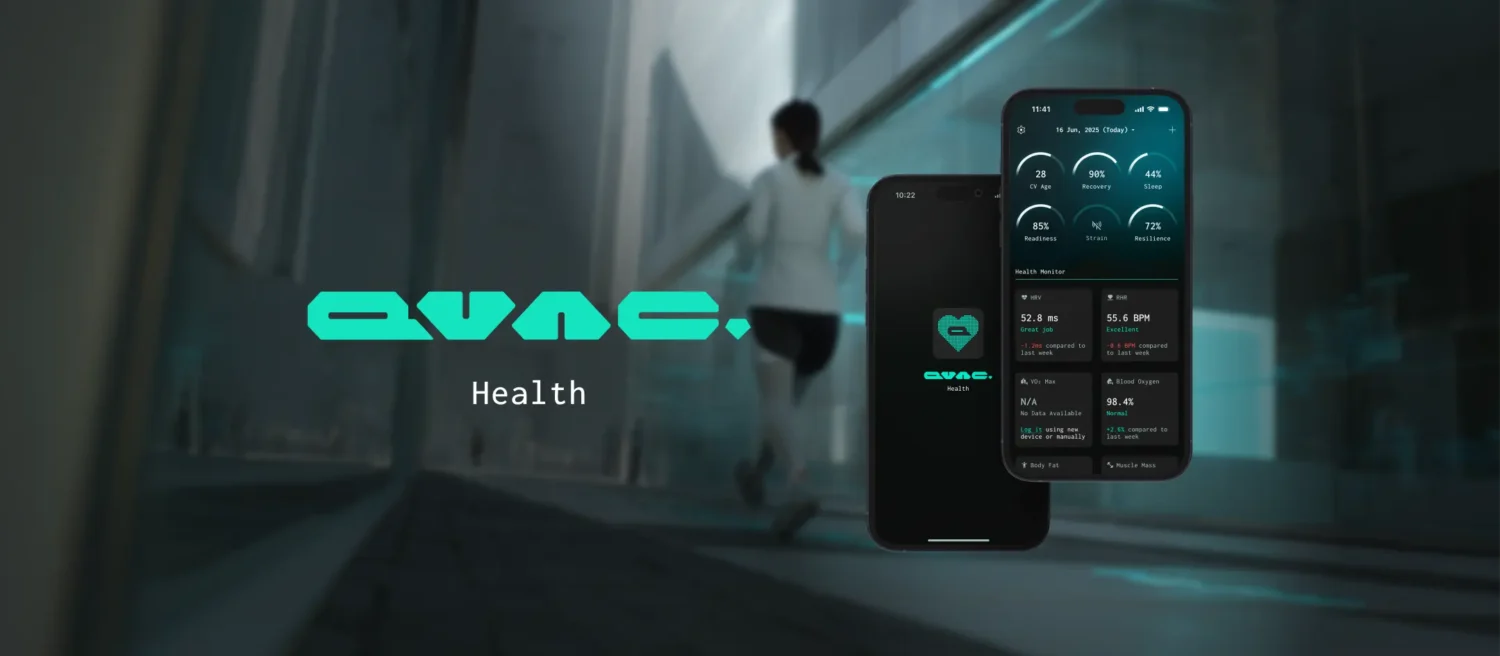
– Tether has launched QVAC Health, a new personal wellness platform designed to aggregate data from disparate fitness trackers and apps into a single, encrypted, and offline-capable environment. 

– By utilizing local, on-device AI rather than cloud processing, the platform aims to break down the “walled gardens” of Big Tech, allowing users to analyze correlations between different biometrics—like sleep rings and running watches—without surrendering their privacy to corporate servers.

The Sovereign Bridge: Tether Bets on Local AI to Break Healthcare’s Walled Gardens

For the past decade, the digital health revolution has been defined by a Faustian bargain: in exchange for insights into our sleep, steps, and heart rate, we surrender our most intimate biological data to proprietary clouds and opaque algorithms. Today, Tether—best known for its dominance in the stablecoin market—is attempting to rewrite that contract with the launch of QVAC Health.

Billed as a “sovereign bridge” between isolated tech ecosystems, QVAC Health is not just another fitness app. It is a strategic attempt to build a neutral operating system for personal wellness, one that relies on local, on-device AI to unify the fragmented reality of modern digital health.

“We are building the first truly neutral ground for wellness data,” said Paolo Ardoino, CEO of Tether. “You shouldn’t have to choose between using the best hardware on the market and maintaining your privacy.”

The Problem: Data Silos and Cloud Dependency

Currently, a user’s health picture is scattered. A dedicated runner might use a Garmin watch for training, an Oura Ring for sleep, and MyFitnessPal for nutrition. These devices rarely speak to one another meaningfully without routing data through third-party servers that harvest and monetize the information.

QVAC Health attacks this friction by aggregating biometric data, workout logs, and medication reminders into a single, encrypted timeline. Crucially, the platform is offline-capable. By downloading AI models peer-to-peer (P2P), the app turns the user’s smartphone into a private intelligence hub, performing advanced analysis of strain and recovery without the user’s context ever leaving the device.

Natural Language and Experimental Vision

The user interface moves away from the spreadsheet-style entry common in health apps, favoring Natural Language Processing (NLP). Users can simply type or speak phrases like “feeling sluggish after lunch,” and the local AI interprets the context to organize the data.

Perhaps most intriguing is the inclusion of experimental computer vision. Users can snap a photo of a meal, and the on-device AI estimates caloric intake and macronutrients in seconds. While cloud-based vision tools exist (like Google Lens or ChatGPT), doing this entirely on-device is a significant technical flex that underscores Tether’s commitment to privacy.

The Roadmap: Bypassing the Manufacturers

Tether plans to introduce Direct Bluetooth Low Energy (BLE) connectivity, a feature that would allow QVAC Health to connect directly to select wearables and read raw sensor data. This is a direct challenge to the industry standard, where manufacturers force developers to use restrictive APIs that route data through their own clouds first. If successful, this would allow users to buy hardware from major brands but manage the data entirely within Tether’s sovereign ecosystem.

  • LinkedIn
  • Twitter
  • Facebook
  • Email
  • Print

Tagged With: Artificial Intelligence

Tap Native

Get in-depth healthcare technology analysis and commentary delivered straight to your email weekly

Reader Interactions

Primary Sidebar

Subscribe to HIT Consultant

Latest insightful articles delivered straight to your inbox weekly.

Submit a Tip or Pitch

Featured Insights

Aligning IT & Clinical Teams: How to Reduce Friction and Improve Communication

Most-Read

mount-sinai-launches-epic-chart-with-art-nursing-ambient-ai

Mount Sinai Medical Center Extends Epic’s Ambient AI to Inpatient Nursing

M&A: Tempus AI to Acquire Personalis for $1.5B to Expand Precision Oncology and MRD Monitoring

M&A: Tempus AI to Acquire Personalis for $1.5B to Expand Precision Oncology and MRD Monitoring

Why Brain Health Is Entering Its Infrastructure Era

Brain Health’s Infrastructure Era: Proving Clinical Outcomes with Integrated Neuromotor Tracking

Why Catholic Health Inked a $500M Care Alliance with GE HealthCare to Automate Outpatient Triage

Catholic Health Inks $500M Care Alliance with GE HealthCare to Automate Outpatient Triage

KLAS Global HIT Trends 2026 Report: Artificial Intelligence Becomes the Top Investment Priority

KLAS Global HIT Trends 2026 Report: Artificial Intelligence Becomes the Top Investment Priority

Optum Partners with Anthropic to Deploy Claude Across Healthcare Claims and Revenue Workflows

Optum Partners with Anthropic to Deploy Claude Across Healthcare Claims and Revenue Workflows

Rock Health H1 2026 Digital Health Funding Recap: Startups Hit $7.4B in Venture Rebound

Rock Health H1 2026 Digital Health Funding Recap: Startups Hit $7.4B in Venture Rebound

M&A: ResMed to Sell MatrixCare Business to Frazier Healthcare Partners for $450M

M&A: ResMed to Sell MatrixCare Business to Frazier Healthcare Partners for $450M

The Real Risk in Healthcare AI Isn’t the Model. It’s the Data. 

Clinical Data Fidelity: The Real Blindspot in Healthcare AI Strategy

KLAS 2026 EHR Market Share Report: Epic Gains as Oracle Health Faces Third Year of Losses

KLAS 2026 EHR Market Share Report: Epic Gains as Oracle Health Faces Third Year of Losses

Secondary Sidebar

Footer

Company

  • About Us
  • 2026 Editorial Calendar
  • Advertise with Us
  • Reprints and Permissions
  • Op-Ed Submission Guidelines
  • Contact
  • Subscribe

Editorial Coverage

  • Opinion
  • Health IT
    • Care Coordination
    • EMR/EHR
    • Interoperability
    • Population Health Management
    • Revenue Cycle Management
  • Digital Health
    • Artificial Intelligence
    • Blockchain Tech
    • Precision Medicine
    • Telehealth
    • Wearables
  • Startups
  • Value-Based Care
    • Accountable Care
    • Medicare Advantage

Connect

Subscribe to HIT Consultant Media

Latest insightful articles delivered straight to your inbox weekly

Copyright © 2026. HIT Consultant Media. All Rights Reserved. Privacy Policy |