
What You Should Know:
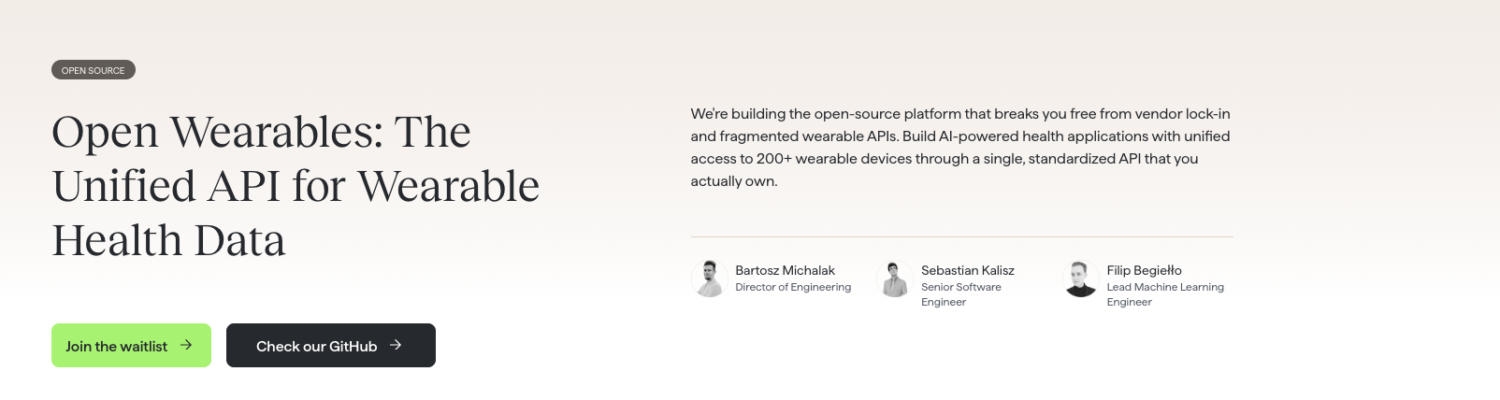
– Momentum has launched Open Wearables, the industry’s first open-source platform designed to unify data from over 200 wearable devices—including Apple Health and Garmin—into a single, developer-friendly API.
– The new infrastructure eliminates the need for expensive proprietary SaaS aggregators, offering a self-hosted, HIPAA-compliant solution that drastically reduces integration time for healthcare startups. By standardizing data models for AI, Momentum aims to remove the financial and technical barriers currently stalling digital health innovation.
How Momentum’s Open-Source Platform is Democratizing Health Tech Innovation
For the past decade, the digital health revolution has faced a persistent, silent bottleneck: interoperability. While consumer adoption of wearables from Apple, Garmin, and Polar has exploded, the data generated by these devices remains trapped within “walled gardens.” For healthcare startups, bridging these gaps has historically meant choosing between two painful options: burning months of engineering time building custom integrations for every device, or paying exorbitant monthly fees to proprietary SaaS aggregators.
Today, healthcare AI agency Momentum aims to dismantle that barrier with the launch of Open Wearables. Billed as the first open-source platform of its kind, Open Wearables unifies data from over 200 distinct devices into a single, cohesive API. This release signals a potential paradigm shift in health tech infrastructure, moving from a rent-seeking model to a community-driven utility.
The End of the “Buy vs. Build” Dilemma
The fragmentation of the wearables market has long favored well-funded enterprises. A startup wanting to analyze heart rate variability (HRV) across a patient population would need separate codebases for an Apple Watch, a Suunto tracker, and a Polar chest strap.
Jan Kamiński, Founder at Momentum, believes this friction stifles innovation. “We’re building the open infrastructure layer for health data that the industry has been missing,” Kamiński said. “Today’s healthcare innovators shouldn’t have to choose between months of custom integration work or vendor lock-in with proprietary platforms.”
By releasing the source code on GitHub, Momentum is essentially offering the “plumbing” of digital health for free. This allows developers to bypass the weeks of development typically required per device integration, redirecting those resources toward building novel algorithms and patient experiences.
Infrastructure Built for Privacy and AI
Beyond mere connectivity, Open Wearables addresses two critical requirements for modern medical applications: compliance and intelligence.
Unlike proprietary SaaS platforms that process data through third-party servers—creating potential privacy vulnerabilities—Open Wearables is designed to be self-hosted. This architecture grants healthcare companies complete control over their data pipelines, significantly simplifying the path to HIPAA compliance.
Furthermore, the platform tackles the issue of “dirty data.” Raw data streams from wearables often vary wildly in format and frequency. Open Wearables normalizes this intake into AI-ready data schemas. By creating a unified data model, the platform makes it significantly easier for developers to train machine learning models and build cross-platform analytics without wrestling with data cleaning.
A Community-Driven Future
Momentum’s strategy relies on the network effects of open source. By allowing the developer community to contribute new device integrations and analytics layers, the platform can theoretically evolve faster than any closed-source competitor.
“Our mission is to democratize wearables data access so that breakthrough health innovations aren’t limited to well-funded enterprises,” added Piotr Sędzik, CEO at Momentum. “Every researcher, developer, and healthcare startup should have access to the same unified health data infrastructure.”
Availability
The platform is available immediately for developers and researchers. The full source code can be accessed at Momentum’s GitHub repository, with comprehensive documentation available via their website.
