
• Skip to main content
  • Skip to secondary menu
  • Skip to primary sidebar
  • Skip to secondary sidebar
  • Skip to footer

  • Opinion
  • Health IT
    • Behavioral Health
    • Care Coordination
    • EMR/EHR
    • Interoperability
    • Patient Engagement
    • Population Health Management
    • Revenue Cycle Management
    • Social Determinants of Health
  • Digital Health
    • AI
    • Blockchain
    • Precision Medicine
    • Telehealth
    • Wearables
  • Life Sciences
  • Investments
  • M&A
  • Value-based Care
    • Accountable Care (ACOs)
    • Medicare Advantage

Smart Eye Will Monitor Driver’s Vital Signs to Enhance Road Safety

by Fred Pennic 06/23/2023 Leave a Comment

  • LinkedIn
  • Twitter
  • Facebook
  • Email
  • Print
Smart Eye Will Monitor Driver’s Vital Signs to Enhance Road Safety

What You Should Know: 

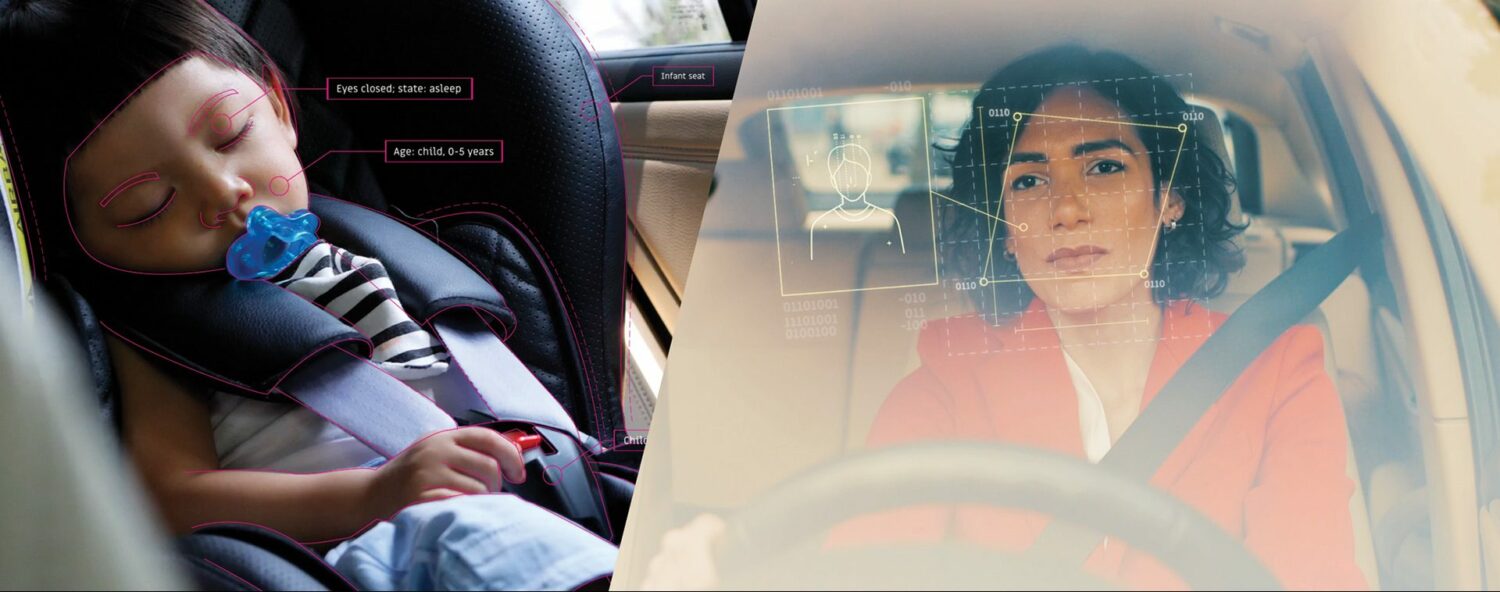
Smart Eye, a developer of Driver Monitoring System (DMS) technology for the automotive industry adds vital signs detection that analyzes multiple physiological signals to remotely monitor heart and respiration rates, enabling detection of sudden illness and prioritizing driver well-being.

By tracking the driver’s physiological indicators, this new feature enables the early detection of sudden illnesses or unresponsive behavior while operating a vehicle. This capability can prove life-saving in situations where a driver experiences unforeseen health conditions, such as heart attacks or seizures. Additionally, the technology facilitates the transmission of post-crash data, including heart and respiration rates, to emergency responders, ultimately leading to more efficient healthcare interventions.

How It Works

Using AI methods, the new feature analyzes multiple physiological signals to accurately determine the driver’s heart and respiration rates. Notably, Smart Eye utilizes remote photoplethysmography (rPPG), a non-contact, camera-based method that measures variations in light reflection from the skin, enabling the estimation of heart rate. Another method employed is micro movement analysis, allowing the software to identify subtle changes in movements associated with breathing or pulse, undetectable to the human eye.

Smart Eye’s technology uses 940 nanometer wavelength infrared light to detect reflections on the skin, ensuring an unobtrusive user experience. This infrared light also enables detection in the challenging lighting conditions in a moving vehicle, such as darkness or intense sunlight.

“By integrating heart and respiration rate detection into Smart Eye’s world-leading driver monitoring system software, we provide an even deeper layer of insight into driver state and health,” said Henrik Lind, Chief Research Officer at Smart Eye. “The advanced methods used, including rPPG and micro movement analysis, let our software detect even the subtlest physiological changes in real time. Highly requested by the automotive industry, this technology offers OEMs an opportunity to proactively address health emergencies and ensure safer road experiences.”

  • LinkedIn
  • Twitter
  • Facebook
  • Email
  • Print

Tagged With: Artificial Intelligence

Tap Native

Get in-depth healthcare technology analysis and commentary delivered straight to your email weekly

Reader Interactions

Primary Sidebar

Subscribe to HIT Consultant

Latest insightful articles delivered straight to your inbox weekly.

Submit a Tip or Pitch

Featured Insights

Aligning IT & Clinical Teams: How to Reduce Friction and Improve Communication

Most-Read

mount-sinai-launches-epic-chart-with-art-nursing-ambient-ai

Mount Sinai Medical Center Extends Epic’s Ambient AI to Inpatient Nursing

M&A: Tempus AI to Acquire Personalis for $1.5B to Expand Precision Oncology and MRD Monitoring

M&A: Tempus AI to Acquire Personalis for $1.5B to Expand Precision Oncology and MRD Monitoring

Why Brain Health Is Entering Its Infrastructure Era

Brain Health’s Infrastructure Era: Proving Clinical Outcomes with Integrated Neuromotor Tracking

Why Catholic Health Inked a $500M Care Alliance with GE HealthCare to Automate Outpatient Triage

Catholic Health Inks $500M Care Alliance with GE HealthCare to Automate Outpatient Triage

KLAS Global HIT Trends 2026 Report: Artificial Intelligence Becomes the Top Investment Priority

KLAS Global HIT Trends 2026 Report: Artificial Intelligence Becomes the Top Investment Priority

Optum Partners with Anthropic to Deploy Claude Across Healthcare Claims and Revenue Workflows

Optum Partners with Anthropic to Deploy Claude Across Healthcare Claims and Revenue Workflows

Rock Health H1 2026 Digital Health Funding Recap: Startups Hit $7.4B in Venture Rebound

Rock Health H1 2026 Digital Health Funding Recap: Startups Hit $7.4B in Venture Rebound

M&A: ResMed to Sell MatrixCare Business to Frazier Healthcare Partners for $450M

M&A: ResMed to Sell MatrixCare Business to Frazier Healthcare Partners for $450M

The Real Risk in Healthcare AI Isn’t the Model. It’s the Data. 

Clinical Data Fidelity: The Real Blindspot in Healthcare AI Strategy

KLAS 2026 EHR Market Share Report: Epic Gains as Oracle Health Faces Third Year of Losses

KLAS 2026 EHR Market Share Report: Epic Gains as Oracle Health Faces Third Year of Losses

Secondary Sidebar

Footer

Company

  • About Us
  • 2026 Editorial Calendar
  • Advertise with Us
  • Reprints and Permissions
  • Op-Ed Submission Guidelines
  • Contact
  • Subscribe

Editorial Coverage

  • Opinion
  • Health IT
    • Care Coordination
    • EMR/EHR
    • Interoperability
    • Population Health Management
    • Revenue Cycle Management
  • Digital Health
    • Artificial Intelligence
    • Blockchain Tech
    • Precision Medicine
    • Telehealth
    • Wearables
  • Startups
  • Value-Based Care
    • Accountable Care
    • Medicare Advantage

Connect

Subscribe to HIT Consultant Media

Latest insightful articles delivered straight to your inbox weekly

Copyright © 2026. HIT Consultant Media. All Rights Reserved. Privacy Policy |