
• Skip to main content
  • Skip to secondary menu
  • Skip to primary sidebar
  • Skip to secondary sidebar
  • Skip to footer

  • Opinion
  • Health IT
    • Behavioral Health
    • Care Coordination
    • EMR/EHR
    • Interoperability
    • Patient Engagement
    • Population Health Management
    • Revenue Cycle Management
    • Social Determinants of Health
  • Digital Health
    • AI
    • Blockchain
    • Precision Medicine
    • Telehealth
    • Wearables
  • Life Sciences
  • Investments
  • M&A
  • Value-based Care
    • Accountable Care (ACOs)
    • Medicare Advantage

Propeller Health: 84% of People with Asthma May Be Using Their Inhaler Incorrectly

by Fred Pennic 02/22/2019 Leave a Comment

  • LinkedIn
  • Twitter
  • Facebook
  • Email
  • Print

 Propeller Health: 84% of People with Asthma May Be Using Their Inhaler Incorrectly

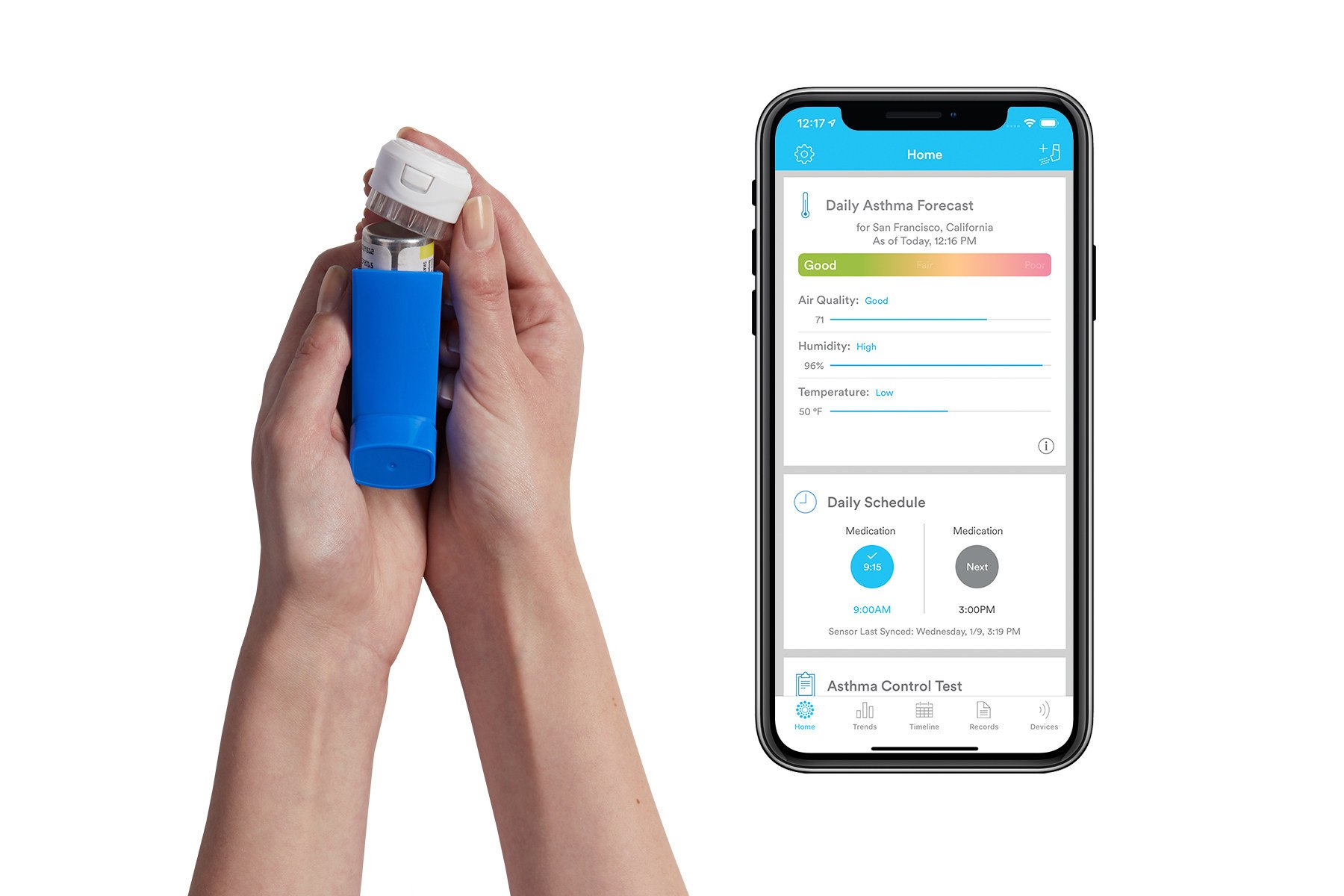
The vast majority of people with asthma may be using their inhalers incorrectly, potentially making their medicine less effective and increasing their risk of asthma attacks, according to new research published in The Journal of Allergy and Clinical Immunology. Traditionally, asthma medicines require that patients take two “puffs” of their inhaler to receive the prescribed dose.

Recommended Asthma Inhaler Guidelines

Asthma guidelines and patient instructions for inhaled medications recommend that patients exhale completely prior to inhaling, inhale the medication slowly and deeply, hold their breath for up to 10 seconds and then wait prior to their next inhalation. These several steps should take between 30 and 60 seconds that allow the medication to reach the appropriate parts of the respiratory tract and maximize effectiveness, helping patients to decrease symptoms, increase their level of asthma control and avoid hospitalization.

Study Background/Findings

The study was conducted by digital therapeutics company Propeller Health, in partnership with the University of Colorado School of Medicine and Children’s Hospital Colorado. During the study, 7,558 patients used Propeller Health’s digital platform by attaching a sensor to their existing inhaler. The sensor tracks medication usage and location data and delivers insights to the patient via their phone or desktop portal.

Data revealed that the majority of patients (84%) took less than 30 seconds between the first and second puff of their rescue or controller inhaler. Further, 67% waited less than 15 seconds between inhalations. Only 16% of patients waited more than 30 seconds between puffs, the minimum amount of time necessary to complete the recommended steps. Of the patients studied, 4-11-year-old patients had the highest level of acceptable timing between inhaler use, while those 18-29 years had the lowest.

Benefits of Digital Medicines

Previous research on inhaler technique was confined to a clinical setting, where a provider would ask a patient to demonstrate their technique for research purposes. Now, data from digital medicines can observe how patients use their inhalers in a real-life setting.

“We hope that with this data from digital medicines, patients and doctors will stimulate a renewed push to address known issues in inadequate inhaler technique, which we know can have a significant impact on how patients experience their disease,” said Stanley Szefler, MD, Director of the Pediatric Asthma Research Program in the Breathing Institute of the Pediatric Pulmonary and Sleep Medicine Section at Children’s Hospital Colorado. “We are entering an era where medicines can not only treat your disease, but new technology can help you optimize that treatment.”

 

  • LinkedIn
  • Twitter
  • Facebook
  • Email
  • Print

Tagged With: Connected Inhalers, Connected Metered Dose Inhaler, Digital Therapeutics, Propeller Health, Smart Inhaler

Tap Native

Get in-depth healthcare technology analysis and commentary delivered straight to your email weekly

Reader Interactions

Primary Sidebar

Subscribe to HIT Consultant

Latest insightful articles delivered straight to your inbox weekly.

Submit a Tip or Pitch

2026 Predictions & Trends

Healthcare 2026 Forecast: Executives on AI Survival, Financial Reckoning, and the End of Point Solutions

2026 Healthcare Executive Predictions: Why the AI “Pilot Era” Is Officially Over

Most-Read

NYC Health + Hospitals to Acquire Maimonides in $2.2B Safety Net Overhaul

NYC Health + Hospitals to Acquire Maimonides in $2.2B Safety Net Overhaul

KLAS Report: Why Hospitals Are Choosing Efficiency Over 'Agentic' AI Hype in 2025

KLAS Report: Why Hospitals Are Choosing Efficiency Over ‘Agentic’ AI Hype in 2025

Advanced Primary Care 2026: Top 6 Investments for Health Systems According to Harvard Medical School

Advanced Primary Care 2026: Top 6 Investments for Health Systems According to Harvard Medical School

AI Nutrition Labels: The Key to Provider Adoption and Patient Trust?

AI Nutrition Labels: The Key to Provider Adoption and Patient Trust?

Kristen Hartsell, VP of Clinical Services, RedSail Technologies

The Pharmacy Closures Crisis: How Independent Pharmacies Are Fixing Pharmacy Deserts

HHS Launches 'OneHHS' AI Strategy to Integrate AI Across CDC, CMS, and FDA for Efficiency and Public Trust

HHS Launches ‘OneHHS’ AI Strategy to Integrate AI Across CDC, CMS, and FDA for Efficiency and Public Trust

From Overwhelmed to Optimized: How AI Agents Address Staffing Challenges and Burnout in Healthcare

From Overwhelmed to Optimized: How AI Agents Address Staffing Challenges and Burnout in Healthcare

The VBC Paradox: Why Hospitals Are Doubling Down on Value-Based Care While Revenue at Risk Lags

The VBC Paradox: Why Hospitals Are Doubling Down on Value-Based Care While Revenue at Risk Lags

Tebra Secures $250M to Challenge Legacy EHRs with AI-Powered Automation

Tebra Secures $250M to Challenge Legacy EHRs with AI-Powered Automation

AstraZeneca Selects Salesforce Agentforce Life Sciences to Deploy AI-Powered Global Customer Engagement

AstraZeneca Selects Salesforce Agentforce Life Sciences to Deploy AI-Powered Global Customer Engagement

Secondary Sidebar

Footer

Company

  • About Us
  • Advertise with Us
  • Reprints and Permissions
  • Op-Ed Submission Guidelines
  • Contact
  • Subscribe

Editorial Coverage

  • Opinion
  • Health IT
    • Care Coordination
    • EMR/EHR
    • Interoperability
    • Population Health Management
    • Revenue Cycle Management
  • Digital Health
    • Artificial Intelligence
    • Blockchain Tech
    • Precision Medicine
    • Telehealth
    • Wearables
  • Startups
  • Value-Based Care
    • Accountable Care
    • Medicare Advantage

Connect

Subscribe to HIT Consultant Media

Latest insightful articles delivered straight to your inbox weekly

Copyright © 2026. HIT Consultant Media. All Rights Reserved. Privacy Policy |