
• Skip to main content
  • Skip to secondary menu
  • Skip to primary sidebar
  • Skip to secondary sidebar
  • Skip to footer

  • Opinion
  • Health IT
    • Behavioral Health
    • Care Coordination
    • EMR/EHR
    • Interoperability
    • Patient Engagement
    • Population Health Management
    • Revenue Cycle Management
    • Social Determinants of Health
  • Digital Health
    • AI
    • Blockchain
    • Precision Medicine
    • Telehealth
    • Wearables
  • Life Sciences
  • Investments
  • M&A
  • Value-based Care
    • Accountable Care (ACOs)
    • Medicare Advantage

Eko and Mayo Clinic Collaborate on Machine Learning Algorithm to Help Physicians Fight Heart Disease

by Jasmine Pennic 10/25/2018 Leave a Comment

  • LinkedIn
  • Twitter
  • Facebook
  • Email
  • Print

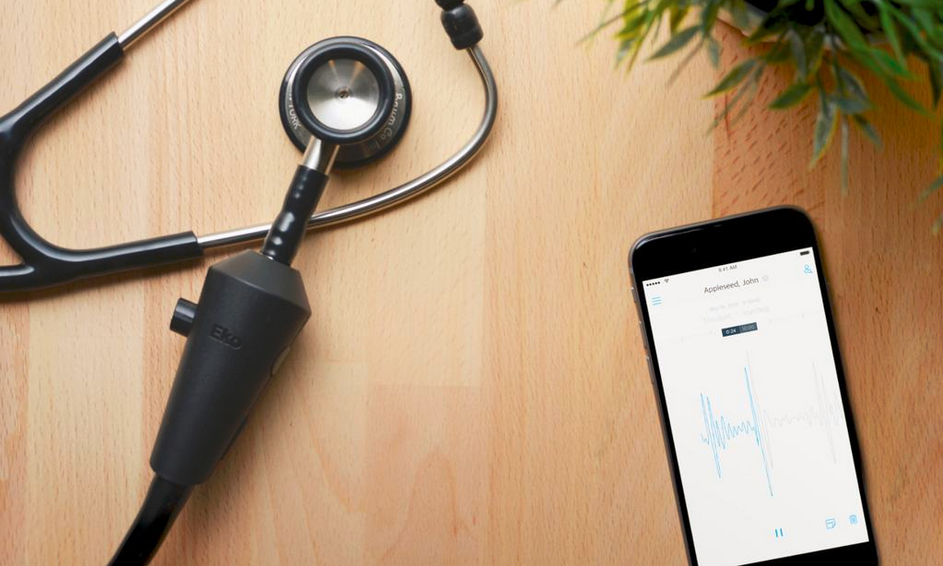
Eko Core

Eko and Mayo Clinic collaborate on a machine learning-based algorithm to help physicians better screen for potentially dangerous heart diseases.

Eko, creators of a heart and lung monitoring platform that combines non-invasive cardiac sensors with machine learning, has announced a collaboration with Mayo Clinic to develop and commercialize a machine learning-based algorithm that screens patients for the presence of a low ejection fraction – a weak heart pump. The collaborative effort combines Mayo’s cardiovascular database containing millions of ECGs and healthcare screenings – with Eko’s smart stethoscope and machine-learning algorithm and software platform.

How It Works

This allows ANY doctor to seamlessly tap the knowledge of an experienced cardiologist to determine if a weak heart pump is present simply by putting a stethoscope on a person’s chest for a few seconds. With this algorithm, Eko can help screen patients in seconds in the doctor’s office. Because the Eko tool can be used by any healthcare provider, it may detect heart function abnormalities earlier and in patients who might not otherwise be screened for heart disease.

The technology leverages the Mayo Clinic’s vast cardiovascular database and their expertise in medical AI and heart disease screening and combines it with Eko’s cardiac monitoring platform. Traditionally, ejection fraction is measured by imaging techniques such as echocardiography, which is a powerful but expensive and time-consuming test that is less accessible to most people in the U.S. and around the world than a doctor with a stethoscope.  

“With this collaboration, we hope to transform the stethoscope in the pocket of every physician and nurse from a hand tool to a power tool,” said Paul Friedman, M.D., Chair of Cardiovascular Medicine at Mayo Clinic in Rochester, MN. “The community practitioner performing high school sports physicals and the surgeon about to operate may be able to seamlessly tap the
knowledge of an experienced cardiologist to determine if a weak heart pump is present simply by putting a stethoscope on a person’s chest for a few seconds.”  

Eko hopes to gain FDA clearance approval for the technology after running clinical studies with Mayo Clinic. 

  • LinkedIn
  • Twitter
  • Facebook
  • Email
  • Print

Tagged With: algorithms, Artificial Intelligence, Eko Devices, heart disease, Machine Learning

Tap Native

Get in-depth healthcare technology analysis and commentary delivered straight to your email weekly

Reader Interactions

Primary Sidebar

Subscribe to HIT Consultant

Latest insightful articles delivered straight to your inbox weekly.

Submit a Tip or Pitch

Featured Research Report

2026 Best in KLAS Awards: The Full List of Software & Services Winners

Most-Read

The "Platform" Squeeze: Epic Releases Native AI Charting, Putting Venture-Backed Scribes on Notice

The “Platform” Squeeze: Epic Releases Native AI Charting, Putting Venture-Backed Scribes on Notice

Analysis: Oracle Cerner’s Plans for a National EHR

Oracle May Cut 30k Jobs and Sell Cerner to Fund $156B OpenAI Deal

The $1.9B Exit: Why CommonSpirit is Insourcing Revenue Cycle and Tenet is Betting Big on Conifer AI

The $1.9B Exit: Why CommonSpirit is Insourcing Revenue Cycle and Tenet is Betting Big on Conifer AI

KLAS 2026 Rankings: Aledade and Guidehealth Named Top VBC Enablement Firms

KLAS 2026 Rankings: Aledade and Guidehealth Named Top VBC Enablement Firms

Beyond the Hype: New KLAS Data Validates the Financial and Clinical ROI of Ambient AI

Beyond the Hype: New KLAS Data Validates the Financial and Clinical ROI of Ambient AI

Anthropic Debuts ‘Claude for Healthcare’ and Opus 4.5 to Engineer the Future of Life Sciences

Anthropic Debuts ‘Claude for Healthcare’ and Opus 4.5 to Engineer the Future of Life Sciences

OpenAI Debuts ChatGPT Health: A ‘Digital Front Door’ That Connects Medical Records to Agentic AI

OpenAI Debuts ChatGPT Health: A ‘Digital Front Door’ That Connects Medical Records to Agentic AI

From Genes to Hackers: The Hidden Cybersecurity Risks in Life Sciences

From Genes to Hackers: The Hidden Cybersecurity Risks in Life Sciences

Utah Becomes First State to Approve AI System for Prescription Renewals

Utah Becomes First State to Approve AI System for Prescription Renewals

NYC Health + Hospitals to Acquire Maimonides in $2.2B Safety Net Overhaul

NYC Health + Hospitals to Acquire Maimonides in $2.2B Safety Net Overhaul

Secondary Sidebar

Footer

Company

  • About Us
  • 2026 Editorial Calendar
  • Advertise with Us
  • Reprints and Permissions
  • Op-Ed Submission Guidelines
  • Contact
  • Subscribe

Editorial Coverage

  • Opinion
  • Health IT
    • Care Coordination
    • EMR/EHR
    • Interoperability
    • Population Health Management
    • Revenue Cycle Management
  • Digital Health
    • Artificial Intelligence
    • Blockchain Tech
    • Precision Medicine
    • Telehealth
    • Wearables
  • Startups
  • Value-Based Care
    • Accountable Care
    • Medicare Advantage

Connect

Subscribe to HIT Consultant Media

Latest insightful articles delivered straight to your inbox weekly

Copyright © 2026. HIT Consultant Media. All Rights Reserved. Privacy Policy |