
• Skip to main content
  • Skip to secondary menu
  • Skip to primary sidebar
  • Skip to secondary sidebar
  • Skip to footer

  • Opinion
  • Health IT
    • Behavioral Health
    • Care Coordination
    • EMR/EHR
    • Interoperability
    • Patient Engagement
    • Population Health Management
    • Revenue Cycle Management
    • Social Determinants of Health
  • Digital Health
    • AI
    • Blockchain
    • Precision Medicine
    • Telehealth
    • Wearables
  • Life Sciences
  • Investments
  • M&A
  • Value-based Care
    • Accountable Care (ACOs)
    • Medicare Advantage

Accenture: 5 Tech Vision Trends Impacting The Life Sciences Industry in 2017 & Beyond

by Fred Pennic 10/06/2017 Leave a Comment

  • LinkedIn
  • Twitter
  • Facebook
  • Email
  • Print

Accenture: 5 Tech Vision Trends Impacting The Life Sciences Industry in 2017 & Beyond

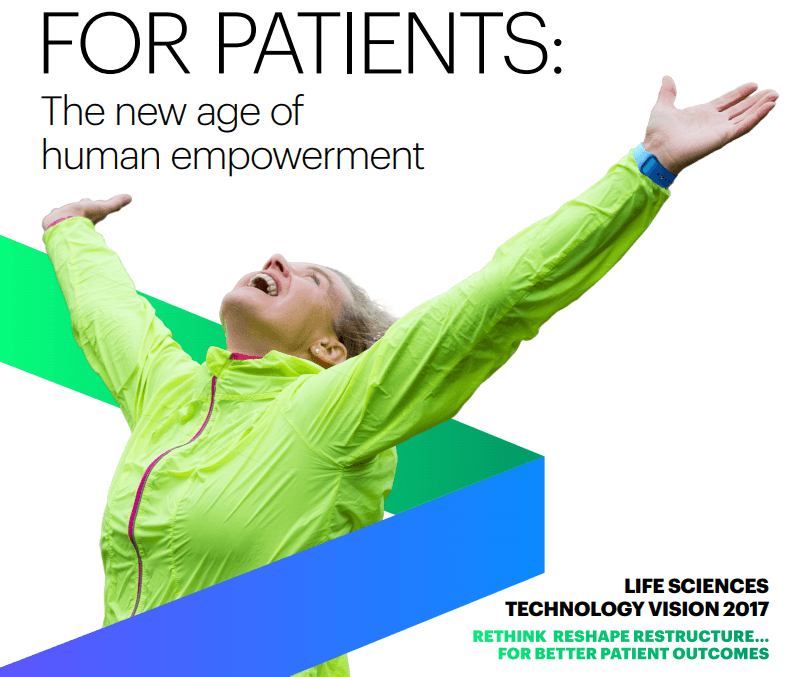
This week, Accenture released the results of its 2017 Tech Vision for Life Sciences report, an annual survey of life sciences executives that examines five key major technology trends shaping the industry. Combined with extraordinary advances in science, these trends are empowering patients around the world and giving rise to new products and solutions that are more relevant and impactful than ever before.

Digital health capabilities are becoming a regular component of everyday life and, combined with science, this is raising the bar on the choices available to people across the world. As leading companies take bold steps to make this a reality, the Accenture report reveals that the life sciences industry is on the brink of radical reinvention.

Each of the five trends centers around the core concept of the changing relationship between people and technology and the resulting freedoms to live life in a different way.

Here is a look at Accenture’s 2017 tech vision trends impacting the life sciences industry:

1. AI is the new UI

Artificial intelligence (AI) is about to become a digital spokesperson for companies. To capitalize on AI’s promise to empower individuals and improve customer interactions, life sciences companies must push their capabilities and applications further.

Accenture finds that 74% of Life Sciences executives believe A.I. will result in significant change and even completely transform their industry within three years Using AI for key clinical health applications could potentially create $150 billion in annual savings for the US economy by 2026. 

2. Ecosystem Power Plays

Companies are increasingly integrating their core business functionalities with third parties and their platforms. The life sciences industry is beginning to align on codes of practice that support platform-based ecosystems, accelerating innovation and the shift to value-based models.

The survey finds:

– 90% of life sciences executives believe adopting a platform-based business model is critical to the success of their business

– 30% of life sciences executives indicate that their org is taking steps to engage in digital ecosystems

3. Workforce Marketplace

New flexible workforce solutions – such as on-demand labor platforms – will be key to unlocking innovation and organizational changes. 73% of life sciences executives agree that their organizations are under extreme pressure to extend innovation into their workforce and corporate structure, while 50% of biomedical researchers are millennials. 

4. Design for Humans

Life sciences companies must bring patients into the heart of design and delivery in order to achieve business and health outcomes. 78% of life sciences executives believe that understanding CX and creating capabilities that align to human behavior are key business differentiators. 

5. The Uncharted

Life sciences companies and regulators will need to collaborate more closely to ensure new innovations are not held back by a trailing regulatory environment. 74% of life sciences executive agree that their org is entering digital industries that have yet to be defined.

  • LinkedIn
  • Twitter
  • Facebook
  • Email
  • Print

Tagged With: Accenture, Accenture Health

Tap Native

Get in-depth healthcare technology analysis and commentary delivered straight to your email weekly

Reader Interactions

Primary Sidebar

Subscribe to HIT Consultant

Latest insightful articles delivered straight to your inbox weekly.

Submit a Tip or Pitch

2026 Predictions & Trends

Healthcare 2026 Forecast: Executives on AI Survival, Financial Reckoning, and the End of Point Solutions

2026 Healthcare Executive Predictions: Why the AI “Pilot Era” Is Officially Over

Most-Read

HHS Launches 'OneHHS' AI Strategy to Integrate AI Across CDC, CMS, and FDA for Efficiency and Public Trust

HHS Launches ‘OneHHS’ AI Strategy to Integrate AI Across CDC, CMS, and FDA for Efficiency and Public Trust

Kristen Hartsell, VP of Clinical Services, RedSail Technologies

The Pharmacy Closures Crisis: How Independent Pharmacies Are Fixing Pharmacy Deserts

From Overwhelmed to Optimized: How AI Agents Address Staffing Challenges and Burnout in Healthcare

From Overwhelmed to Optimized: How AI Agents Address Staffing Challenges and Burnout in Healthcare

The VBC Paradox: Why Hospitals Are Doubling Down on Value-Based Care While Revenue at Risk Lags

The VBC Paradox: Why Hospitals Are Doubling Down on Value-Based Care While Revenue at Risk Lags

Tebra Secures $250M to Challenge Legacy EHRs with AI-Powered Automation

Tebra Secures $250M to Challenge Legacy EHRs with AI-Powered Automation

AstraZeneca Selects Salesforce Agentforce Life Sciences to Deploy AI-Powered Global Customer Engagement

AstraZeneca Selects Salesforce Agentforce Life Sciences to Deploy AI-Powered Global Customer Engagement

Aidoc Partners with NVIDIA MONAI to Scale Open-Source Clinical AI

Aidoc Partners with NVIDIA MONAI to Scale Open-Source Clinical AI

RapidAI Secures FDA Clearance for Five New Deep Clinical AI Modules, Expanding Enterprise Imaging Platform

RapidAI and AWS Deepen Partnership to Scale Clinical AI in Healthcare

Greece and Sword Health to Build AI-Powered Healthcare Front Door

Greece and Sword Health to Build AI-Powered Healthcare Front Door

GE HealthCare Acquires Intelerad for $2.3B to Create Cloud-First, AI-Enabled Imaging Ecosystem

GE HealthCare Acquires Intelerad for $2.3B to Create Cloud-First, AI-Enabled Imaging Ecosystem

Secondary Sidebar

Footer

Company

  • About Us
  • Advertise with Us
  • Reprints and Permissions
  • Op-Ed Submission Guidelines
  • Contact
  • Subscribe

Editorial Coverage

  • Opinion
  • Health IT
    • Care Coordination
    • EMR/EHR
    • Interoperability
    • Population Health Management
    • Revenue Cycle Management
  • Digital Health
    • Artificial Intelligence
    • Blockchain Tech
    • Precision Medicine
    • Telehealth
    • Wearables
  • Startups
  • Value-Based Care
    • Accountable Care
    • Medicare Advantage

Connect

Subscribe to HIT Consultant Media

Latest insightful articles delivered straight to your inbox weekly

Copyright © 2025. HIT Consultant Media. All Rights Reserved. Privacy Policy |