
• Skip to main content
  • Skip to secondary menu
  • Skip to primary sidebar
  • Skip to secondary sidebar
  • Skip to footer

  • Opinion
  • Health IT
    • Behavioral Health
    • Care Coordination
    • EMR/EHR
    • Interoperability
    • Patient Engagement
    • Population Health Management
    • Revenue Cycle Management
    • Social Determinants of Health
  • Digital Health
    • AI
    • Blockchain
    • Precision Medicine
    • Telehealth
    • Wearables
  • Life Sciences
  • Investments
  • M&A
  • Value-based Care
    • Accountable Care (ACOs)
    • Medicare Advantage

Biotricity Awarded Ethics Approval to Validate Mobile Wireless Fetal Monitoring

by Jasmine Pennic 06/20/2017 Leave a Comment

  • LinkedIn
  • Twitter
  • Facebook
  • Email
  • Print

AT&T Taps biotricity To Power Wearable Medical Devices Medical

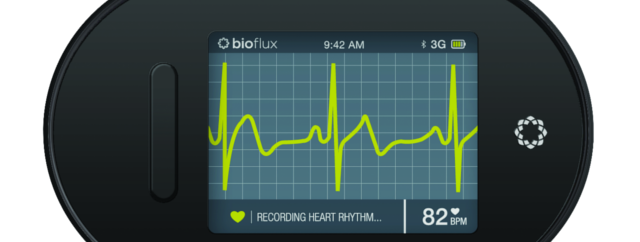
Biotricity, Inc., a provider of biometric remote monitoring solutions has been awarded ethics approval to conduct a study that will investigate and validate a mobile wireless fetal heart rate variability (HRV) monitor. Conducted at Rockyview General Hospital, the findings of the study will be used to build on the research of Biotricity’s flagship product Bioflux which is currently awaiting final FDA clearance and will be the second major app for the clinical-grade remote patient monitoring device.

Study Overview

Early and consistent prenatal care improves the chances of a healthy pregnancy for both mother and child. Prenatal monitoring helps physicians and other caregivers to better control existing conditions in the mother, such as high blood pressure and diabetes, and help avoid serious complications in pregnancy from other disorders, such as preeclampsia. Regular monitoring reduces the infant’s risk for complications as well, making unforeseeable risks more predictable, manageable and potentially preventable.

Mobile, wearable systems for fetal ECG recording will allow for real-time and real-life evaluation of both the baby’s and mother’s status. An electrical sensing ECG monitor provides a higher sampling rate than conventional techniques. This allows for a higher level of heart rate variability processing and automation, which can help differentiate artifacts from the heart rates of both the mother and the baby. This enhanced accuracy could further help save lives and improve the overall quality of prenatal care.

“Estimating the heart rate variability pre-birth is a natural progression for Biotricity, whose main goal in this sphere is to research future medical devices that are easy to implement in both the physician’s office and the patient’s home, that are comfortable and small, and that can offer precise remote data and care,” said Waqaas Al-Siddiq, Founder and CEO of Biotricity. “We are extremely excited to receive ethics approval and look forward to building on the research of our flagship product, Bioflux, which is a highly accurate, clinical-grade remote patient monitoring device that specifically focuses on individuals diagnosed with or at risk for cardiovascular disease.”

  • LinkedIn
  • Twitter
  • Facebook
  • Email
  • Print

Tagged With: biotricity, Clinical-Grade Wearable, wireless fetal/maternal monitoring

Tap Native

Get in-depth healthcare technology analysis and commentary delivered straight to your email weekly

Reader Interactions

Primary Sidebar

Subscribe to HIT Consultant

Latest insightful articles delivered straight to your inbox weekly.

Submit a Tip or Pitch

Featured Insights

Aligning IT & Clinical Teams: How to Reduce Friction and Improve Communication

Most-Read

CB Insights Q2 2026 State of Digital Health Report: Fewest Deals in Over a Decade as Median Sizes Rise

CB Insights Q2 2026 State of Digital Health Report: Fewest Deals in Over a Decade as Median Sizes Rise

mount-sinai-launches-epic-chart-with-art-nursing-ambient-ai

Mount Sinai Medical Center Extends Epic’s Ambient AI to Inpatient Nursing

M&A: Tempus AI to Acquire Personalis for $1.5B to Expand Precision Oncology and MRD Monitoring

M&A: Tempus AI to Acquire Personalis for $1.5B to Expand Precision Oncology and MRD Monitoring

Why Brain Health Is Entering Its Infrastructure Era

Brain Health’s Infrastructure Era: Proving Clinical Outcomes with Integrated Neuromotor Tracking

Why Catholic Health Inked a $500M Care Alliance with GE HealthCare to Automate Outpatient Triage

Catholic Health Inks $500M Care Alliance with GE HealthCare to Automate Outpatient Triage

KLAS Global HIT Trends 2026 Report: Artificial Intelligence Becomes the Top Investment Priority

KLAS Global HIT Trends 2026 Report: Artificial Intelligence Becomes the Top Investment Priority

Optum Partners with Anthropic to Deploy Claude Across Healthcare Claims and Revenue Workflows

Optum Partners with Anthropic to Deploy Claude Across Healthcare Claims and Revenue Workflows

Rock Health H1 2026 Digital Health Funding Recap: Startups Hit $7.4B in Venture Rebound

Rock Health H1 2026 Digital Health Funding Recap: Startups Hit $7.4B in Venture Rebound

M&A: ResMed to Sell MatrixCare Business to Frazier Healthcare Partners for $450M

M&A: ResMed to Sell MatrixCare Business to Frazier Healthcare Partners for $450M

The Real Risk in Healthcare AI Isn’t the Model. It’s the Data. 

Clinical Data Fidelity: The Real Blindspot in Healthcare AI Strategy

Secondary Sidebar

Footer

Company

  • About Us
  • 2026 Editorial Calendar
  • Advertise with Us
  • Reprints and Permissions
  • Op-Ed Submission Guidelines
  • Contact
  • Subscribe

Editorial Coverage

  • Opinion
  • Health IT
    • Care Coordination
    • EMR/EHR
    • Interoperability
    • Population Health Management
    • Revenue Cycle Management
  • Digital Health
    • Artificial Intelligence
    • Blockchain Tech
    • Precision Medicine
    • Telehealth
    • Wearables
  • Startups
  • Value-Based Care
    • Accountable Care
    • Medicare Advantage

Connect

Subscribe to HIT Consultant Media

Latest insightful articles delivered straight to your inbox weekly

Copyright © 2026. HIT Consultant Media. All Rights Reserved. Privacy Policy |