
• Skip to main content
  • Skip to secondary menu
  • Skip to primary sidebar
  • Skip to secondary sidebar
  • Skip to footer

  • Opinion
  • Health IT
    • Behavioral Health
    • Care Coordination
    • EMR/EHR
    • Interoperability
    • Patient Engagement
    • Population Health Management
    • Revenue Cycle Management
    • Social Determinants of Health
  • Digital Health
    • AI
    • Blockchain
    • Precision Medicine
    • Telehealth
    • Wearables
  • Life Sciences
  • Investments
  • M&A
  • Value-based Care
    • Accountable Care (ACOs)
    • Medicare Advantage

NIH Launches $200k Wearable Device Competition to Detect Alcohol Levels in Real-Time

by HITC Staff 12/13/2016 Leave a Comment

  • LinkedIn
  • Twitter
  • Facebook
  • Email
  • Print

NIH Launches $200k Wearable Device Competition to Detect Alcohol Levels in Real-Time

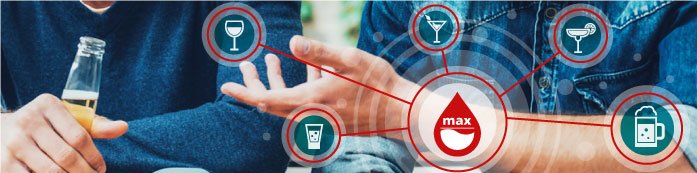
The National Institute on Alcohol Abuse and Alcoholism, part of the National Institutes of Health has launched a $200k challenge to design a wearable device capable of measuring blood alcohol in near real-time. For the challenge, the wearable device would be capable of measuring alcohol concentration in the blood or interstitial fluid that surrounds the body’s cells, which differs from existing technology that detects alcohol released through the skin in sweat or vapor.

The first place for the winning prototype will be awarded $200,000 and second place will receive $100,000 through Challenge.gov, which lists federal incentive prizes and competitions.

Many alcohol studies rely on self-report to measure drinking, which can be unreliable. A wearable alcohol monitoring device could have consumer appeal as well; much like counting one’s steps, this information could help individuals make better health choices.

To solve this, the wearable alcohol biosensor competition was conceived primarily to aid researchers in collecting more accurate data. This could help in the understanding and treatment of alcohol use disorder, as well as conditions affected by alcohol use, such as liver disease and HIV/AIDS.

In addition to its potential for researchers, alcohol biosensors could also be a tool for consumers who wish to track their own personal drinking patterns. While initiating this second challenge, NIAAA hopes to continue to collaborate with the winners of the first competition to develop a viable prototype to use in NIAAA studies.

“We have learned that there is real interest in the private sector around wearable alcohol biosensors, and that innovation using distinct means of alcohol detection are on the horizon,” said Kathy Jung, Ph.D., director of NIAAA’s Division of Metabolism and Health Effects, and co-leader of the competition. 

“We want to continue to harness the power of the private sector because if alcohol biosensors become a part of the ‘wearable toolbox,’ then tangible new opportunities will become available that will profoundly affect the field of alcohol research.”

Competition submissions (a working prototype, data proving functionality/reliability, and photos/videos) will be accepted until May 15, 2017. Judging is expected to take place May 16, 2017 – July 26, 2017, with winners announced on or after August 1, 2017.  Visit https://www.challenge.gov/challenge/wearable-alcohol-biosensor/ for more information.

  • LinkedIn
  • Twitter
  • Facebook
  • Email
  • Print

Tap Native

Get in-depth healthcare technology analysis and commentary delivered straight to your email weekly

Reader Interactions

Primary Sidebar

Subscribe to HIT Consultant

Latest insightful articles delivered straight to your inbox weekly.

Submit a Tip or Pitch

Featured Insights

Aligning IT & Clinical Teams: How to Reduce Friction and Improve Communication

Most-Read

Oracle Lays Off 539 Kansas City Employees as Focus Shifts to AI Data Centers

Oracle Lays Off 539 Kansas City Employees as Focus Shifts to AI Data Centers

SAMHSA and ONC Invest $20M in Behavioral Health IT Initiative

HHS Reverses 2024 Tech Reorganization: Why HHS Just Stripped AI and Cyber Operations Out of the ONC

How Small Medical Practices Can Build HIPAA-Aligned DevSecOps Without Enterprise Budgets

How Small Medical Practices Can Build HIPAA-Aligned DevSecOps Without Enterprise Budgets

Insilico Medicine and Eli Lilly Form $2.75B AI Drug Discovery Collaboration

Insilico Medicine and Eli Lilly Form $2.75B AI Drug Discovery Collaboration

Microsoft Copilot Health, Integrates Apple Health, Oura, and 50,000 EHRs in New AI Push

Microsoft Launches Copilot Health, Integrates Apple Health, Oura, and 50,000 EHRs in New AI Push

Health Recovery Solutions (HRS) Acquires Rimidi for Chronic Care Management and RPM Integration

Health Recovery Solutions (HRS) Acquires Rimidi for Chronic Care Management and RPM Integration

RadNet Subsidiary DeepHealth Acquires French Radiology AI Leader Gleamer

RadNet’s $269M AI Play: DeepHealth Acquires French AI Gleamer

Walgreens Launches Virtual Weight Management Platform for Self-Pay GLP-1 Patients

Walgreens Launches Virtual Weight Management Platform for Self-Pay GLP-1 Patients

KLAS Digital Pathology 2026 Report: Top IMS, Scanner, and AI Vendors Evaluated

KLAS Digital Pathology 2026 Report: Top IMS, Scanner, and AI Vendors Evaluated

The "Platform" Squeeze: Epic Releases Native AI Charting, Putting Venture-Backed Scribes on Notice

The “Platform” Squeeze: Epic Releases Native AI Charting, Putting Venture-Backed Scribes on Notice

Secondary Sidebar

Footer

Company

  • About Us
  • 2026 Editorial Calendar
  • Advertise with Us
  • Reprints and Permissions
  • Op-Ed Submission Guidelines
  • Contact
  • Subscribe

Editorial Coverage

  • Opinion
  • Health IT
    • Care Coordination
    • EMR/EHR
    • Interoperability
    • Population Health Management
    • Revenue Cycle Management
  • Digital Health
    • Artificial Intelligence
    • Blockchain Tech
    • Precision Medicine
    • Telehealth
    • Wearables
  • Startups
  • Value-Based Care
    • Accountable Care
    • Medicare Advantage

Connect

Subscribe to HIT Consultant Media

Latest insightful articles delivered straight to your inbox weekly

Copyright © 2026. HIT Consultant Media. All Rights Reserved. Privacy Policy |