

• Skip to main content
  • Skip to secondary menu
  • Skip to primary sidebar
  • Skip to secondary sidebar
  • Skip to footer

  • Opinion
  • Health IT
    • Behavioral Health
    • Care Coordination
    • EMR/EHR
    • Interoperability
    • Patient Engagement
    • Population Health Management
    • Revenue Cycle Management
    • Social Determinants of Health
  • Digital Health
    • AI
    • Blockchain
    • Precision Medicine
    • Telehealth
    • Wearables
  • Life Sciences
  • Investments
  • M&A
  • Value-based Care
    • Accountable Care (ACOs)
    • Medicare Advantage

Australian Startup DoseMe Raises $2.6M for Precision Dosing

by Fred Pennic 08/26/2016 Leave a Comment

  • LinkedIn
  • Twitter
  • Facebook
  • Email
  • Print

DoseMe

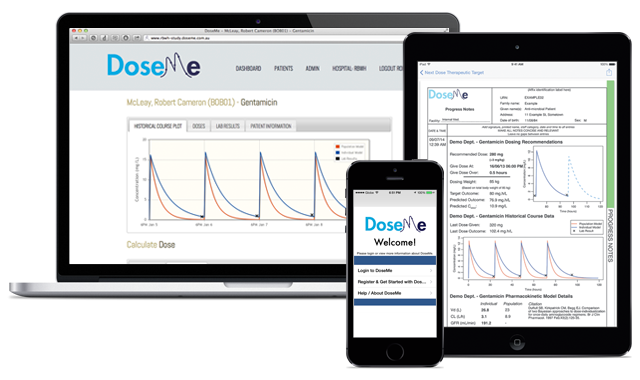
DoseMe, an Australian digital health startup has raised $2.6 million in Series A funding to expand its precision dosing platform. The company plans to utilize the latest round of funding to commercialize DoseMe in Australia, expand into the US and European markets and integrate with existing EMRs in key markets.  

Founded in 2012 by Dr Robert McLeay, the recent funding round was filled by Greg Spurgin and Gary Cunningham who co-founded an US outpatient orthopedic physical therapy company Results Physiotherapy, the DoseMe software platform is a simple-to-use precision dosing tool.

How DoseMe Works

Built on the principles of Bayesian dose forecasting, a complex mathematical algorithm that uses patient data and laboratory results to estimate a person’s metabolism – their ability to absorb, process and clear a drug from their system. 

DoseMe achieves this by building a virtual model of each person, from as little as one laboratory result, by using thousands of data points from published population models. Once this virtual model of each individual is built – in less than a second – DoseMe helps clinicians dose more accurately, and precisely, calculating the most effective dose to reach the desired outcome. DoseMe continues to learn over time; continuously becoming more refined in its dose recommendations.

In addition, DoseMe can simulate the potential outcome of different dosing regimens to support clinicians in making the best decision for challenging cases.

Key patient benefits and cost savings of the platform include:  

– Increase childhood leukaemia survival by > 10% 

– Halve side-effects for chemotherapy. 

– Increase patients in therapeutic range from 35% to > 90%. 

– Reduce mortality by 50%. 

– Save more than $2,500 USD per patient. 

– Reduce hospital stay length by up to 16 days per patient. 

– Cost-benefit ratio between 4:1 and 52:1 

Additionally, DoseMe plans to expand the number of drug molecules on the platform (including regulatory costs for each molecule in Australia (Therapeutic Goods Administration), Europe (CE) where DoseMe has medical regulatory clearance, and the US (FDA) where DoseMe’s submission is currently being reviewed.

  • LinkedIn
  • Twitter
  • Facebook
  • Email
  • Print

Tagged With: DoseMe

Tap Native

Get in-depth healthcare technology analysis and commentary delivered straight to your email weekly

Reader Interactions

Primary Sidebar

Subscribe to HIT Consultant

Latest insightful articles delivered straight to your inbox weekly.

Submit a Tip or Pitch

Featured Insights

Aligning IT & Clinical Teams: How to Reduce Friction and Improve Communication

Most-Read

KLAS 2026 EHR Market Share Report: Epic Gains as Oracle Health Faces Third Year of Losses

KLAS 2026 EHR Market Share Report: Epic Gains as Oracle Health Faces Third Year of Losses

Qualtrics Acquires Press Ganey Forsta for $6.75B to Create the Most Comprehensive AI Experience Platform

M&A: Qualtrics Completes $6.75B Acquisition of Press Ganey Forsta

Viz.ai Launches Viz Pulmonary™ Suite: AI-Powered Workflows for COPD, Lung Nodules, and PE

Viz.ai Launches Viz Pulmonary™ Suite: AI-Powered Workflows for COPD, Lung Nodules, and PE

PathAI Partners to Deploy First AI-Powered Biospecimen Solutions

Roche Acquires PathAI to Automate Cancer Diagnostics in $1B Deal

Vocal Biomarkers: Helping Clinicians Detect What Patients Hesitate to Share

Vocal Biomarkers: Helping Clinicians Detect What Patients Hesitate to Share

Aidoc Secures $150M to Accelerate Enterprise-Scale Clinical AI Across 2,000 Hospitals

OpenAI Launches ChatGPT for Clinicians: Free AI Documentation and Research Tool for Verified Physicians

OpenAI Launches ChatGPT for Clinicians: Free AI Documentation and Research Tool for Verified Physicians

IKS Health Acquires TruBridge for Rural EHR and RCM Solutions Expansion

IKS Health Acquires TruBridge for Rural EHR and RCM Solutions Expansion

UT Austin is Building the Nation's First 'AI-Native' Hospital, Backed by $750M

Why UT Austin is Building an ‘AI-Native’ Hospital from Scratch

The Medtech Pitch Deck Casino: Why Hype Still Wins, and How Scrutiny Could Improve Everyone’s Odds

The Casino Model: Why Medtech VCs Are Betting Billions on Unproven AI

Secondary Sidebar

Footer

Company

  • About Us
  • 2026 Editorial Calendar
  • Advertise with Us
  • Reprints and Permissions
  • Op-Ed Submission Guidelines
  • Contact
  • Subscribe

Editorial Coverage

  • Opinion
  • Health IT
    • Care Coordination
    • EMR/EHR
    • Interoperability
    • Population Health Management
    • Revenue Cycle Management
  • Digital Health
    • Artificial Intelligence
    • Blockchain Tech
    • Precision Medicine
    • Telehealth
    • Wearables
  • Startups
  • Value-Based Care
    • Accountable Care
    • Medicare Advantage

Connect

Subscribe to HIT Consultant Media

Latest insightful articles delivered straight to your inbox weekly

Copyright © 2026. HIT Consultant Media. All Rights Reserved. Privacy Policy |