
• Skip to main content
  • Skip to secondary menu
  • Skip to primary sidebar
  • Skip to secondary sidebar
  • Skip to footer

  • Opinion
  • Health IT
    • Behavioral Health
    • Care Coordination
    • EMR/EHR
    • Interoperability
    • Patient Engagement
    • Population Health Management
    • Revenue Cycle Management
    • Social Determinants of Health
  • Digital Health
    • AI
    • Blockchain
    • Precision Medicine
    • Telehealth
    • Wearables
  • Life Sciences
  • Investments
  • M&A
  • Value-based Care
    • Accountable Care (ACOs)
    • Medicare Advantage

IBM, Pfizer Partner for IoT Collaboration to Transform Parkinson’s Disease Care

by HITC Staff 04/07/2016 Leave a Comment

  • LinkedIn
  • Twitter
  • Facebook
  • Email
  • Print

IBM, Pfizer Partner for IoT Collaboration to Transform Parkinson’s Disease Care 

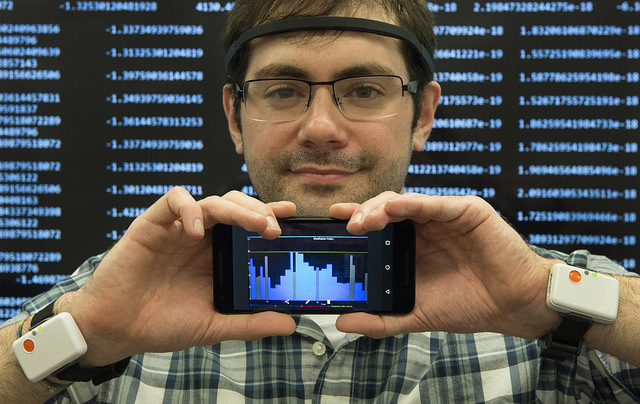
Pfizer and IBM are teaming up on a first-of-its-kind research Internet of Things (IoT) collaboration to develop remote monitoring solutions aimed at transforming how clinicians deliver care to patients suffering from Parkinson’s disease. The experimental IoT approach will rely on a system of sensors, mobile devices, and machine learning to provide real-time, around-the-clock disease symptom information to clinicians and researchers.

The research collaboration goal is to obtain a better understanding of a patient’s disease progression and medication response to help inform treatment decisions and clinical trial design, while also speeding the development of new therapeutic options.

The two companies plan that the system will move into initial clinical testing quickly. Additionally, Pfizer and IBM will convene an external advisory board of patient groups, advocacy organizations, clinicians, and neuroscientists for guidance on the use of technology, medical devices, data management, and research protocols, and to ensure the needs of patients guide the program

Parkinson’s disease in particular requires ongoing adjustment to medication depending on the progression of the disease and response of the patient. The collaboration seeks to create a holistic view of a patient’s well-being by seeking to accurately measure a variety of health indicators, including motor function, dyskinesia, cognition, sleep and daily activities such as grooming, dressing and eating. Insights from these data could help clinicians understand the effect of a patient’s medication as the disease progresses, enabling them to help optimize the patient’s treatment regimen as needed. Data generated through the system could also arm researchers with the insights and real-world evidence needed to help accelerate potential new and better therapies.


According to the World Health Organization, neurological disorders including Parkinson’s disease, Alzheimer’s disease, stroke, multiple sclerosis and epilepsy impact almost one billion families around the world and account for 12 percent of total deaths globally. Many diseases of the brain, spine, and nerves are progressive conditions that get worse over time and can create uncontrolled movement, impair the ability to think, and cause other debilitating symptoms impacting the patient’s quality of life. Approximately 60,000 Americans are diagnosed with Parkinson’s disease each year according to the Parkinson’s Disease Foundation, and an estimated seven to 10 million people suffer from the disease globally.

“With the proliferation of digital health information, one area that remains elusive is the collection of real-time physiological data to support disease management,” said Arvind Krishna, Senior Vice President and Director of IBM Research. “We are testing ways to create a system that passively collects data with little to no burden on the patient, and to provide doctors and researchers with objective, real-time insights that we believe could fundamentally change the way patients are monitored and treated.”

 

  • LinkedIn
  • Twitter
  • Facebook
  • Email
  • Print

Tagged With: IBM, Internet of Things (IoT), Pfizer

Tap Native

Get in-depth healthcare technology analysis and commentary delivered straight to your email weekly

Reader Interactions

Primary Sidebar

Subscribe to HIT Consultant

Latest insightful articles delivered straight to your inbox weekly.

Submit a Tip or Pitch

2026 Predictions & Trends

Healthcare 2026 Forecast: Executives on AI Survival, Financial Reckoning, and the End of Point Solutions

2026 Healthcare Executive Predictions: Why the AI “Pilot Era” Is Officially Over

Most-Read

NYC Health + Hospitals to Acquire Maimonides in $2.2B Safety Net Overhaul

NYC Health + Hospitals to Acquire Maimonides in $2.2B Safety Net Overhaul

KLAS Report: Why Hospitals Are Choosing Efficiency Over 'Agentic' AI Hype in 2025

KLAS Report: Why Hospitals Are Choosing Efficiency Over ‘Agentic’ AI Hype in 2025

Advanced Primary Care 2026: Top 6 Investments for Health Systems According to Harvard Medical School

Advanced Primary Care 2026: Top 6 Investments for Health Systems According to Harvard Medical School

AI Nutrition Labels: The Key to Provider Adoption and Patient Trust?

AI Nutrition Labels: The Key to Provider Adoption and Patient Trust?

Kristen Hartsell, VP of Clinical Services, RedSail Technologies

The Pharmacy Closures Crisis: How Independent Pharmacies Are Fixing Pharmacy Deserts

HHS Launches 'OneHHS' AI Strategy to Integrate AI Across CDC, CMS, and FDA for Efficiency and Public Trust

HHS Launches ‘OneHHS’ AI Strategy to Integrate AI Across CDC, CMS, and FDA for Efficiency and Public Trust

From Overwhelmed to Optimized: How AI Agents Address Staffing Challenges and Burnout in Healthcare

From Overwhelmed to Optimized: How AI Agents Address Staffing Challenges and Burnout in Healthcare

The VBC Paradox: Why Hospitals Are Doubling Down on Value-Based Care While Revenue at Risk Lags

The VBC Paradox: Why Hospitals Are Doubling Down on Value-Based Care While Revenue at Risk Lags

Tebra Secures $250M to Challenge Legacy EHRs with AI-Powered Automation

Tebra Secures $250M to Challenge Legacy EHRs with AI-Powered Automation

AstraZeneca Selects Salesforce Agentforce Life Sciences to Deploy AI-Powered Global Customer Engagement

AstraZeneca Selects Salesforce Agentforce Life Sciences to Deploy AI-Powered Global Customer Engagement

Secondary Sidebar

Footer

Company

  • About Us
  • Advertise with Us
  • Reprints and Permissions
  • Op-Ed Submission Guidelines
  • Contact
  • Subscribe

Editorial Coverage

  • Opinion
  • Health IT
    • Care Coordination
    • EMR/EHR
    • Interoperability
    • Population Health Management
    • Revenue Cycle Management
  • Digital Health
    • Artificial Intelligence
    • Blockchain Tech
    • Precision Medicine
    • Telehealth
    • Wearables
  • Startups
  • Value-Based Care
    • Accountable Care
    • Medicare Advantage

Connect

Subscribe to HIT Consultant Media

Latest insightful articles delivered straight to your inbox weekly

Copyright © 2025. HIT Consultant Media. All Rights Reserved. Privacy Policy |