
• Skip to main content
  • Skip to secondary menu
  • Skip to primary sidebar
  • Skip to secondary sidebar
  • Skip to footer

  • Opinion
  • Health IT
    • Behavioral Health
    • Care Coordination
    • EMR/EHR
    • Interoperability
    • Patient Engagement
    • Population Health Management
    • Revenue Cycle Management
    • Social Determinants of Health
  • Digital Health
    • AI
    • Blockchain
    • Precision Medicine
    • Telehealth
    • Wearables
  • Life Sciences
  • Investments
  • M&A
  • Value-based Care
    • Accountable Care (ACOs)
    • Medicare Advantage

‘Moneyball’ Comes to Medicine: Data Guru Paul DePodesta Joins Scripps

by Fred Pennic 12/22/2015 Leave a Comment

  • LinkedIn
  • Twitter
  • Facebook
  • Email
  • Print

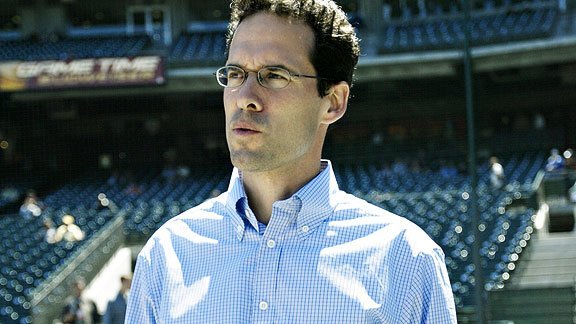
Paul DePodesta

After leading a data revolution in Major League Baseball, data guru Paul DePodesta is joining the faculty of the Scripps Translational Science Institute (STSI) where he will apply his skills and insight to the emerging field of digital medicine.

STSI is a National Institutes of Health sponsored consortium led by Scripps Health in collaboration with The Scripps Research Institute. Through this innovative research partnership, Scripps is leading the effort to translate wireless and genetic medical technologies into high-quality, cost-effective treatments and diagnostics for patients. 

DePodesta is a Harvard economics graduate who rose to prominence when, as the assistant general manager to Oakland Athletics General Manager Billy Beane, he used his knowledge of data analytics to radically alter the way the team recruited players. His time with the Athletics was depicted in the film “Moneyball” through the fictional character Peter Brand, as played by actor Jonah Hill.

In his new role at Scripps, DePodesta will serve as an assistant professor of bioinformatics at STSI to work on large medical data projects with the center’s analytics team, which is led by Ali Torkamani, Ph. D., associate professor and director of genome informatics. Other team members include Andrew Su, Ph. D., associate professor, and Nathan Wineinger, Ph. D., director of biostatistics.

Wide range of research projects
The team’s work covers a wide span of diseases and medical conditions. Examples include:

– The Molecular Autopsy Study, which is searching for genes associated with sudden unexplained death by sequencing and analyzing the DNA of adults, children and infants whose death cannot be explained using traditional medical investigative methods.

– The GIRAFFE Study, which seeks to identify a set of genetic mutations associated with atrial fibrillation, the most common type of irregular heartbeat. Those mutations would then be used to predict a risk of developing the potentially dangerous condition.

– The IDIOM Study, which uses DNA sequencing to look for the genetic causes and potential treatments of idiopathic diseases – those serious, rare and perplexing health conditions that defy a diagnosis and standard treatment.  

 DePodesta first connected with Dr. Topol last summer after reading the physician/researcher’s acclaimed book “The Patient Will See You Now.” In an email to Dr. Topol, DePodesta explained that he was struck by the parallels between baseball and medicine, and was looking to apply his skills and knowledge to a field with global impact.

Soon after, the two scheduled a one-hour lunch which turned into a three-and-a-half-hour discussion about the intersection of Big Data analytics and health care. In October, DePodesta was a featured speaker at the inaugural Transforming Medicine: Evidence-Driven mHealth conference organized by STSI. He will join the institute’s faculty on Jan. 1. 

“In disciplines as disparate as baseball, financial services, trucking and retail, people are realizing the power of data to help make better decisions,” DePodesta said. “Medicine is just beginning to explore this opportunity, but it faces many of the same barriers that existed in those other sectors – deeply held traditions, monolithic organizational and operational structures, and a psychological resistance to change.

“Being part of the STSI faculty allows me to apply the things I’ve learned in baseball to a critical sector of our lives and our economy that is ripe for this kind of revolution,” he said.

  • LinkedIn
  • Twitter
  • Facebook
  • Email
  • Print

Tagged With: Scripps Health

Tap Native

Get in-depth healthcare technology analysis and commentary delivered straight to your email weekly

Reader Interactions

Primary Sidebar

Subscribe to HIT Consultant

Latest insightful articles delivered straight to your inbox weekly.

Submit a Tip or Pitch

Featured Research Report

2026 Best in KLAS Awards: The Full List of Software & Services Winners

Most-Read

The "Platform" Squeeze: Epic Releases Native AI Charting, Putting Venture-Backed Scribes on Notice

The “Platform” Squeeze: Epic Releases Native AI Charting, Putting Venture-Backed Scribes on Notice

Analysis: Oracle Cerner’s Plans for a National EHR

Oracle May Cut 30k Jobs and Sell Cerner to Fund $156B OpenAI Deal

The $1.9B Exit: Why CommonSpirit is Insourcing Revenue Cycle and Tenet is Betting Big on Conifer AI

The $1.9B Exit: Why CommonSpirit is Insourcing Revenue Cycle and Tenet is Betting Big on Conifer AI

KLAS 2026 Rankings: Aledade and Guidehealth Named Top VBC Enablement Firms

KLAS 2026 Rankings: Aledade and Guidehealth Named Top VBC Enablement Firms

Beyond the Hype: New KLAS Data Validates the Financial and Clinical ROI of Ambient AI

Beyond the Hype: New KLAS Data Validates the Financial and Clinical ROI of Ambient AI

Anthropic Debuts ‘Claude for Healthcare’ and Opus 4.5 to Engineer the Future of Life Sciences

Anthropic Debuts ‘Claude for Healthcare’ and Opus 4.5 to Engineer the Future of Life Sciences

OpenAI Debuts ChatGPT Health: A ‘Digital Front Door’ That Connects Medical Records to Agentic AI

OpenAI Debuts ChatGPT Health: A ‘Digital Front Door’ That Connects Medical Records to Agentic AI

From Genes to Hackers: The Hidden Cybersecurity Risks in Life Sciences

From Genes to Hackers: The Hidden Cybersecurity Risks in Life Sciences

Utah Becomes First State to Approve AI System for Prescription Renewals

Utah Becomes First State to Approve AI System for Prescription Renewals

NYC Health + Hospitals to Acquire Maimonides in $2.2B Safety Net Overhaul

NYC Health + Hospitals to Acquire Maimonides in $2.2B Safety Net Overhaul

Secondary Sidebar

Footer

Company

  • About Us
  • 2026 Editorial Calendar
  • Advertise with Us
  • Reprints and Permissions
  • Op-Ed Submission Guidelines
  • Contact
  • Subscribe

Editorial Coverage

  • Opinion
  • Health IT
    • Care Coordination
    • EMR/EHR
    • Interoperability
    • Population Health Management
    • Revenue Cycle Management
  • Digital Health
    • Artificial Intelligence
    • Blockchain Tech
    • Precision Medicine
    • Telehealth
    • Wearables
  • Startups
  • Value-Based Care
    • Accountable Care
    • Medicare Advantage

Connect

Subscribe to HIT Consultant Media

Latest insightful articles delivered straight to your inbox weekly

Copyright © 2026. HIT Consultant Media. All Rights Reserved. Privacy Policy |