

What You Should Know
- San Francisco-based healthcare and physical AI company Remedy Robotics raises $62M in Series B funding led by returning investor DCVC to advance its AI-enabled endovascular robotic platform, the N1 System, toward pivotal clinical trials and FDA approval.
- New institutional investors joining the Series B syndicate include UC Investments (the University of California’s investment office), Skip Capital, and Australian pension fund Hostplus, alongside returning backers Build Collective by Tony Fadell, Blackbird, Divergent Capital, and KdT Ventures.
- Proceeds will fund a planned pivotal neurovascular clinical trial in partnership with the University of California network, expand prototype N1 System deployments across strategic clinical alliances—including SVIN Mission Thrombectomy and the Australian Stroke Alliance—and accelerate autonomous robotic software development.
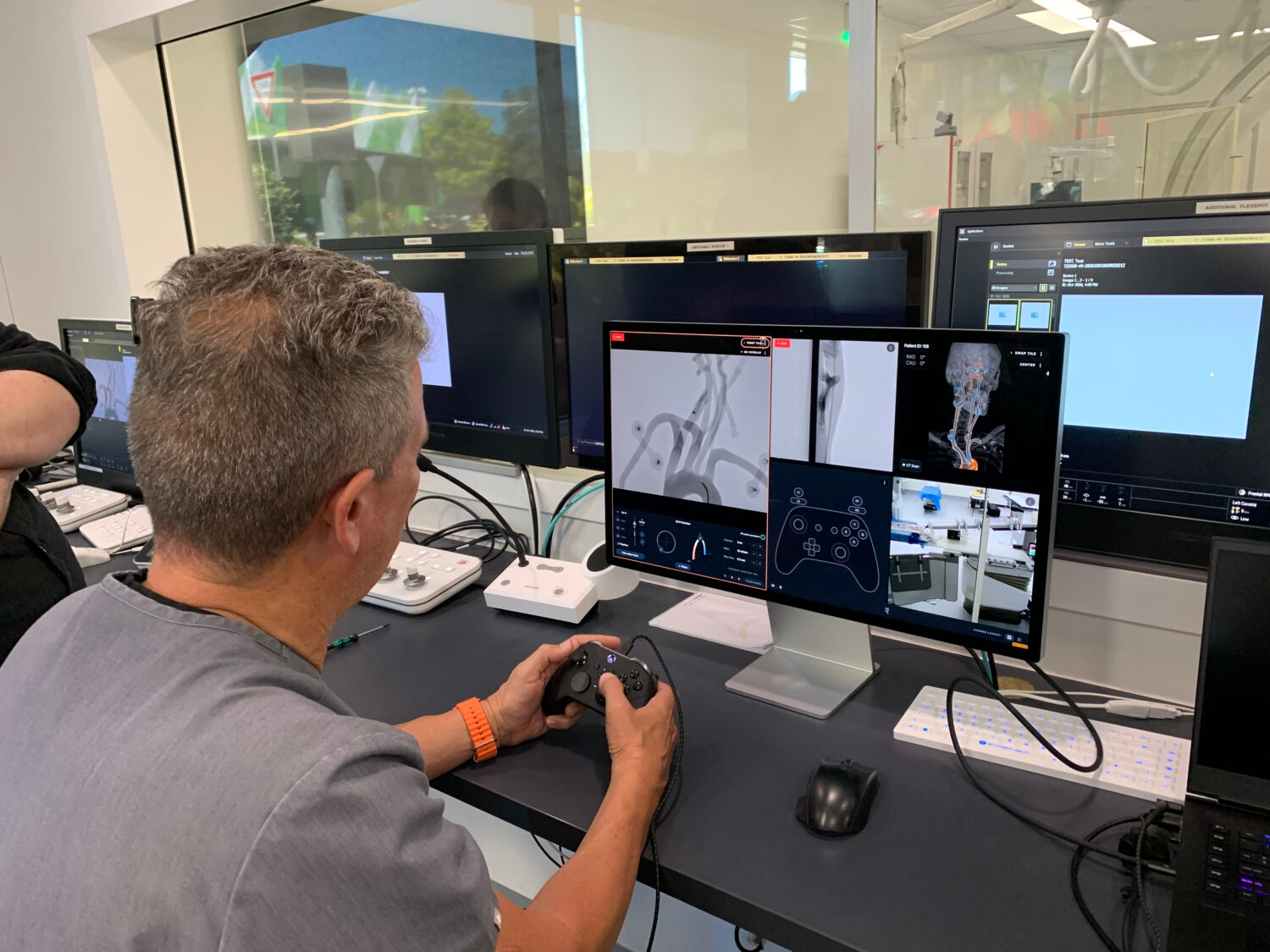
- Engineered for on-site, remote, or autonomous operation across neurovascular, coronary, and peripheral vascular interventions, the N1 System utilizes machine learning to analyze preoperative imaging, simulate procedures in advance, and execute real-time 3D-2D image registration.
The N1 Platform: Physical AI, Preoperative Simulation, and Remote Endovascular Execution
Backed by 48 issued patents spanning machine learning and surgical robotics, Remedy Robotics engineered the N1 System to decouple specialist expertise from physical bedside presence. The platform integrates precision catheter-driving hardware with an artificial intelligence software suite capable of supporting on-site, tele-operated remote, and progressively autonomous endovascular procedures across neurovascular, coronary, and peripheral vascular indications.
Prior to vascular access, the N1 software analyzes preoperative computed tomography and angiographic imaging to simulate patient-specific vascular anatomy and tortuosity in advance. During live procedures, the system executes real-time 3D-to-2D image registration—overlaying three-dimensional preoperative vascular maps onto two-dimensional intraoperative fluoroscopy—enabling interventionalists operating from remote hubs to navigate microcatheters and stent retrievers through delicate cerebral arteries with sub-millimeter precision. Currently collaborating with more than 100 hospitals worldwide, Remedy is scaling prototype deployments through global clinical partnerships including SVIN Mission Thrombectomy and the Australian Stroke Alliance, while advancing software capabilities toward full procedural autonomy.
“Endovascular intervention is the gold standard treatment for stroke and many cardiovascular emergencies, yet access remains limited to a small number of hospitals. For these time-critical conditions, that’s devastating. Even when specialist intervention is available, treatment is often delayed, and complications are frustratingly common,” said Dr. David Bell, CEO and Co-founder of Remedy Robotics. “This funding will allow us to accelerate toward deployment of our N1 System so we can bring quality intervention to patients everywhere, regardless of geography.”
