
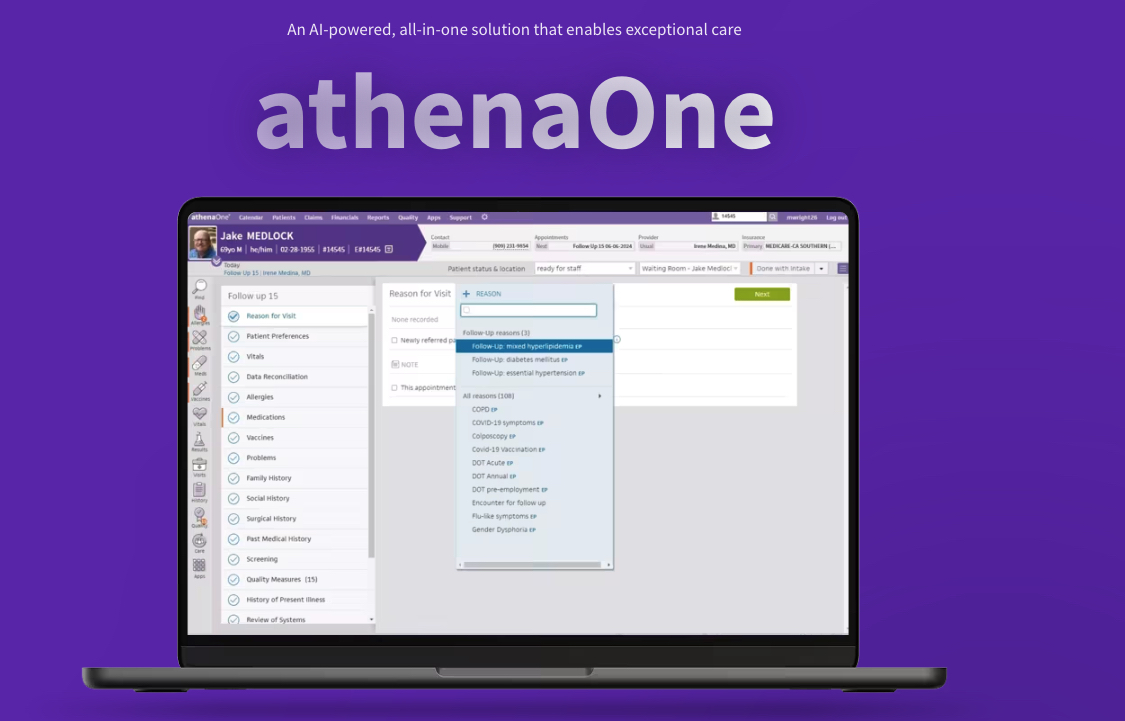
What You Should Know
- athenahealth announced the broad deployment of AI-native capabilities across its athenaOne network, extending native ambient features to over 170,000 physicians and clinicians.
- The core innovation, athenaAmbient, is built directly into athenaOne at no extra charge, capturing patient encounters to generate draft notes, suggested diagnoses, orders, and care-gap alerts.
- Network results since late 2025 show a reduction of nearly six minutes per patient encounter in chart preparation and documentation—saving clinicians more than two workdays per month.
- Early adopters report an increase of up to 30% in same-day chart completion rates, significantly reducing documentation backlogs.
- Product development is driven by the EHR AI CoLab (a co-innovation forum within athenaInstitute) alongside testing involving thousands of alpha/beta clinicians and over 70 user groups.
- Upcoming capabilities currently in testing include problem-based summaries, a timeline chart view, an AI-native clinical inbox, and a value-based care analytics assistant.
Native Ambient Encounter Architecture
athenahealth has announced the general availability of new AI-native capabilities across its athenaOne platform, extending embedded ambient documentation, decision support, and workflow automation to more than 170,000 clinicians. Built directly into the core EHR at no additional subscription cost, the rollout challenges traditional point-solution scribes that require external add-ons, separate logins, or per-user monthly licensing fees.
At the center of the deployment is athenaAmbient, an ambient documentation tool that captures patient-clinician conversations across desktop and mobile devices. Operating natively within the chart, the system automatically drafts clinical notes, infers potential diagnoses, recommends order types, and identifies care gaps in real time.
The embedded workflow directly addresses administrative fatigue and charting backlogs:
- Administrative Recovery: Saves nearly six minutes per patient encounter on chart preparation and documentation, yielding more than two full workdays recovered per clinician each month.
- Charting Velocity: Increases same-day chart completion by up to 30% among early adopters.
- Zero-Cost Inclusion: Delivered as a core feature of the athenaOne subscription, bypassing third-party software overhead.
Co-Innovation and Alpha Pipeline
To validate model outputs and workflow fit, athenahealth launched the EHR AI CoLab—a co-innovation forum within its athenaInstitute research hub comprising clinicians and superusers. The group works alongside thousands of alpha/beta testers across 70+ user groups to refine new tools before broad release.
Additional AI-native tools currently in alpha testing include:
- Problem-Based Summaries: Aggregates relevant chart data around specific diagnoses to reduce review clicks.
- AI-Native Clinical Inbox: Surfaces contextual insights and suggests next steps to streamline task management.
- Value-Based Care Analytics Assistant: Tracks quality measure performance and population health targets to support value-based contract compliance.
“These AI capabilities are helping me spend less time on documentation and more time fully present with my patients,” said Dr. Lynn Joffe, owner of DTC Family Medicine in Colorado. “I’m able to walk into the exam room with the right context, stay engaged with the patient in front of me, and complete more of my charts the same day.”
