

What You Should Know
- Oxford spin-out Caristo Diagnostics has secured FDA De Novo authorization for CaRi-Heart®, making it the first and only technology authorized in the U.S. to quantify coronary inflammation from routine Coronary CT Angiography (CCTA).
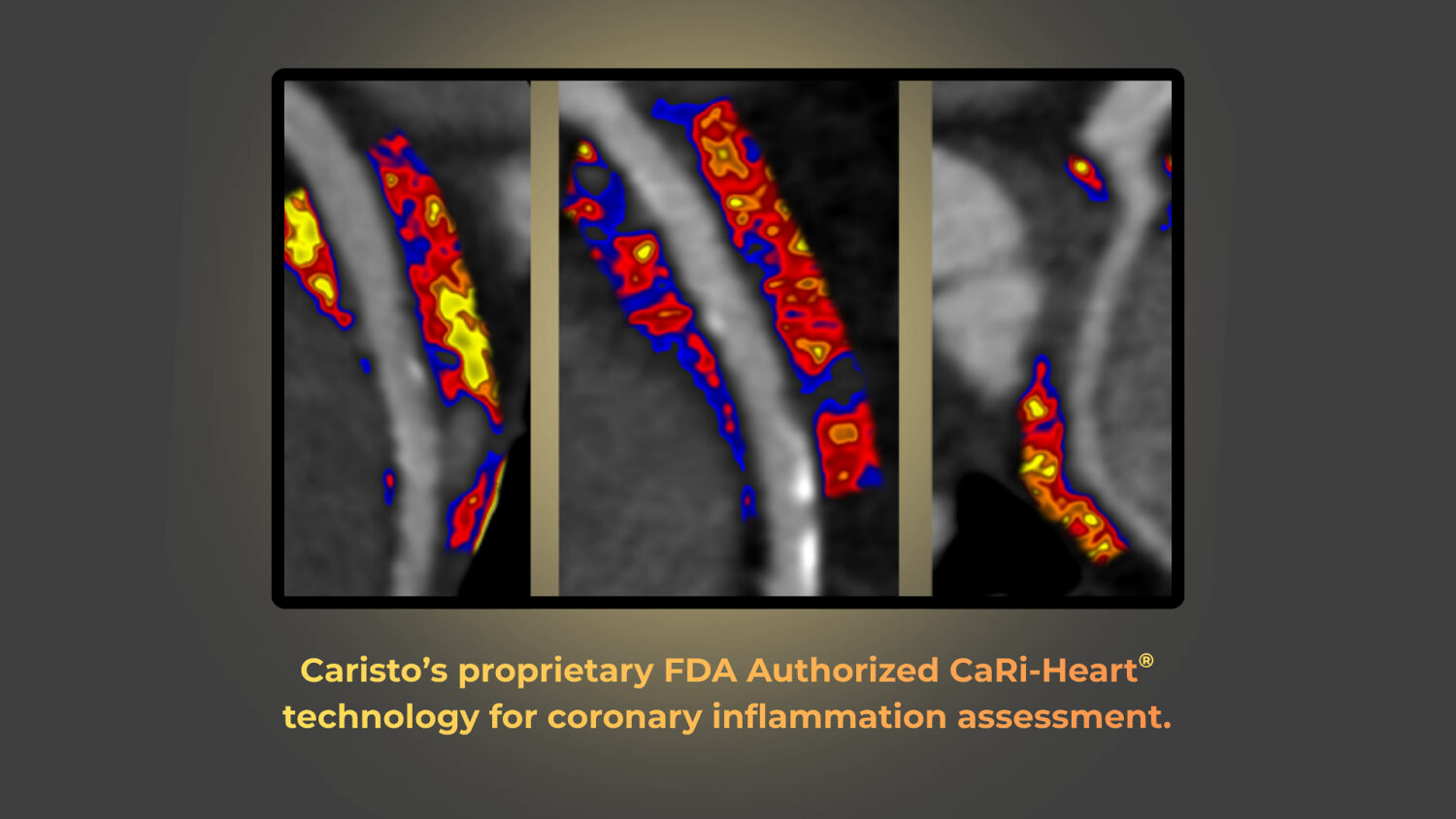
- CaRi-Heart uses advanced AI to analyze inflammation-driven changes in the pericoronary adipose tissue, generating a Fat Attenuation Index Score (FAI-Score™) and a 10-year personalized cardiovascular mortality risk estimate.
- The FDA clearance addresses the critical diagnostic gap where ~50% of first-time heart attacks occur in patients previously classified as “low risk” by traditional calcium scoring or standard CCTA.
- Supported by peer-reviewed evidence in The Lancet and clinical validation through the Oxford Risk Factors And Non-invasive imaging study (ORFAN), which tracks up to 250,000 patients globally.
Pericoronary Fat Attenuation and CPT Billing Architecture
Spun out of the University of Oxford, Caristo’s AI platform quantifies pericoronary fat attenuation directly from routine CCTA scans, offering U.S. clinicians a non-invasive method to measure active coronary inflammation. CaRi-Heart integrates advanced spatial computer vision and bio-imaging algorithms directly into existing radiology and cardiology imaging workflows:
- Fat Attenuation Index (FAI-Score™): Analyzes subtle composition changes in the fat surrounding the coronary arteries (pericoronary adipose tissue) triggered by inflammatory signals released from the arterial wall.
- 10-Year Mortality Prediction: Combines the FAI-Score™ with anatomical plaque metrics and patient demographics to produce the CaRi-Heart® Risk Score—a personalized 10-year estimate of cardiovascular mortality.
- Synergy with CaRi-Plaque®: Complements Caristo’s FDA-cleared CaRi-Plaque® software to deliver a comprehensive dual-assessment of both structural plaque burden and active biological inflammation.
- Commercial CPT Billing Infrastructure: Supported by AMA Category III CPT codes 0992T and 0993T (effective January 1, 2026), providing health systems and outpatient imaging centers with established reimbursement pathways.
“We’ve spent decades building the scientific case that coronary inflammation is an important contributor to the development and progression of coronary plaque,” stated Ron Blankstein, M.D., of Harvard Medical School and Brigham and Women’s Hospital. “And now for the first time, clinicians can specifically measure coronary inflammation, obtaining a more complete picture of cardiovascular risk compared to standard CCTA, or calcium scoring alone.”
By converting routine, existing CCTA scans into high-value inflammatory risk assessments without requiring extra radiation or contrast injections, Caristo unlocks immediate clinical value for health systems.
Furthermore, having pre-established Category III CPT codes ahead of its U.S. commercial push removes the primary adoption hurdle facing advanced AI diagnostic tools.
