
What You Should Know
- No Barrier’s AI-powered medical interpretation platform was tested in an independent study at Mass General Brigham, published in the New England Journal of Medicine (NEJM) Catalyst.
- The research compared Remote Video Interpretation (RVI), No Barrier’s real-time AI, and a hybrid approach to assess patient preferences using a modified technology acceptance model (TAM).
- Findings indicate that RVI is preferred for emotionally sensitive or high-stakes surgical conversations, while No Barrier’s AI is valued for its instant speed and privacy.
- The study involved 23 adult Spanish-speaking surgical patients at Brigham and Women’s Hospital to explore perceived usefulness, ease of use, and cultural alignment.
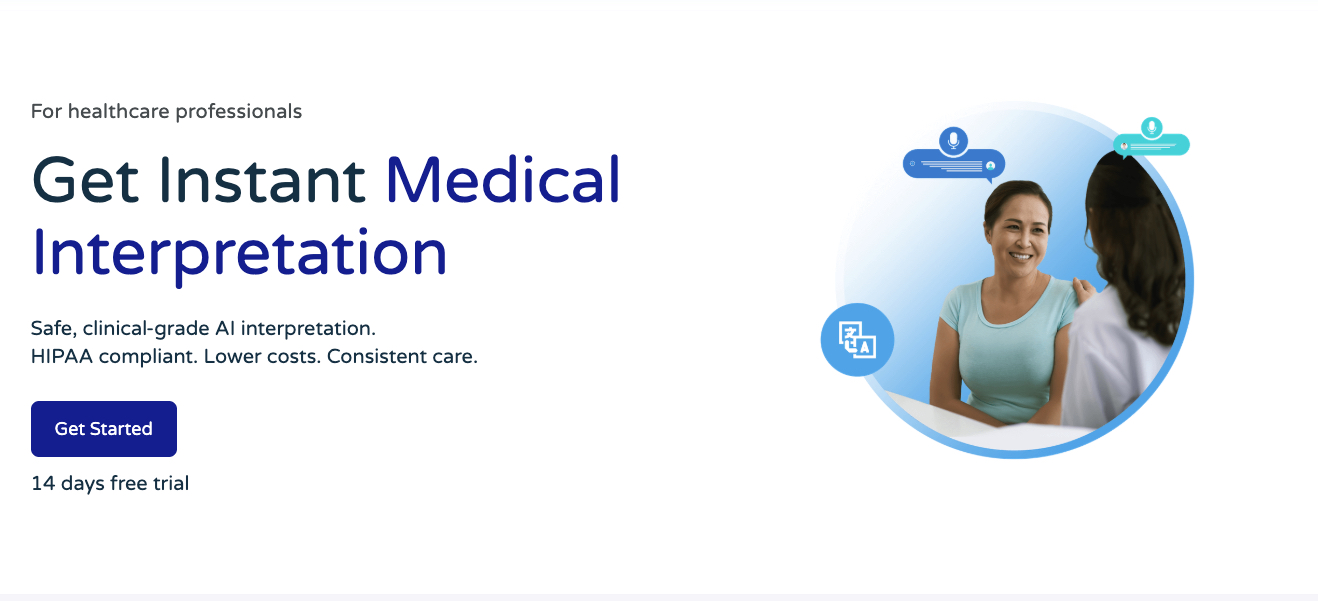
- No Barrier provides HIPAA-compliant translation in over 40 languages, designed to treat language access as a critical clinical process rather than a supplemental service.
For patients with Non-English Language Preference (NELP), the surgical journey is often fraught with communication barriers that can impact both emotional well-being and clinical outcomes. A new study conducted at Mass General Brigham and published in NEJM Catalyst has shed light on the evolving role of artificial intelligence in bridging these gaps. By integrating No Barrier’s real-time AI translation platform into the clinical environment, researchers explored how technology can move beyond traditional models to provide more flexible, patient-centric care.
The study utilized a modified technology acceptance model (TAM) to go beyond technical functionality. Researchers evaluated patient perspectives based on emotional resonance, trust, and cultural alignment. This approach recognizes that in a surgical setting, “understanding” the words is only half the battle; the patient must also feel a sense of security and human connection. The results emphasize that a one-size-fits-all approach to medical interpretation is no longer sufficient for modern healthcare organizations.
The Case for a Hybrid Interpretation Infrastructure
One of the most significant findings from the Mass General Brigham study is the patient demand for choice. While Remote Video Interpretation (RVI) remains a vital tool for navigating complex emotional nuances in high-stakes discussions, No Barrier’s AI interpretation was highly valued for its immediacy and the privacy it affords patients during routine communication. Patients participating in the study explicitly expressed that a “combination would be ideal,” suggesting that the future of language access is a hybrid infrastructure.
No Barrier CEO Eyal Heldenberg noted that the report validates an “AI-first” approach that is consistently reinforced by human expertise. By providing an instant interface for real-time medical communication, the platform eliminates the delays often associated with scheduling or connecting to live interpreters. This speed is critical in surgical workflows where timely information exchange can directly influence the pace of care and the patient’s level of anxiety.
Designing Care Delivery Around Flexibility and Trust
The study focused on a cohort of Spanish-speaking adult patients from the Department of Surgery at Brigham and Women’s Hospital. By using purposive sampling to explore their perceptions, the authors were able to develop an implementation framework for AI-based interpretation that prioritizes the patient experience. This framework suggests that language access should be embedded into the core of care processes, utilizing HIPAA-compliant tools to ensure data integrity and patient confidentiality across more than 40 languages.
Dr. Ilan Shapiro, Medical Advisor at No Barrier, emphasized that engagement improves when patients are met where they are. A hybrid model acknowledges the varying realities of patient needs—offering a human voice for the most difficult moments while providing a private, instant AI assistant for daily clinical interactions. This flexibility is not just an operational perk; it is a fundamental requirement for building trust with underserved populations and ensuring that every patient feels heard throughout their surgical journey.
Why This Matters
Organizations that offer a spectrum of choices—from RVI to AI-driven tools like No Barrier—will see higher patient satisfaction and more efficient clinical workflows. In an increasingly diverse U.S. patient population, treating language access as a critical care component rather than a checkbox item will be a defining differentiator for elite health systems.
