
What You Should Know
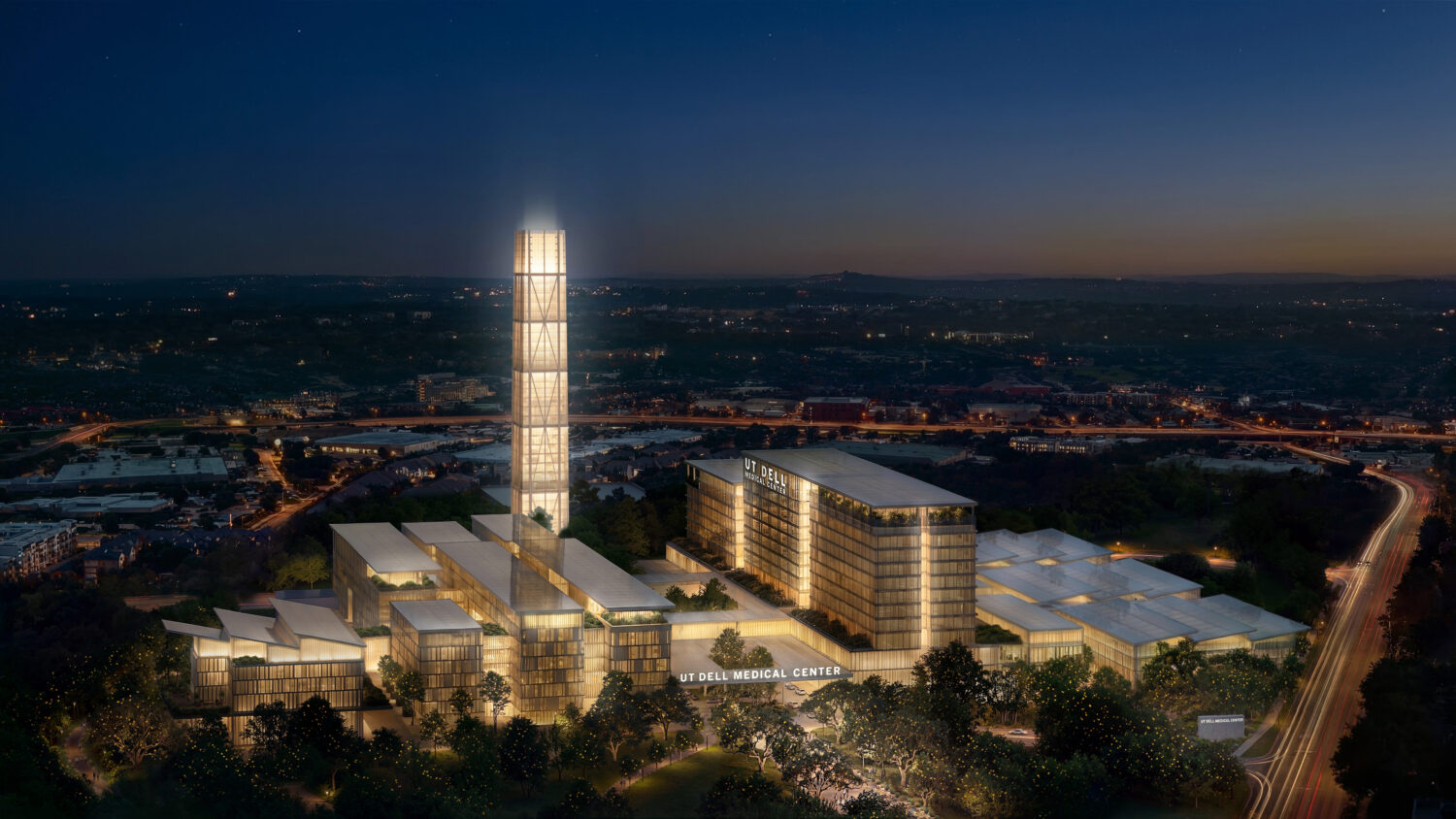
- The Launch: The University of Texas at Austin has announced the UT Dell Medical Center, a comprehensive, “tech-native” academic medical center slated to open in 2030.
- The MD Anderson Integration: Central to the facility’s clinical strategy is a unique collaboration with UT MD Anderson Cancer Center, which will be fully integrated into the Austin campus to deliver elite, coordinated care for complex conditions.
- The “Greenfield” Tech Stack: Because the hospital is being built from the ground up, technology is structurally integrated into the building. Key features include an Intelligence Performance Center (IPC) operating as the building’s central nervous system, Living Digital Twins that simulate patient deterioration up to 72 hours in advance, and integrated robotics for surgery and logistics.
A $10 Billion Vision for 2030
Fueled by a record $750M gift from Michael and Susan Dell—bringing their total university giving to $1 billion—and an additional $100M from Tench and Simone Coxe, the medical center is projected to open in 2030. UT Austin has established an ambitious “10-10-10” goal: to raise $10 billion and achieve a top 10 national medical center ranking within 10 years of its opening.
“Invisible” Technology and Human Connection
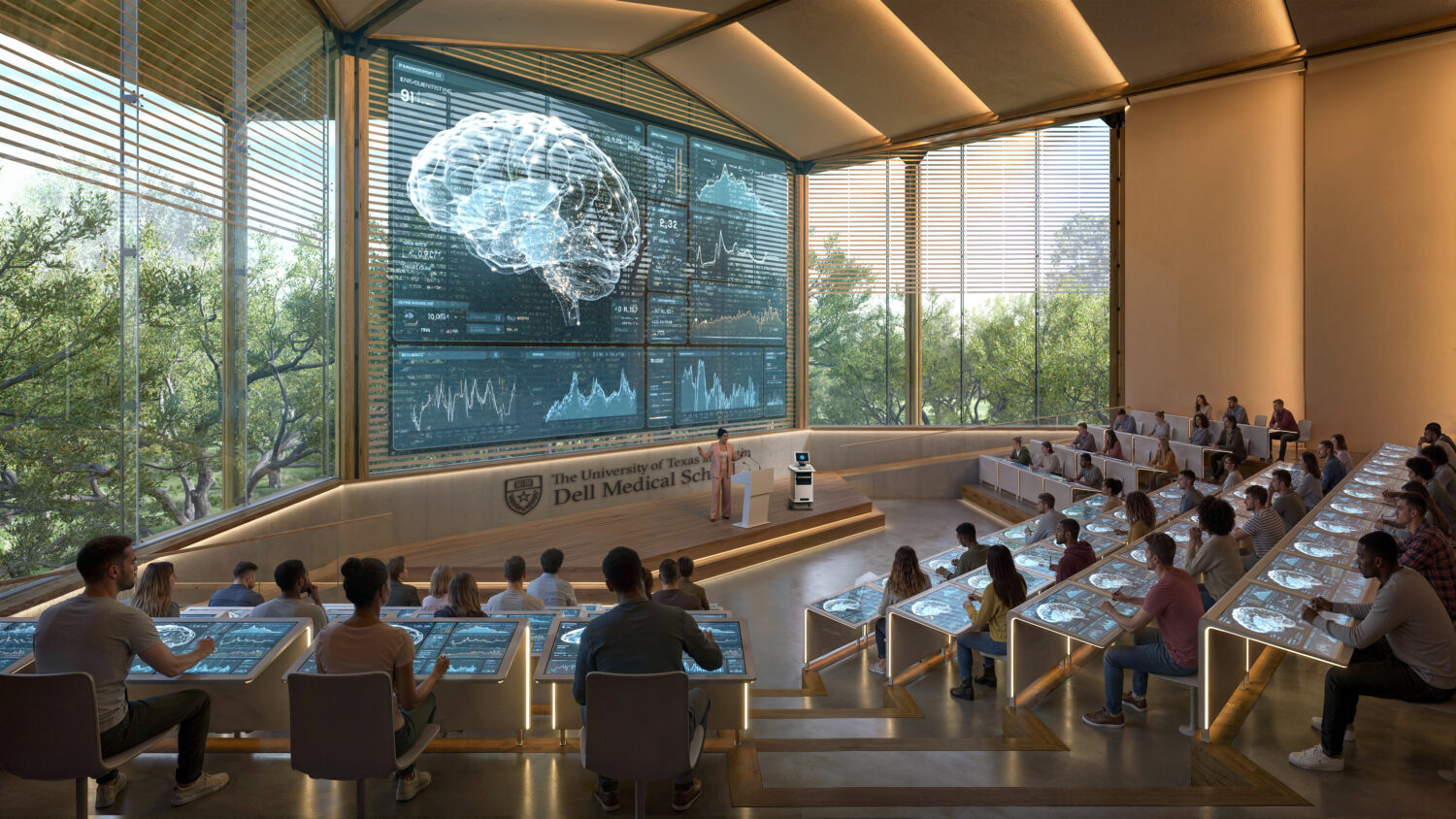
The medical center is being engineered as a “tech-native” institution where data and intelligent systems are embedded into the physical infrastructure from day one. The goal is to move technology into the background, allowing it to anticipate needs without increasing the administrative burden on clinicians.
Core Technological Pillars:
- The Intelligence Performance Center (IPC): Acts as the hospital’s “brain,” merging sensor data with EHR and supply chain platforms to resolve operational issues in real time.
- Living Digital Twins: Every patient will have a continuously updating computational model used to predict clinical deterioration 24 to 72 hours before symptoms manifest.
- Situational Awareness: Environmental sensors can detect patient anxiety or sleep patterns, allowing the building to automatically adjust schedules, meals, and lighting to avoid disrupting recovery.
- Integrated Robotics: Autonomous systems will handle medication dispensing, sterile processing, and logistics, while AI-guided robotics assist in surgery.
- Automated Back-Office: The system is designed to entirely remove clerical overload through autonomous documentation, automated coding, and predictive prior authorization.
Strategic Integration with MD Anderson
A defining feature of the new center is the full integration of The University of Texas MD Anderson Cancer Center. This partnership will bring the nation’s leading cancer expertise directly into a unified, patient-centered system in Austin, ensuring that complex oncology care is coordinated across the full arc of a patient’s life.
“We asked a different question: what does a hospital look like if you design the entire clinical, operational, and physical system around intelligence from day one? The answer is an institution… where clinicians never have to choose between a patient and a keyboard.” — Claus Jensen, Ph.D., CIO
