
• Skip to main content
  • Skip to secondary menu
  • Skip to primary sidebar
  • Skip to secondary sidebar
  • Skip to footer

  • Opinion
  • Health IT
    • Behavioral Health
    • Care Coordination
    • EMR/EHR
    • Interoperability
    • Patient Engagement
    • Population Health Management
    • Revenue Cycle Management
    • Social Determinants of Health
  • Digital Health
    • AI
    • Blockchain
    • Precision Medicine
    • Telehealth
    • Wearables
  • Life Sciences
  • Investments
  • M&A
  • Value-based Care
    • Accountable Care (ACOs)
    • Medicare Advantage

EBSCO Clinical Decisions Report: 80% of Clinicians Trust Evidence-Based AI Tools

by Jasmine Pennic 04/10/2026 Leave a Comment

  • LinkedIn
  • Twitter
  • Facebook
  • Email
  • Print
EBSCO Clinical Decisions Report: 80% of Clinicians Trust Evidence-Based AI Tools

What You Should Know

  • The Trust Divide: A newly released report from EBSCO Clinical Decisions highlights a massive disconnect between clinical readiness and patient confidence regarding AI in healthcare. While 89% of clinicians believe AI for clinical decision support (AI-CDS) will ultimately lead to better patient outcomes, 64% of consumers would prefer to see a healthcare professional who does not use AI at all.
  • General vs. Evidence-Based AI: Consumer skepticism is heavily tied to the type of AI being used. General AI tools (like ChatGPT or Gemini) are trained on broad, unvetted internet data and lack medical guardrails. Over half (54%) of consumers say their trust would actually decrease if a general AI tool were involved in their care.

Bridging the AI Trust Gap in Healthcare

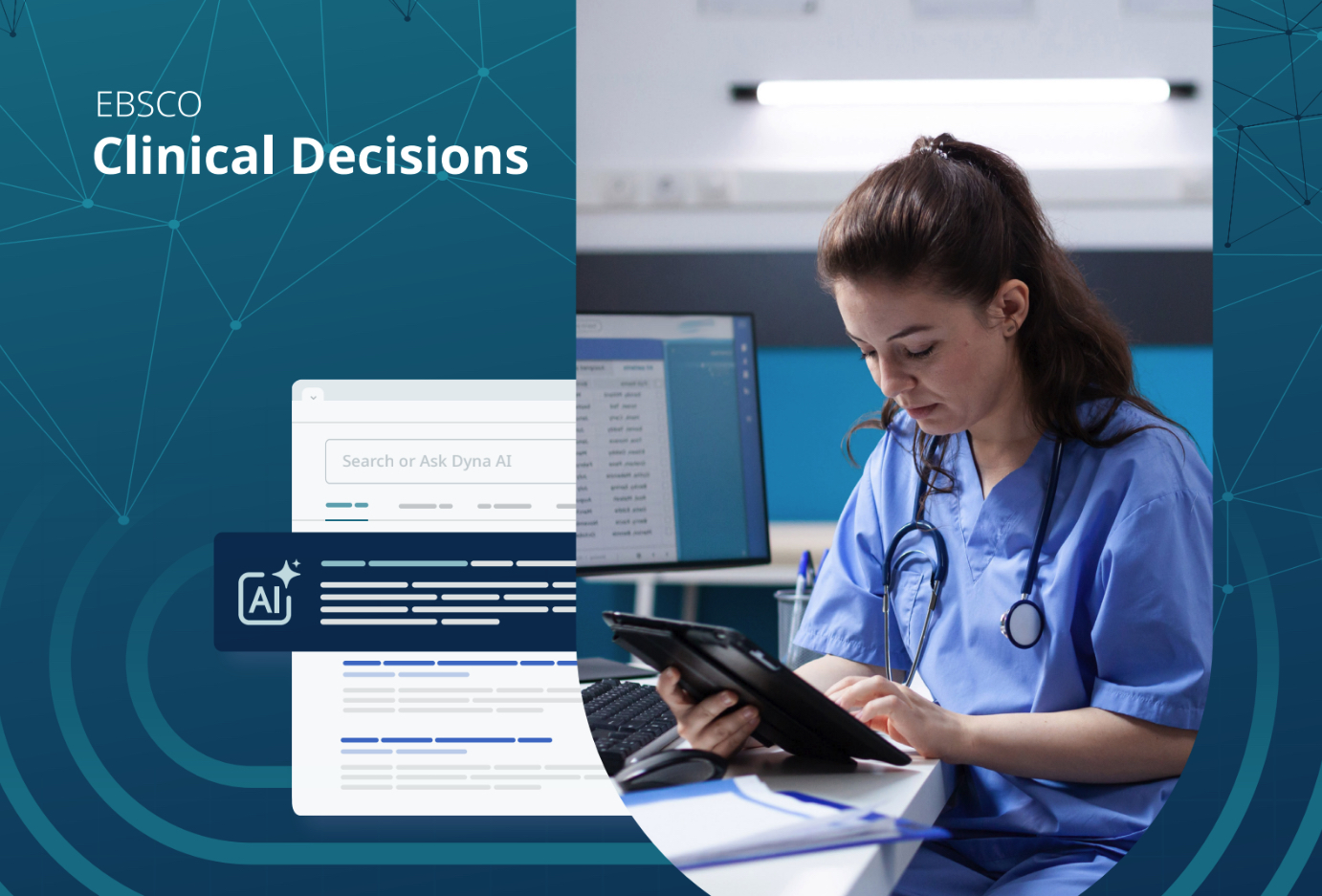
In the rush to integrate artificial intelligence into the clinical workflow, the healthcare industry has largely focused on operational efficiency. But a newly released report from EBSCO Clinical Decisions, titled “The Clinician-Patient Trust Dynamic in the Era of AI-Powered Clinical Decision Support,“ reveals that the true value of AI isn’t just about saving time—it’s about saving the doctor-patient relationship.

The report uncovers a fascinating, somewhat alarming tension in modern medicine. Clinicians are overwhelmingly ready for AI, with 89% believing AI-CDS will lead to better patient outcomes and higher quality care. However, the patients sitting across from them are highly skeptical. A staggering 64% of consumers would prefer to see a healthcare professional who does not use AI at all.

ChatGPT vs. Evidence-Based AI

To bridge this trust gap, health systems must realize that neither clinicians nor patients view all AI equally.

General-purpose AI tools are trained on broad, largely unvetted internet data and entirely lack medical guardrails. Over half (54%) of consumers state that their trust would decrease if a general AI tool was involved in their care.

However, specialized AI-CDS tools are trained exclusively on peer-reviewed research and clinical guidelines, providing traceable, verifiable support. When this distinction is made clear, the skepticism vanishes. 80% of clinicians trust clinical guidance from evidence-based AI-CDS tools, and 66% of consumers say their trust in a medical recommendation would actually increase if a specialized AI tool were utilized.

Other key findings of the report include: 

The Research Bottleneck: The current clinical workflow is highly inefficient. Today, 68% of clinicians spend an average of 3 to 6 hours per week manually searching for, reviewing, and synthesizing clinical evidence at the point of care.

The Efficiency Engine: AI-CDS drastically reduces this manual burden. 75% of clinicians who use AI-CDS report saving four minutes or more per patient encounter. Furthermore, nearly a quarter of users (23%) save 10 minutes or more per encounter.

The ‘Presence Payoff’: The ultimate value of AI-CDS is not merely operational efficiency; it is the reduction of cognitive load. 87% of clinicians agree that AI-CDS frees up mental energy. Importantly, 67% of consumers believe the time saved by AI will make providers more engaged and better communicators.

For more information about the report, visit https://more.ebsco.com/2026-AI-CDS-Report.html

  • LinkedIn
  • Twitter
  • Facebook
  • Email
  • Print

Tagged With: Artificial Intelligence

Tap Native

Get in-depth healthcare technology analysis and commentary delivered straight to your email weekly

Reader Interactions

Primary Sidebar

Subscribe to HIT Consultant

Latest insightful articles delivered straight to your inbox weekly.

Submit a Tip or Pitch

Featured Insights

Aligning IT & Clinical Teams: How to Reduce Friction and Improve Communication

Most-Read

Oracle Lays Off 539 Kansas City Employees as Focus Shifts to AI Data Centers

Oracle Lays Off 539 Kansas City Employees as Focus Shifts to AI Data Centers

SAMHSA and ONC Invest $20M in Behavioral Health IT Initiative

HHS Reverses 2024 Tech Reorganization: Why HHS Just Stripped AI and Cyber Operations Out of the ONC

How Small Medical Practices Can Build HIPAA-Aligned DevSecOps Without Enterprise Budgets

How Small Medical Practices Can Build HIPAA-Aligned DevSecOps Without Enterprise Budgets

Insilico Medicine and Eli Lilly Form $2.75B AI Drug Discovery Collaboration

Insilico Medicine and Eli Lilly Form $2.75B AI Drug Discovery Collaboration

Microsoft Copilot Health, Integrates Apple Health, Oura, and 50,000 EHRs in New AI Push

Microsoft Launches Copilot Health, Integrates Apple Health, Oura, and 50,000 EHRs in New AI Push

Health Recovery Solutions (HRS) Acquires Rimidi for Chronic Care Management and RPM Integration

Health Recovery Solutions (HRS) Acquires Rimidi for Chronic Care Management and RPM Integration

RadNet Subsidiary DeepHealth Acquires French Radiology AI Leader Gleamer

RadNet’s $269M AI Play: DeepHealth Acquires French AI Gleamer

Walgreens Launches Virtual Weight Management Platform for Self-Pay GLP-1 Patients

Walgreens Launches Virtual Weight Management Platform for Self-Pay GLP-1 Patients

KLAS Digital Pathology 2026 Report: Top IMS, Scanner, and AI Vendors Evaluated

KLAS Digital Pathology 2026 Report: Top IMS, Scanner, and AI Vendors Evaluated

The "Platform" Squeeze: Epic Releases Native AI Charting, Putting Venture-Backed Scribes on Notice

The “Platform” Squeeze: Epic Releases Native AI Charting, Putting Venture-Backed Scribes on Notice

Secondary Sidebar

Footer

Company

  • About Us
  • 2026 Editorial Calendar
  • Advertise with Us
  • Reprints and Permissions
  • Op-Ed Submission Guidelines
  • Contact
  • Subscribe

Editorial Coverage

  • Opinion
  • Health IT
    • Care Coordination
    • EMR/EHR
    • Interoperability
    • Population Health Management
    • Revenue Cycle Management
  • Digital Health
    • Artificial Intelligence
    • Blockchain Tech
    • Precision Medicine
    • Telehealth
    • Wearables
  • Startups
  • Value-Based Care
    • Accountable Care
    • Medicare Advantage

Connect

Subscribe to HIT Consultant Media

Latest insightful articles delivered straight to your inbox weekly

Copyright © 2026. HIT Consultant Media. All Rights Reserved. Privacy Policy |