
What You Should Know
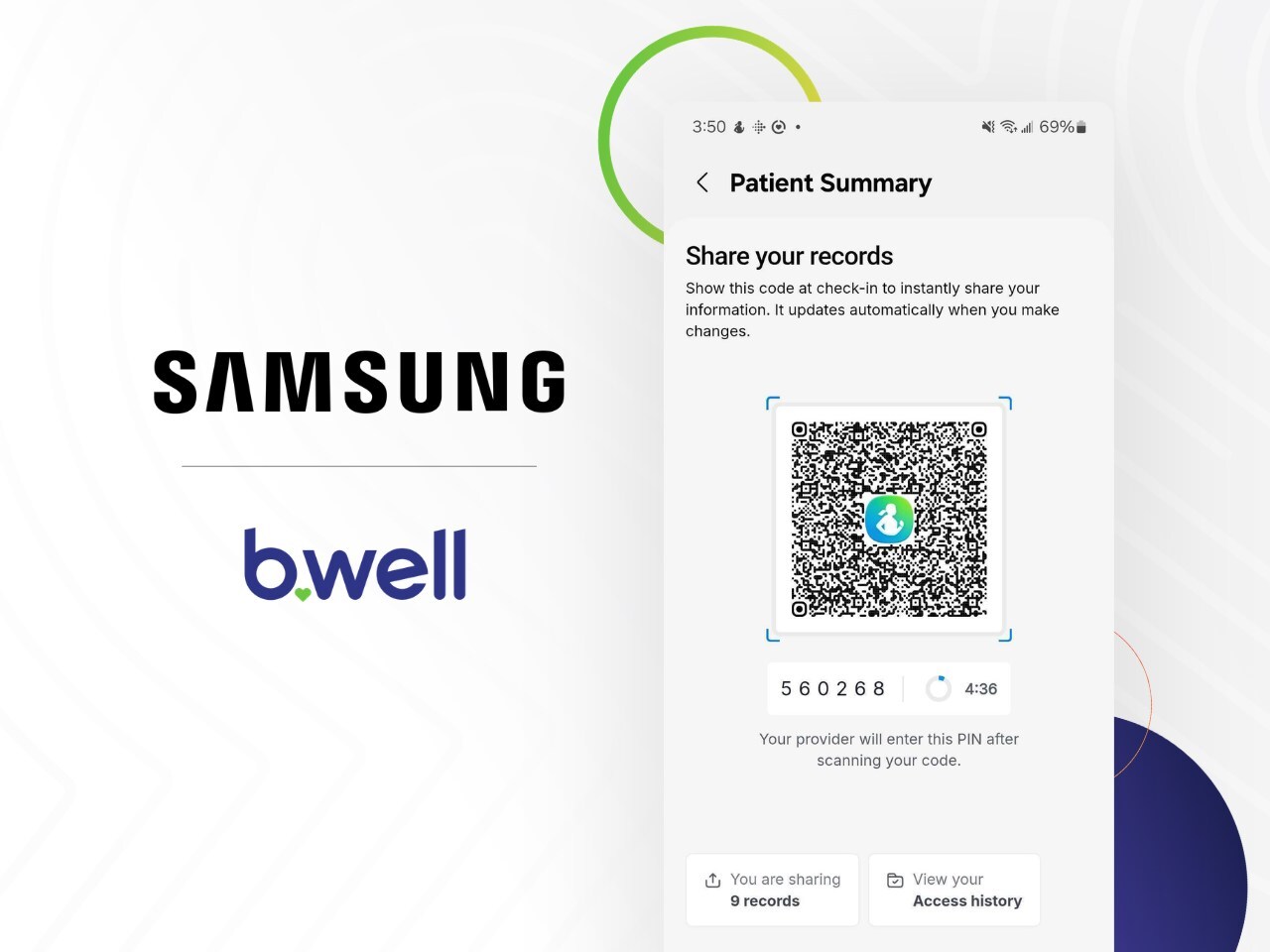
- The Launch: b.well Connected Health and Samsung Electronics have launched an end-to-end integration that turns Samsung Galaxy smartphones into a centralized hub for patient health records, accessible directly via the Samsung Health app.
- The Policy Alignment: The rollout is a direct response to the federal “Kill the Clipboard” initiative led by the Centers for Medicare & Medicaid Services (CMS), which aims to modernize healthcare by eliminating repetitive forms and establishing patient-controlled, portable data.
- The Identity Layer: To ensure security across fragmented health systems, the platform utilizes CLEAR to verify users and issue a reusable digital IAL2 credential.
- The AI Translation: Beyond mere data access, b.well integrates its conversational AI health assistant, bailey™, to translate complex medical jargon into plain language, helping patients understand their diagnoses, prepare for visits, and receive ongoing care nudges.
- The System Architecture: Unlike proprietary, hospital-by-hospital portal integrations, this solution relies on national FHIR standards. It allows health data to move securely from the consumer’s device directly into a provider’s electronic medical record (EHR) without manual entry.
Moving From Policy to Practice
The CMS “Kill the Clipboard” mandate—which gained massive traction throughout 2025—is designed to ensure that medical information follows the patient, rather than remaining trapped inside siloed hospital EHRs.
Samsung and b.well are putting the required infrastructure behind that policy. Through the Samsung Health app, Galaxy users can now securely pull their comprehensive, longitudinal health history onto their local device. When they walk into a participating clinic, they simply grant permission to share that verified data directly into the provider’s clinical workflow. No manual entry, no portal passwords, and no repetitive paperwork.
“Our partnership with b.well shows how mobile technology can connect people, providers, and health records at a national scale,” noted Dr. Hon Pak, Senior Vice President and Head of Digital Health Team at Samsung Electronics.
The Identity and AI Architecture
Interoperability at this scale requires two critical components: absolute trust in the patient’s identity, and the ability for the patient to actually understand the data they are carrying.
To solve the identity problem, the partnership leverages CLEAR to issue a reusable digital IAL2 credential. This ensures that the data being piped from the smartphone into the hospital’s EHR definitively belongs to the individual holding the device, heavily mitigating the risk of medical identity fraud and mismatched records.
To solve the comprehension problem, b.well has embedded its conversational AI, known as bailey™. Giving a patient a raw FHIR (Fast Healthcare Interoperability Resources) bundle of their medical history is essentially useless if they cannot read it. The AI assistant ingests the verified clinical history and acts as a translator, allowing patients to ask natural-language questions about their diagnoses, receive post-visit summaries, and prepare specific questions for their next doctor’s appointment.
“This is the moment interoperability becomes real for people,” said Kristen Valdes, CEO and Founder of b.well. “For years, patients were promised access to their health data but still faced friction at every appointment. Now the experience matches the policy, your health information moves with you.”
