
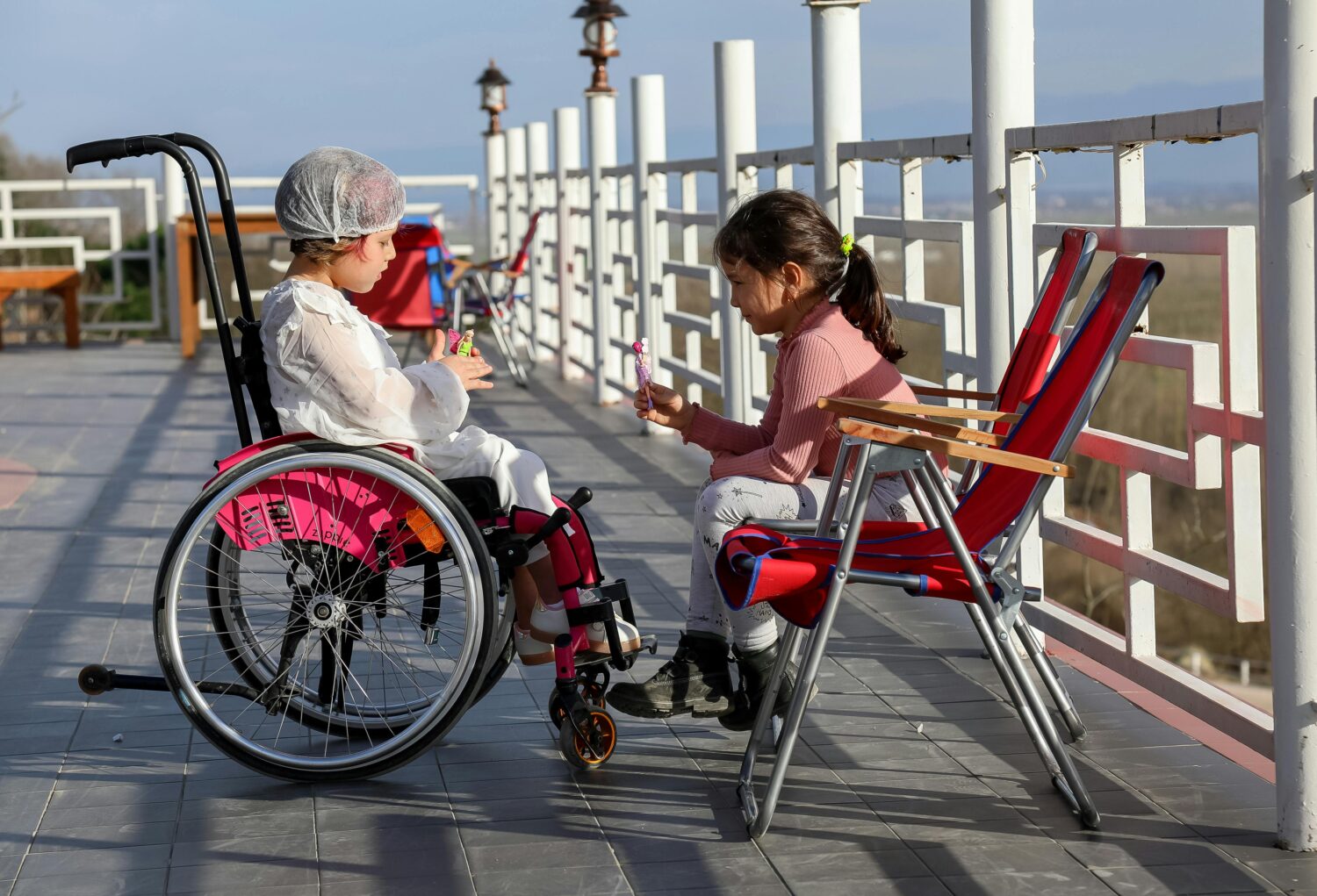
A child’s ability to move through their world shapes play and learning, yet many families still face long waits and uneven access to the right equipment. Assistive mobility tools are now more adjustable and more connected, which helps care-teams match devices to real-life goals.
Mobility support sits inside a bigger story about pediatric complexity. In the United States, around 1 in 4 children are thought to have a special healthcare need, representing between 15 and 18.5 million children, and many families report knock-on effects like missed school-days and reduced caregiver work hours. For clinicians and digital health leaders, that scale makes mobility a practical priority: devices can reduce pain, lower the burden on caregivers for lifting and open doors to participation.
Starting With The Everyday Mobility Kit
When mobility is limited, early wins are often practical ones: getting a child comfortably from home to school, supporting posture during daily activities, reducing strain on caregivers and saving caregiver energy. That is why an adaptive stroller can be a starting point for many families. For example, Shop Home Med offers their Shop Home Med special needs stroller that can be built around positioning needs, head and trunk support and growth-adjustability, while still being suitable for everyday transport and indoor spaces.
These devices sit at the intersection of function and safety. Better support can lower the risk of pressure hot-spots, reduce fatigue and help a child stay engaged for longer. For caregivers, the right set-up can cut the number of transfers and awkward lifts that turn a short, casual outing into a tough task with potentially a long recovery.
It also helps to treat ‘mobility’ as a toolkit, not a single product. For some children, a gait-trainer or stander is part of the plan because the goal is not only transport but also stretching and weight-bearing. In a recent study of children with cerebral palsy, lower-extremity orthoses were the most common device used (75.3%), and device use tended to rise with age, which lines up with what many clinics see in follow-up visits.
Assessment, Fit And Safety In Clinical Practice
A good match starts with a clear, shared goal. Do you want safer community access, better endurance for school-days, fewer falls at home, or a calmer transfer routine? This is where multidisciplinary assessment earns its keep: physical therapy, occupational therapy, orthotics and seating specialists, plus the child and family as equal partners.
Recent national data also shows why ‘range’ matters. The Centers for Disease Control and Prevention’s National Center for Health Statistics reported that: “Among children ages 5–17, just over one-half (50.8%) experienced functioning difficulties (13.0% a lot, 37.8% some).” Those difficulties span domains like walking, fine motor skills, communication and coping with change, so a one-size device category rarely fits.
In practice, fit is the big safety lever. Seating angle, pelvic positioning, footplate height and harness placement can change skin integrity and breathing mechanics, especially for children who spend long stretches in a chair or stroller. Add growth spurts and you have an even tougher assignment. Clinics that build in trial periods and structured check-ins tend to catch issues early, before a child starts avoiding the device or developing pain.
Documentation is the other lever. A short baseline note on endurance, transfer burden and participation can make later re-assessments faster, and it can support prior-authorization conversations when payers ask for outcomes. Mobility Technology Improving a child’s day-to-day life is easier to show when you track a before-and-after in plain language.
Smart And Connected Mobility For Real-Life Routines
The next wave of mobility support is increasingly data-aware. You are seeing more sensor-enabled cushions that map pressure and GPS features that support safety during community use. For some families, even simple prompts can help, like reminders for tilt-in-space schedules.
From a health IT angle, the key question is whether the data changes decisions. A step-count alone might not tell you much if a child uses multiple modes of mobility. But combining information, like time-in-seat, activity bursts and caregiver-reported fatigue, can help a care-team decide whether a device is supporting participation or quietly adding burden.
Connected mobility also raises workflow and privacy questions. If you are capturing mobility-related data, where does it live, who reviews it and how is consent handled when devices are used in schools or shared-care settings? Agreeing those basics upfront avoids a familiar pattern: data that is collected, then ignored.
None of this replaces clinical judgement, but it can sharpen it. When you can access records that show that a child’s seated time spiked during a flare-up, or that a new seat insert reduced pressure peaks, you can make targeted adjustments rather than asking families to rely on memory.
Therapy Pathways That Reinforce Independence
Mobility devices do more than move a child from point A to point B. Used well, they become therapy tools that build independence and confidence. Early powered mobility is a good example. Even short, supervised experiences with child-sized powered devices can support exploration and social interaction, which then feeds language and play.
You also tend to see better outcomes when training is tied to daily routines. Transfers are easier when a seating system matches the child’s posture needs. Walking practice can be more motivating when a gait-trainer is used to reach a preferred activity. The goal is to avoid separating ‘therapy time’ from ‘life time’, because real progress is built through repetition, ideally that continues outside and after therapy.
This is where home-based support can be a force-multiplier. In 7 Breakthroughs Making Home-Based Physiotherapy More Effective Than Ever, HIT Consultant points to adaptive equipment and home modifications as part of safer, more effective rehab at home. For families of children with special needs, a clearer home set-up can make mobility practice less stressful and more consistent.
Evidence also suggests you should plan for training as carefully as you plan for hardware. The cerebral palsy mobility study found that the chance of becoming a wheelchair user rose as children got older, and device needs tended to shift over time. That kind of change is predictable, which means you can revisit goals and teach new skills before a family hits a crisis point. Mobility Technology Improving progress depends on that ongoing coaching.
Making Access Sustainable Across Home, School And Community
The hardest part is often not the technology. It is access: coverage rules, documentation burden, repair delays and the simple reality that children outgrow equipment. In pediatric populations, insurance mix shapes what families can obtain. In the cerebral palsy mobility study, 83.2% of children had Medicaid coverage, which underlines how central public programs are to real-world mobility access.
Families also carry hidden costs in time and work. In a recent national survey of children’s health, it was found that more than 1 in 3 caregivers of children with functional limitations reported leaving a job or reducing hours in the past year, due to the child’s health. That context can help clinicians frame mobility support as part of a broader plan to stabilise family routines and reduce caregiver strain.
If you are trying to make your pathway more reliable, four practical moves tend to help:
- Use a simple template for your notes so it is clear what the child needs and why
- Track goals families care about, like getting to school more often or going out more
- Plan ahead for growth and repairs, including who to call and what to do while you wait
- Talk to schools early about safe transfers, charging and where the equipment will be stored
Finally, keep your definition of success wide. The best outcomes can look like fewer missed school-days, smoother transfers, calmer bedtimes and more spontaneous outings, because a child was less exhausted from compensating all day. Over time, the devices will keep evolving, but the aim stays simple: give children more control over where they go and how they join in. With thoughtful assessment, connected supports and a realistic plan for access, Mobility Technology Improving quality of life becomes visible in the small moments that add up.
