

• Skip to main content
  • Skip to secondary menu
  • Skip to primary sidebar
  • Skip to secondary sidebar
  • Skip to footer

How eClinicalWorks Agentic AI Is Helping Revenue Cycle Leaders Improve Financial Performance
  • Opinion
  • Health IT
    • Behavioral Health
    • Care Coordination
    • EMR/EHR
    • Interoperability
    • Patient Engagement
    • Population Health Management
    • Revenue Cycle Management
    • Social Determinants of Health
  • Digital Health
    • AI
    • Blockchain
    • Precision Medicine
    • Telehealth
    • Wearables
  • Life Sciences
  • Investments
  • M&A
  • Value-based Care
    • Accountable Care (ACOs)
    • Medicare Advantage

Critical Medical Device Risks Continue to Threaten Hospital Security & Patient Safety

by Jasmine Pennic 01/25/2022 Leave a Comment

  • LinkedIn
  • Twitter
  • Facebook
  • Email
  • Print
Critical Medical Device Risks Continue to Threaten Hospital Security & Patient Safety

What You Should Know:

– After a year of unprecedented ransomware attacks on hospitals and healthcare systems – and with healthcare now the #1 target for cybercriminals – critical medical device risks in hospital environments continue to leave hospitals and their patients vulnerable to cyber-attacks and data security issues.

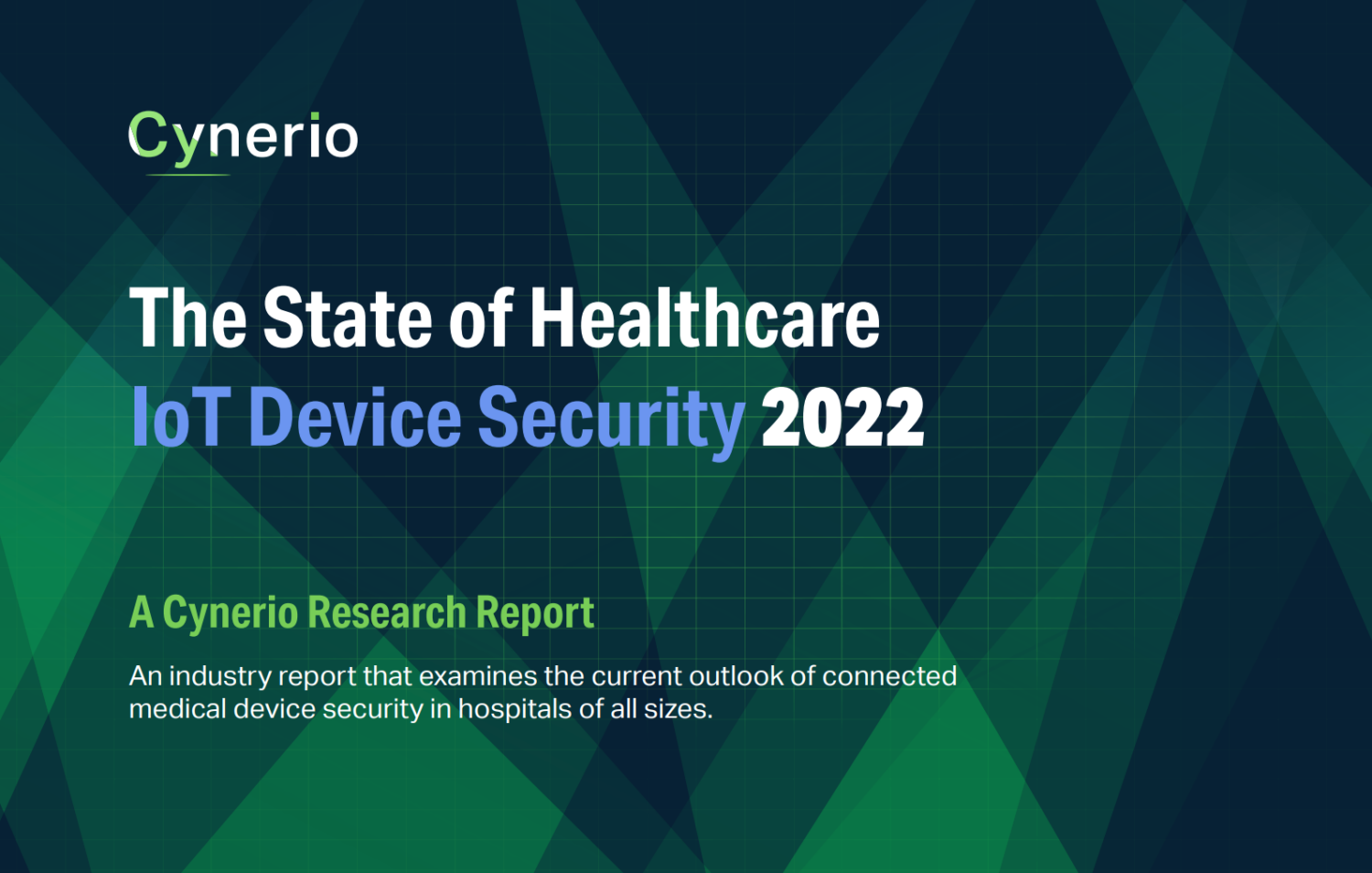
– New data released by Cynerio, a leading provider of healthcare IoT cybersecurity and asset management, in its 2022 State of Healthcare IoT Device Security Report shows that steps the cybersecurity industry has taken to date to protect hospitals and health systems are not enough. 

State of Healthcare IoT Device Security

Cynerio, found that security threats related to IoT and related devices within healthcare environments have remained sorely under-addressed, despite increased investments in healthcare cybersecurity. Data shows that 53% of connected medical devices and other IoT devices in hospitals have a known critical vulnerability. Additionally, a third of bedside healthcare IoT devices – which patients most depend on for optimal health outcomes – have an identified critical risk. If attacked, these vulnerabilities could impact service availability, data confidentiality, or patient safety – with potentially life-threatening consequences for patient care.

Other key findings of the report include:

– IV Pumps Are the Most Common Healthcare IoT Device and Possess a Lion’s Share of Risk: IV pumps make up 38% of a hospital’s typical healthcare IoT footprint and 73% of those have a vulnerability that could jeopardize patient safety, data confidentiality, or service availability if it were to be exploited by an adversary. 

– Healthcare IoT Running Outdated Windows Versions Dominate Devices in Critical Care Sectors: Devices running versions older than Windows 10 account for the majority of devices used by pharmacology, oncology, and laboratory devices, and make up a plurality of devices used by radiology, neurology, and surgery departments, leaving patients connected to these devices vulnerable. 

– Default Passwords Remain a Common Risk: The most common IoMT and IoT device risks are connected to default passwords and settings that attackers can often obtain easily from manuals posted online, with 21% of devices secured by weak or default credentials.

– Network Segmentation Can Reduce Critical IoMT and IoT Risk: Network segmentation can address over 90 percent of the critical risks presented by connected medical devices in hospitals and is the most effective way to mitigate most risks presented by connected devices.  

“Healthcare is a top target for cyber attacks, and even with continued investments in cybersecurity, critical vulnerabilities remain in many of the medical devices hospitals rely on for patient care,” said Daniel Brodie, CTO and co-founder, Cynerio. “Visibility and risk identification are no longer enough. Hospitals and health systems don’t need more data – they need advanced solutions that mitigate risks and empower them to fight back against cyber attacks, and as medical device security providers it’s time for all of us to step up. With the first ransomware-related fatalities reported last year, it could mean life or death.” 

For additional data and analysis, download a full version of the State of Healthcare IoT Device Security Report

  • LinkedIn
  • Twitter
  • Facebook
  • Email
  • Print

Tagged With: Medical Device, Medical Device Cybersecurity, Medical Devices, patient safety

Tap Native

Get in-depth healthcare technology analysis and commentary delivered straight to your email weekly

Reader Interactions

Primary Sidebar

Subscribe to HIT Consultant

Latest insightful articles delivered straight to your inbox weekly.

Submit a Tip or Pitch

Featured Insights

How eClinicalWorks Agentic AI Is Helping Revenue Cycle Leaders Improve Financial Performance

Most-Read

Innovaccer-CHIME 2030 Survey Reveals AI Will Automate Nearly Two-Thirds of Administrative Work and Do 3x the Work With the Same Staff

Innovaccer-CHIME 2030 Survey Reveals AI Will Automate Nearly Two-Thirds of Administrative Work and Do 3x the Work With the Same Staff

CB Insights’ 2026 Digital Health 50 Reveals How Agentic AI Is Becoming the Clinical Provider and Medication Access Engine

Oura Acquires Counsel Health for $625M: Scaling Continuous Biometrics into On-Demand Medical Care

M&A: Oura Acquires Counsel Health for $625M: Scaling Continuous Biometrics into On-Demand Medical Care

WittKieffer 2026 Healthcare CIO Survey: 82% Sit on Executive Teams, Yet Only 36% Have Formal Succession Plans

WittKieffer 2026 Healthcare CIO Survey: 82% Sit on Executive Teams, Yet Only 36% Have Formal Succession Plans

CVS Rebrands Health Services Segment, Launches Model for Retail Pharmacy Reimbursement

CVS Health Formalizes Tax-Free Split-Off to Carve Out CVS Pharmacy by 2028

SAMHSA and ONC Invest $20M in Behavioral Health IT Initiative

ONC Finalizes HTI-5 Deregulatory Rule to Cut $1.55B in Health IT Compliance and Accelerate FHIR APIs

Redesign Health Merges with Sheba Medical Center’s ARC Global and Agrees to Acquire AVIA

Redesign Health Merges with Sheba Medical Center’s ARC Global and Agrees to Acquire AVIA

Sword Acquires Headspace in All-Cash Deal Worth Up to $300M to Unify Physical and Mental AI Care

M&A: Sword Acquires Headspace in All-Cash Deal Worth Up to $300M to Unify Physical and Mental AI Care

M&A: Francisco Partners to Acquire Weave in $650M Take-Private Deal

M&A: Francisco Partners to Acquire Weave in $650M Take-Private Deal

Epic Launches One-Click Care Everywhere Diagnostic Image Exchange

Epic Launches One-Click Care Everywhere Diagnostic Image Exchange

Secondary Sidebar

Footer

Company

  • About Us
  • 2026 Editorial Calendar
  • Advertise with Us
  • Reprints and Permissions
  • Op-Ed Submission Guidelines
  • Contact
  • Subscribe

Editorial Coverage

  • Opinion
  • Health IT
    • Care Coordination
    • EMR/EHR
    • Interoperability
    • Population Health Management
    • Revenue Cycle Management
  • Digital Health
    • Artificial Intelligence
    • Blockchain Tech
    • Precision Medicine
    • Telehealth
    • Wearables
  • Startups
  • Value-Based Care
    • Accountable Care
    • Medicare Advantage

Connect

Subscribe to HIT Consultant Media

Latest insightful articles delivered straight to your inbox weekly

Copyright © 2026. HIT Consultant Media. All Rights Reserved. Privacy Policy |