
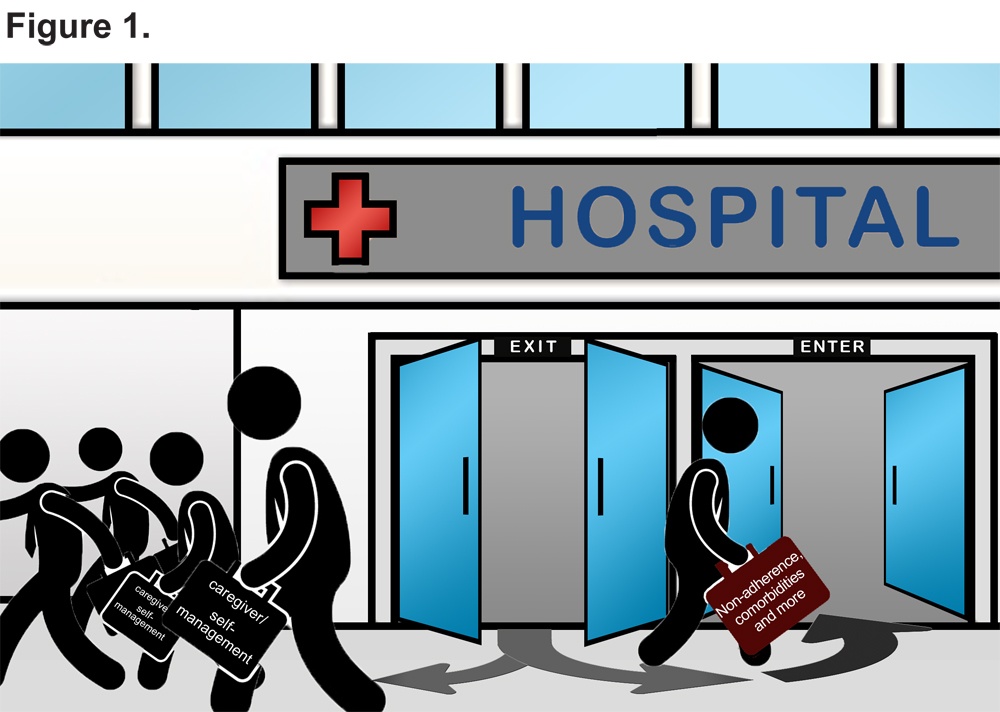
Partners Connected Health and Hitachi, Ltd., today announced a collaboration to develop a new artificial intelligence (AI) tool that can predict with high accuracy, the risk of hospital readmissions within 30 days for patients with heart failure. The tool will help identify appropriate patients to participate in a readmission prevention program study following hospital discharge, and can explain the reason why patients were identified as being at high risk.
Hospital Readmission Prediction Study & Results
As part of the study, the Partners Connected Health Innovation team simulated the readmission prediction program among heart failure patients participating in the Partners Connected Cardiac Care Program (CCCP), a remote patient monitoring and education program designed to improve the management of heart failure patients at risk for hospitalization.
These results were compared to data from approximately 12,000 heart failure patients hospitalized and discharged from the Partners HealthCare hospital network in 2014 and 2015. The analysis showed the prediction algorithm achieved a high accuracy of approximately AUC 0.71, and can significantly reduce the number of patient readmissions. (AUC, area under the curve, is a measure of prediction model performance with an ideal value range from 0 to 1.) As a result, approximately an additional US $7,000 savings per patient per year among the cohort of CCCP patients can be expected.
Applying AI to Reduce Hospital Readmissions
The 30-day readmission rate is regarded as one of the important indicators in hospital management, and can carry significant penalties for hospitals via the US Centers for Medicare and Medicaid (CMS) as part of the Affordable Care Act (ACA). Artificial intelligence defined as enabling machines to explain their decisions and actions to human users, and enabling them to understand, appropriately trust and effectively manage AI tools, while maintaining a high level of prediction accuracy. Hitachi’s new AI technology uses deep learning to construct this prediction model. With conventional deep learning models, it is difficult for users to understand why the AI predicted a particular outcome.
This presents a challenge for its adoption in healthcare. To address this problem, Tokyo, Japan-based Hitachi developed a technology for risk prediction with analyzing the results presented by deep learning and extracting the several dozens of actionable factors for each patient from the vast amount of data collected from heart failure patients. These are elements familiar to clinicians and can support medical decision-making in clinical practice. Through a standard statistical approach based on this risk prediction model, the extracted factors were used to calculate the risk of hospital readmission, and the relevance of the factors was calculated. Thus, this explainable AI technology can enhance prediction accuracy and the quality of medical decision-making.
As part of the collaboration, Hitachi and the Partners Connected Health Innovation team will jointly conduct a prospective study, which evaluates the prediction program by clinicians, and study how to integrate this within clinical workflows. By using this new AI, Hitachi will provide solutions for the medical field, including solutions for insurance and pharmaceutical companies, emergency services, and other healthcare services where prediction-based on medical data can be utilized.
“Traditional machine learning can help us predict events, but as end-users, we can’t tell why the machine is predicting something a certain way,” said Kamal Jethwani, MD, MPH, Senior Director, Partners Connected Health Innovation in a statement. “With this innovation, doctors and nurses using the algorithm will be able to tell exactly why a certain patient is at high risk for hospital admission, and what they can do about it. We want to enable our providers to act on this information, which is a step beyond the state-of-the-art today, in terms of machine learning algorithms.”
Featured image credit: COPD Foundation
