
• Skip to main content
  • Skip to secondary menu
  • Skip to primary sidebar
  • Skip to secondary sidebar
  • Skip to footer

  • Opinion
  • Health IT
    • Behavioral Health
    • Care Coordination
    • EMR/EHR
    • Interoperability
    • Patient Engagement
    • Population Health Management
    • Revenue Cycle Management
    • Social Determinants of Health
  • Digital Health
    • AI
    • Blockchain
    • Precision Medicine
    • Telehealth
    • Wearables
  • Life Sciences
  • Investments
  • M&A
  • Value-based Care
    • Accountable Care (ACOs)
    • Medicare Advantage

Study: Telehealth-based Programs for Stroke Therapy Accelerates Recovery

by Fred Pennic 05/11/2016 Leave a Comment

  • LinkedIn
  • Twitter
  • Facebook
  • Email
  • Print

Constant Therapy Raises $2M for Customized Brain Rehab Apps

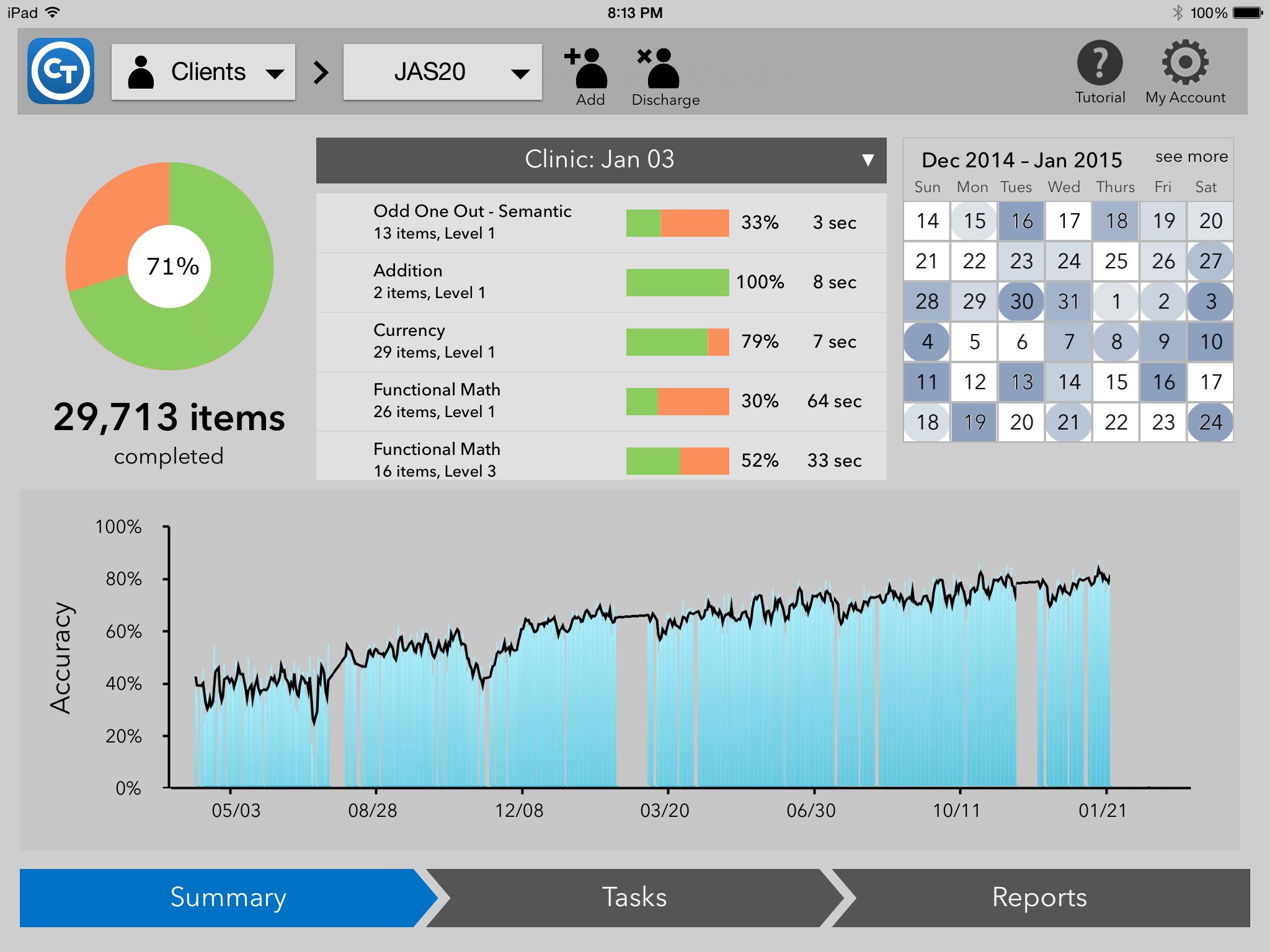
Stroke survivors engaged in telehealth-based stroke therapy programs received 5 times more therapy than patients receiving in­-clinic therapy alone, according to an internal study conducted by Constant Therapy, which provides a science­-based, customized brain rehabilitation software program. After analyzing more than 20 million therapy exercises completed by users on its mobile platform, the company found that stroke patients experience greater improvement in both cognitive and speech accuracy and processing speed during their recovery using telehealth-based programs.

Because therapy is available for use on an iPad, Android or Kindle tablet device, rehabilitation exercises that are assigned and practiced during an in-clinic session can be continued at home. As the person continues to practice, a speech and language pathologist — or the technology itself — can advance an individual through a series of more challenging exercises to help improve memory, attention and speaking.

Other key findings from Constant Therapy’s study, which analyzed more than 100 million data points, include:

– Accuracy in language and cognitive exercises improved 15% in individuals with severe impairments by completing 100 exercises, and 40% for those completing 500 or more of the same exercises.

– Processing speed in language and cognitive exercises improved more than 20% with 100 items completed, and over 80% after completing more than 500 exercises

That same data, now available at scale, enables speech-­language pathologists and other healthcare clinicians to understand and predict what brain therapy exercises will be most effective for individual stroke patients. The company’s NeuroPerformance EngineTM, an advanced analytics engine, analyzes patient performance and automatically personalizes therapy based on their specific performance and needs.

“Combining big data and mobile technology allows us to collect more and better data throughout the rehabilitation process than was ever possible before,” said Keith Cooper, CEO of Constant Therapy. “The more data we collect, the better our algorithms become and the more we can recommend and deliver precision medicine. It’s really the dream of personalized healthcare.”

  • LinkedIn
  • Twitter
  • Facebook
  • Email
  • Print

Tagged With: Constant Therapy

Tap Native

Get in-depth healthcare technology analysis and commentary delivered straight to your email weekly

Reader Interactions

Primary Sidebar

Subscribe to HIT Consultant

Latest insightful articles delivered straight to your inbox weekly.

Submit a Tip or Pitch

Featured Research Report

2026 Best in KLAS Awards: The Full List of Software & Services Winners

Most-Read

The "Platform" Squeeze: Epic Releases Native AI Charting, Putting Venture-Backed Scribes on Notice

The “Platform” Squeeze: Epic Releases Native AI Charting, Putting Venture-Backed Scribes on Notice

Analysis: Oracle Cerner’s Plans for a National EHR

Oracle May Cut 30k Jobs and Sell Cerner to Fund $156B OpenAI Deal

The $1.9B Exit: Why CommonSpirit is Insourcing Revenue Cycle and Tenet is Betting Big on Conifer AI

The $1.9B Exit: Why CommonSpirit is Insourcing Revenue Cycle and Tenet is Betting Big on Conifer AI

KLAS 2026 Rankings: Aledade and Guidehealth Named Top VBC Enablement Firms

KLAS 2026 Rankings: Aledade and Guidehealth Named Top VBC Enablement Firms

Beyond the Hype: New KLAS Data Validates the Financial and Clinical ROI of Ambient AI

Beyond the Hype: New KLAS Data Validates the Financial and Clinical ROI of Ambient AI

Anthropic Debuts ‘Claude for Healthcare’ and Opus 4.5 to Engineer the Future of Life Sciences

Anthropic Debuts ‘Claude for Healthcare’ and Opus 4.5 to Engineer the Future of Life Sciences

OpenAI Debuts ChatGPT Health: A ‘Digital Front Door’ That Connects Medical Records to Agentic AI

OpenAI Debuts ChatGPT Health: A ‘Digital Front Door’ That Connects Medical Records to Agentic AI

From Genes to Hackers: The Hidden Cybersecurity Risks in Life Sciences

From Genes to Hackers: The Hidden Cybersecurity Risks in Life Sciences

Utah Becomes First State to Approve AI System for Prescription Renewals

Utah Becomes First State to Approve AI System for Prescription Renewals

NYC Health + Hospitals to Acquire Maimonides in $2.2B Safety Net Overhaul

NYC Health + Hospitals to Acquire Maimonides in $2.2B Safety Net Overhaul

Secondary Sidebar

Footer

Company

  • About Us
  • 2026 Editorial Calendar
  • Advertise with Us
  • Reprints and Permissions
  • Op-Ed Submission Guidelines
  • Contact
  • Subscribe

Editorial Coverage

  • Opinion
  • Health IT
    • Care Coordination
    • EMR/EHR
    • Interoperability
    • Population Health Management
    • Revenue Cycle Management
  • Digital Health
    • Artificial Intelligence
    • Blockchain Tech
    • Precision Medicine
    • Telehealth
    • Wearables
  • Startups
  • Value-Based Care
    • Accountable Care
    • Medicare Advantage

Connect

Subscribe to HIT Consultant Media

Latest insightful articles delivered straight to your inbox weekly

Copyright © 2026. HIT Consultant Media. All Rights Reserved. Privacy Policy |