
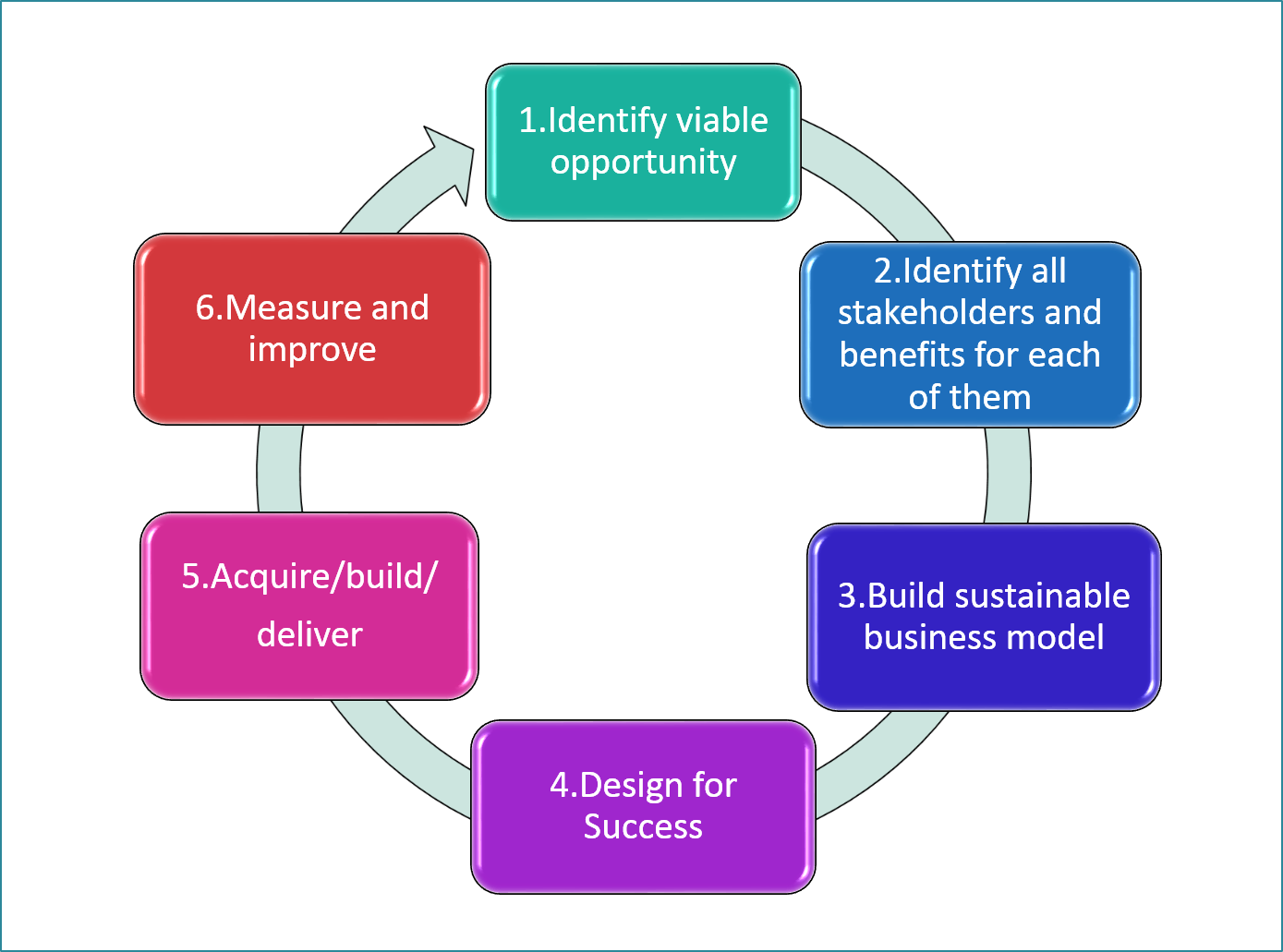
New methodology created by Tony Kane Consulting Ltd outlines six key stages of a successful mhealth project.
Typically, mHealth has been held back by a lack of insight into the necessary factors to ensure a successful mHealth project. To address this issue, Tony Kane Consulting Ltd has developed a structured repeatable methodology supported by real life case studies and practical toolkits to help project sponsors successfully build the critical elements for success into their plans and deliver sustainable success.
The “6 Steps to mHealth Success” methodology is delivered in the form of personal coaching or training events which will deliver the necessary confidence and skills to all mHealth project participants, whether they are payers, providers, patients, pharma and medical device companies or technology providers.
WHY THIS METHODOLOGY IS NEEDED?
The mHealth spaced is currently characterized by:
– On the supply side, thousands of technology companies, large and small, vying to establish themselves with sustainable revenues. There has been no shortage of backers so far but investors are starting to question when the real return will materialise
– On the demand side, we have a large number of potential mHealth users, across payers, providers, patient groups and pharma companies, but in general they are unclear and uncomfortable with the benefits of mHealth and where it really fits in. Instead they just see an ocean of wearables and apps and feel over-whelmed.
Given this inefficient, immature market it was clear to Tony Kane that all stakeholders would benefit from a structured, formal methodology to guide them through their choices in a more logical manner, to move away from this ‘technology looking for a problem’ scenario. That’s why the firm codified all their experiences and insights into this toolset, which they believe is universally applicable in planning mHealth projects, across all markets and geographies.
What are the ‘6 Steps’?
The ‘6 Steps’ methodology provide a rational, top-down approach:
1. Identify a viable target – is there a real problem or compelling event to address? How much would an mHealth solution support a patient or HCP in the ‘job they are trying to do’ – for example there’s no point measuring someone’s weight if their real problem is simply getting their medicines delivered.
2. Identify all stakeholders and benefits for each of them – probably the most important step of the process. Can we identify all stakeholders and users, not just the obvious ones like HCP or patient – what about pharmacists, carers, payers? More importantly do they all win with our solution – because if any one of them loses, they will certainly discontinue use and your project will fail.
3. Build a sustainable business model – too many mHealth projects have kicked off as pilots with a limited amount of funding, in the naive hope that the pilot will inevitably bring in further funding. Sustainability and funding needs to be planned in from day one – and if you can’t identify someone who would fund the service in the long term, then it probably isn’t worth building.
4. Design for success – there are so many options for the functionality that you could insert into an mHealth service, such as monitoring, adherence, patient support, education, behavioral change, gamification, connected devices – but which are the right ones to support your users in their objectives? Equally if you can’t make the user experience really simple then you will fail.
5. Acquire/build/deliver – only when you know the answers to the previous steps should you start to consider technology solutions to support your project, and most importantly whether to build in-house (advantages of control) versus acquire an external solution (advantages of speed). The commonest mistake we see in mHealth is that sponsors dive in at this stage, prompted by seeing some hot new technology, without having gone through the rigour of the pre-requisite stages.
6. Measure and improve – assuming you’re serious about building a sustainable service with a long lifespan, you need to future-proof your project. What measures do I need to gather to deliver ongoing evidence that this is working, and how will I use that evidence to refine my service over time? Too often we see sponsors deliver a project then scramble later to gather some evidence – build those hooks in from the outset and you make life a lot easier.
Investing in a sensible up-front planning phase will reap huge dividends and avoid expensive mistakes in planing your future mHealth journey. Straight away stakeholders will be prioritizing projects according to the best ROI, designing around the needs of your users and not around the technology, while focusing on sustainability and solid economics rather than burning yourself out on pilots that go nowhere. Lastly, this method also embeds a cross-stakeholder, co-creation approach which avoids the tendency to silo-building. No one party can succeed on their own in health, and mHealth is no different.
For more information about the firm’s methodology and services, email info@tonykaneconsulting.com
