
What You Should Know
- Healthcare at-home technology and clinical platform Abby Care raises an $82M Series C financing round led by Transformation Capital, with participation from new investors CVS Health Ventures, Frist Cressey Ventures, and Pivotal Ventures along with existing investors Khosla Ventures, Thrive Capital, and Sequoia Capital.
- Directly addresses the critical national shortage of home health aides and direct care workers: enables family members of vulnerable individuals to become formally trained, certified, and compensated paid caregivers.
- Aligns with payer economics: helps commercial, Medicare Advantage, and Medicaid managed care health plans keep members with complex, long-term care needs safely in home environments, directly avoiding expensive emergency department admissions and premature long-term nursing home institutionalization.
Operating Model: Clinical Governance and Algorithmic Fraud Prevention
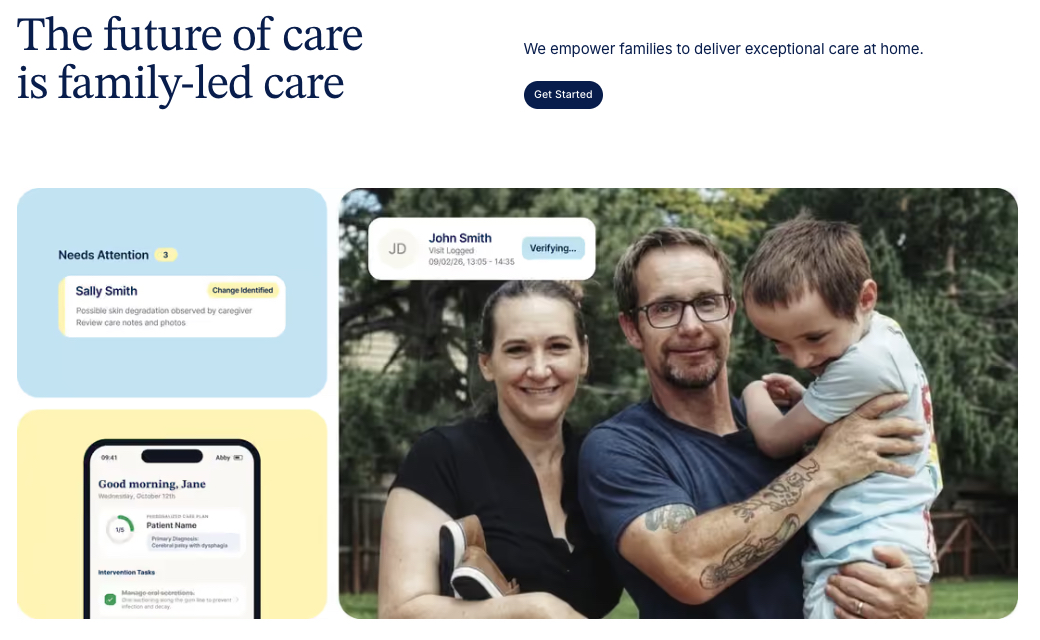
Abby Care converts an informal, unmonitored caregiving relationship into an integrated, compensated healthcare delivery channel. The platform addresses health plans’ primary operational risks through a three-part framework:
- Training and Credentialing Infrastructure: Abby Care screens, onboard, trains, and certifies family members as accredited caregivers within state-specific regulatory and Medicaid home-and-community-based services (HCBS) guidelines.
- Continuous RN Clinical Oversight: Rather than leaving family members unmonitored, the platform assigns dedicated Registered Nurse (RN) Care Managers to oversee each care plan, review biometrics and longitudinal status updates, and proactively intervene before clinical deteriorations escalate into emergency department visits.
- Automated Program Integrity and Auditability: The proprietary software stack continuously captures real-time documentation of care delivery within the home. By utilizing automated verification tools, Abby Care provides health plans with immutable digital audit trails that mitigate fraudulent time reporting and non-compliance, solving a historic point of friction in Medicaid self-directed programs.
Formalizing the Shadow Healthcare Workforce
Traditional home care agencies cannot recruit or retain sufficient direct care staff to satisfy authorized Medicaid hours, leaving billions in approved care undelivered. By credentialing the family member who is already physically present, Abby Care unlocks immediate, durable workforce capacity that does not compete in the open labor market.
The direct participation of CVS Health Ventures and Frist Cressey Ventures underscores that payers view compliance technology as the prerequisite for scaling at-home care. With Medicaid program integrity under intense state and federal scrutiny, platforms that prove that paid care was legitimately rendered in the home will win preferred-network status. The financial burden of long-term nursing home placements represents one of the largest single budget line items for state Medicaid programs. Equipping family caregivers with professional clinical guidance and digital escalation pathways keeps complex members stable in lower-cost home settings for longer periods.
“Abby Care was built around the thesis: when you leverage the person who already knows a family member best and is consistently there for them, and combine that with clinical oversight, technology, and real-time visibility, you can deliver care that is more proactive and preventative than other traditional care models,” said Havi Nguyen, Founder and CEO of Abby Care.