
• Skip to main content
  • Skip to secondary menu
  • Skip to primary sidebar
  • Skip to secondary sidebar
  • Skip to footer

  • Opinion
  • Health IT
    • Behavioral Health
    • Care Coordination
    • EMR/EHR
    • Interoperability
    • Patient Engagement
    • Population Health Management
    • Revenue Cycle Management
    • Social Determinants of Health
  • Digital Health
    • AI
    • Blockchain
    • Precision Medicine
    • Telehealth
    • Wearables
  • Life Sciences
  • Investments
  • M&A
  • Value-based Care
    • Accountable Care (ACOs)
    • Medicare Advantage

Teladoc Health Unveils Teladoc One to Deliver Connected, Adaptive Virtual Care

by Jasmine Pennic 07/23/2026 Leave a Comment

  • LinkedIn
  • Twitter
  • Facebook
  • Email
  • Print
Teladoc Health Unveils Teladoc One to Deliver Connected, Adaptive Virtual Care

What You Should Know

  • Teladoc Health has introduced Teladoc One, an integrated virtual care practice designed to replace fragmented, single-disease point solutions with a connected, person-centric platform.
  • Built over two years, Teladoc’s proprietary Pulse engine aggregates clinical history with claims, pharmacy records, connected devices, medical records, and eligibility data to power early risk detection and care routing.
  • Demonstrating high confidence in its clinical outcomes, Teladoc Health is placing 100% of its fees at risk, directly tying payment performance to population-wide clinical metrics and total cost of care reductions.
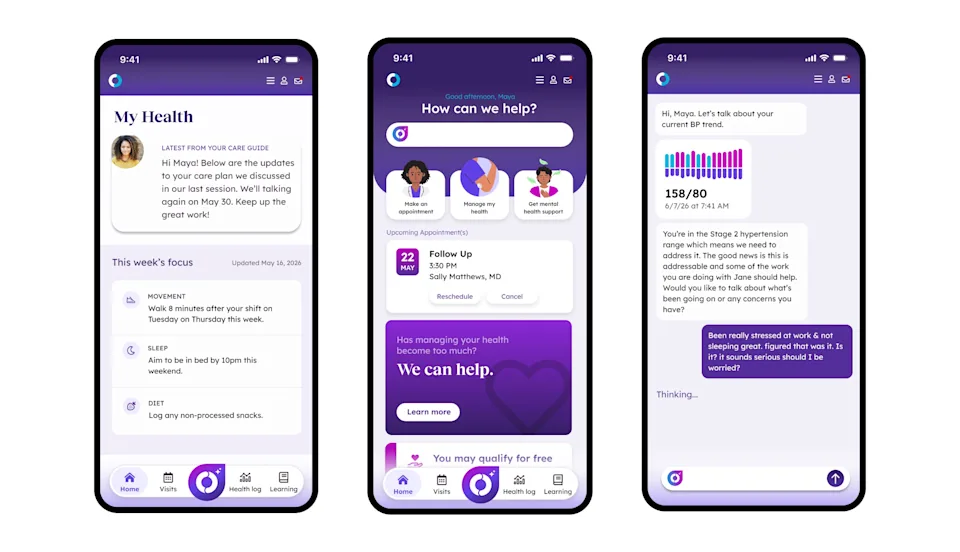
  • Patients receive care from a multidisciplinary team (clinicians, dietitians, health coaches, mental health therapists), a human Care Guide for local network coordination, and always-on AI support between visits.
  • Programs under Teladoc One will launch with select enterprise clients in September 2026, initially focusing on cardiometabolic health, ahead of broader availability in January 2027.

Beyond Point-Solution Fatigue: How Teladoc One Rebuilds Virtual Care Around a “Population of One”

The employer health benefits, health plan management, and virtual care sectors face severe point-solution fatigue. Over the past decade, digital health expanded through niche, disease-specific apps—forcing the average U.S. adult to navigate six separate health applications and spend eight hours each month coordinating their own healthcare.

With three in four Americans managing at least one chronic condition driving $4.7 trillion in annual healthcare spending, self-insured employers and health plans can no longer afford to manage fragmented, overlapping digital vendors.

Rather than driving measurable savings, condition-specific apps created operational silos where clinical context, medication adjustments, and specialist referrals were lost. To unify virtual care into an adaptive system of record, Teladoc Health has announced Teladoc One.

Built on a foundation of over 100 million virtual visits across primary care, behavioral health, chronic disease, and acute care, Teladoc One transitions virtual health away from episodic transactions toward a single, continuous care journey.


The Pulse Engine and Multidisciplinary AI Workflows

At the technological core of Teladoc One is the Pulse intelligence engine—the culmination of two years of backend infrastructure unification. Pulse synthesizes longitudinal health data to deliver proactive risk signaling across three integrated support layers:

  • The Unified Pulse Engine: Pairs decades of clinical history with real-time data from health information exchanges (HIEs), pharmacy claims, connected biometric devices, and eligibility records to identify emerging health risks early.
  • Multidisciplinary Clinical Teams: Connects board-certified physicians, mental health therapists, certified health coaches, registered dietitians, and specialists inside a single care chassis.
  • Human Care Guides: Dedicated navigators who manage care plans, coordinate in-network physical referrals, exchange clinical notes with local primary care doctors, and ensure follow-through.
  • Always-On AI Engagement: Conversational AI agents that engage members between clinical touchpoints to send reminders, track symptoms, assist with scheduling, and surface high-priority alerts to the human clinical team.

“The industry’s current approach of treating one disease at a time isn’t the answer. Teladoc One changes that,” stated Kelly Bliss, President of U.S. Group Health at Teladoc Health. “Importantly for our buyers, Teladoc One raises the bar on accountability, delivering a model that answers to outcomes.”

  • LinkedIn
  • Twitter
  • Facebook
  • Email
  • Print

Tagged With: Artificial Intelligence, Virtual Care

Tap Native

Get in-depth healthcare technology analysis and commentary delivered straight to your email weekly

Reader Interactions

Primary Sidebar

Subscribe to HIT Consultant

Latest insightful articles delivered straight to your inbox weekly.

Submit a Tip or Pitch

Featured Insights

Aligning IT & Clinical Teams: How to Reduce Friction and Improve Communication

Most-Read

M&A: Tempus AI to Acquire Personalis for $1.5B to Expand Precision Oncology and MRD Monitoring

M&A: Tempus AI to Acquire Personalis for $1.5B to Expand Precision Oncology and MRD Monitoring

Why Brain Health Is Entering Its Infrastructure Era

Brain Health’s Infrastructure Era: Proving Clinical Outcomes with Integrated Neuromotor Tracking

Why Catholic Health Inked a $500M Care Alliance with GE HealthCare to Automate Outpatient Triage

Catholic Health Inks $500M Care Alliance with GE HealthCare to Automate Outpatient Triage

KLAS Global HIT Trends 2026 Report: Artificial Intelligence Becomes the Top Investment Priority

KLAS Global HIT Trends 2026 Report: Artificial Intelligence Becomes the Top Investment Priority

Optum Partners with Anthropic to Deploy Claude Across Healthcare Claims and Revenue Workflows

Optum Partners with Anthropic to Deploy Claude Across Healthcare Claims and Revenue Workflows

Rock Health H1 2026 Digital Health Funding Recap: Startups Hit $7.4B in Venture Rebound

Rock Health H1 2026 Digital Health Funding Recap: Startups Hit $7.4B in Venture Rebound

M&A: ResMed to Sell MatrixCare Business to Frazier Healthcare Partners for $450M

M&A: ResMed to Sell MatrixCare Business to Frazier Healthcare Partners for $450M

The Real Risk in Healthcare AI Isn’t the Model. It’s the Data. 

Clinical Data Fidelity: The Real Blindspot in Healthcare AI Strategy

KLAS 2026 EHR Market Share Report: Epic Gains as Oracle Health Faces Third Year of Losses

KLAS 2026 EHR Market Share Report: Epic Gains as Oracle Health Faces Third Year of Losses

Qualtrics Acquires Press Ganey Forsta for $6.75B to Create the Most Comprehensive AI Experience Platform

M&A: Qualtrics Completes $6.75B Acquisition of Press Ganey Forsta

Secondary Sidebar

Footer

Company

  • About Us
  • 2026 Editorial Calendar
  • Advertise with Us
  • Reprints and Permissions
  • Op-Ed Submission Guidelines
  • Contact
  • Subscribe

Editorial Coverage

  • Opinion
  • Health IT
    • Care Coordination
    • EMR/EHR
    • Interoperability
    • Population Health Management
    • Revenue Cycle Management
  • Digital Health
    • Artificial Intelligence
    • Blockchain Tech
    • Precision Medicine
    • Telehealth
    • Wearables
  • Startups
  • Value-Based Care
    • Accountable Care
    • Medicare Advantage

Connect

Subscribe to HIT Consultant Media

Latest insightful articles delivered straight to your inbox weekly

Copyright © 2026. HIT Consultant Media. All Rights Reserved. Privacy Policy |