
What You Should Know
- The Milestone: XCath, a neuro-endovascular robotics company, successfully completed the world’s first telerobotic stroke procedure on a human patient.
- The Geography: The procedure, dubbed “Operation Robo Angel,” was performed by neurosurgeon Dr. Vitor Mendes Pereira operating from a control station in Santiago, Panama. The patient was located on an operating table in Panama City—over 120 miles (200 kilometers) away.
- The Clinical Emergency: The patient, a male in his late 60s, was suffering from a severe ischemic stroke caused by a large vessel occlusion (LVO). His initial NIHSS score was 21, indicating a high likelihood of death or devastating disability without immediate intervention.
- The Technology: Using the XCath Iris Surgical Robotic System, the remote surgeon successfully navigated therapeutic devices through the patient’s brain and removed the clot on the first pass with zero perceptible latency.
- The Outcome: The patient achieved complete reperfusion (mTICI score of 3). Within 24 hours, his NIHSS score plummeted from a 21 to a 2, and he is expected to make a full neurological recovery.
- The Market Problem: Mechanical thrombectomy is the gold-standard treatment for this type of stroke, but because it requires highly specialized neurosurgeons, global median access to the procedure is a dismal 2.79%.
Operation Robo Angel
Conducted during a clinical investigation in Panama, a male patient in his late 60s presented with a severe large vessel occlusion (LVO) stroke, registering a highly critical 21 on the NIHSS stroke scale. He was rapidly transferred to The Panama Clinic in Panama City, where a local clinical team prepped him under the XCath Iris Surgical Robotic System.
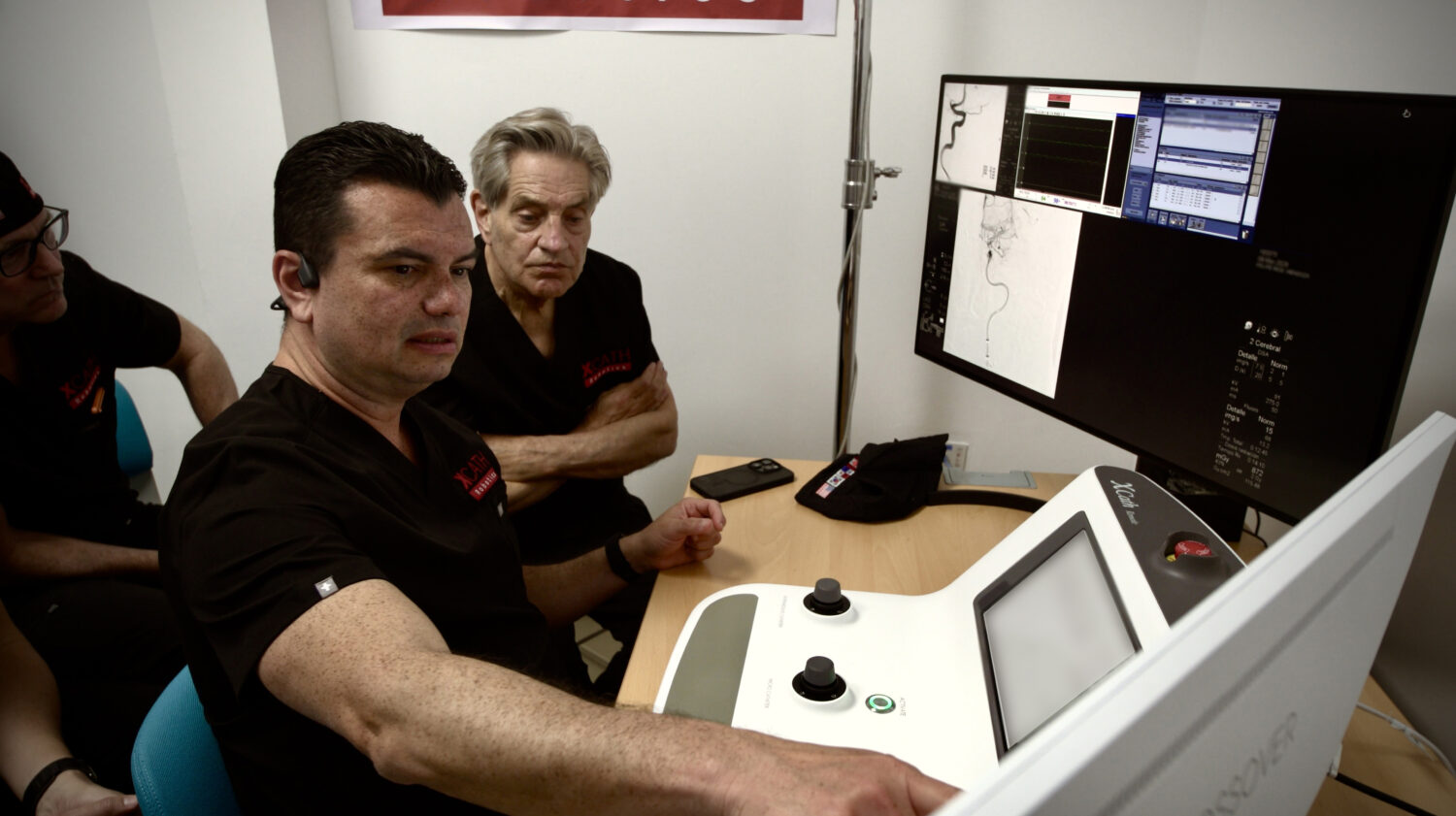
Meanwhile, over 120 miles (200 kilometers) away in Santiago, neurosurgeon Dr. Vitor Mendes Pereira took control of the robotic interface. Operating over a dedicated fiber connection, Dr. Pereira robotically navigated the microcatheters through the patient’s intracranial vasculature. He extracted the clot on the very first pass. By the next day, the patient’s stroke score had dropped from a 21 to a 2. He is expected to make a complete recovery.
“Mechanical thrombectomy is proven to reduce mortality and disability in patients with ischemic stroke but unfortunately access to the procedure is extremely low. The work XCath has done with the Iris System is a giant step toward broadening access to mechanical thrombectomy for patients around the world,” Dr. Vitor Mendes Pereira said. “The experience of performing the first-in-human procedure matched the successful simulated procedures we previously performed with the team, with imperceptibly low latency and no disruptions to the surgical workflow. It is the highlight of my career to be involved in this historic achievement.”
