
• Skip to main content
  • Skip to secondary menu
  • Skip to primary sidebar
  • Skip to secondary sidebar
  • Skip to footer

  • Opinion
  • Health IT
    • Behavioral Health
    • Care Coordination
    • EMR/EHR
    • Interoperability
    • Patient Engagement
    • Population Health Management
    • Revenue Cycle Management
    • Social Determinants of Health
  • Digital Health
    • AI
    • Blockchain
    • Precision Medicine
    • Telehealth
    • Wearables
  • Life Sciences
  • Investments
  • M&A
  • Value-based Care
    • Accountable Care (ACOs)
    • Medicare Advantage

How Horizon Health and Qure.ai Are Using AI to Catch “Incidental” Lung Cancer

by Jasmine Pennic 12/17/2025 Leave a Comment

  • LinkedIn
  • Twitter
  • Facebook
  • Email
  • Print
How Horizon Health and Qure.ai Are Using AI to Catch "Incidental" Lung Cancer

What You Should Know: 

– Horizon Health Network, operating across New Brunswick, Canada, has partnered with global health tech leader Qure.ai to implement a comprehensive AI suite for lung cancer care. 

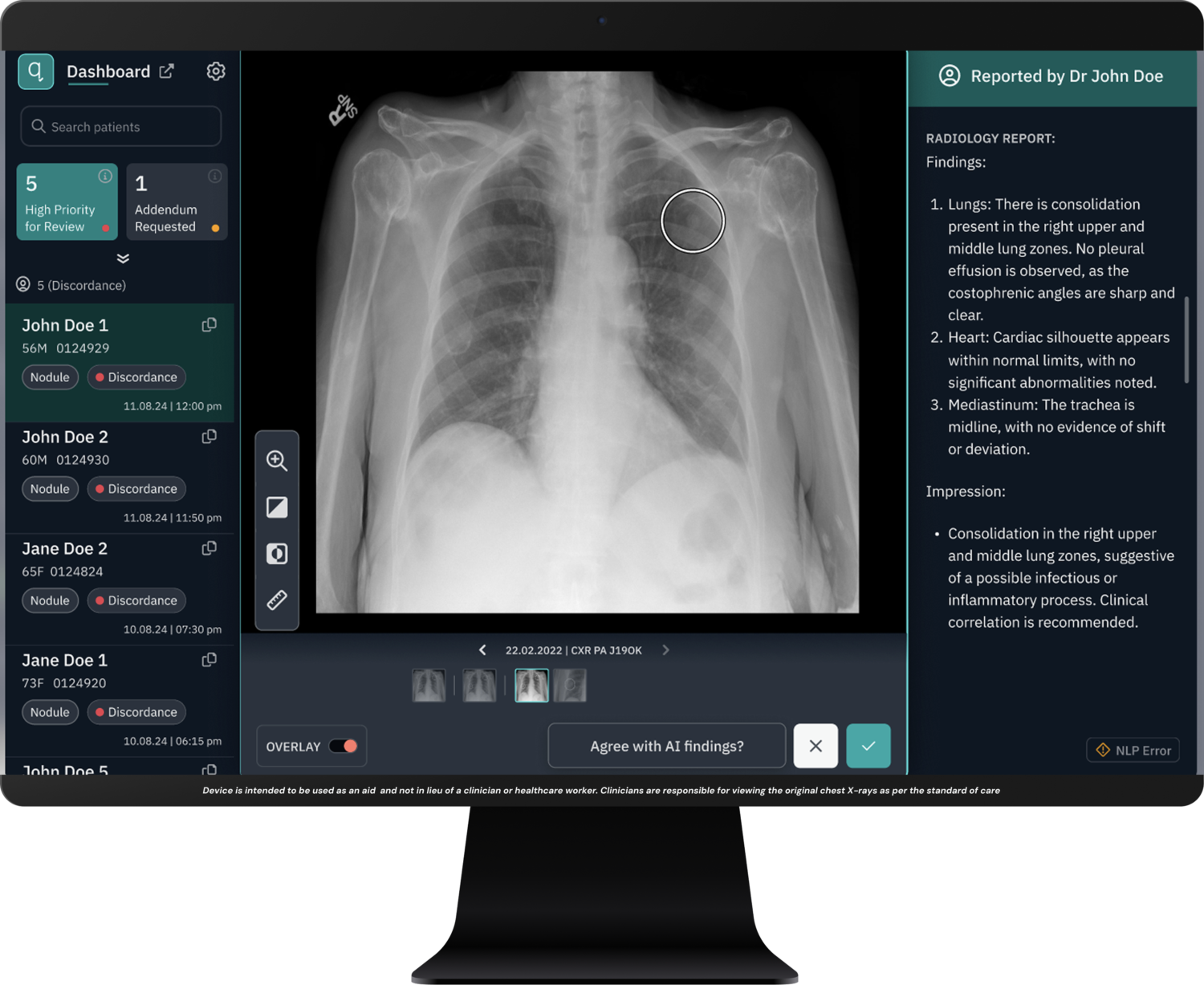
– The strategic collaboration is designed to prepare the health system for a province-wide screening program while simultaneously deploying AI to detect “incidental” lung nodules in routine X-rays and CT scans. By integrating tools for detection, quantification, and patient tracking, the initiative aims to catch lung cancer at Stage I, significantly boosting survival rates.

Improving Survival Rates: Horizon Health Prepares for Provincial Screening with Qure.ai’s Class III Medical AI

Lung cancer remains the leading cause of cancer death in North America, a statistic driven largely by the stealthy nature of the disease; by the time symptoms appear, it is often too late. Today, Horizon Health Network (Horizon) announced a strategic move to shift those odds, entering a partnership with Qure.ai to deploy an end-to-end Artificial Intelligence (AI) suite across its 12 hospitals and 100+ medical facilities in New Brunswick.

This partnership is not merely a software upgrade; it is a fundamental restructuring of how a health system watches over its patients. By integrating Qure.ai’s solutions, Horizon is building the digital infrastructure necessary for a massive, province-wide low-dose CT lung cancer screening program, while simultaneously addressing the critical gap of “incidental” detection.

Beyond the Screening Program: The Power of Incidental Findings

While organized screening programs are vital for high-risk patients (such as long-term smokers), they only cover a specific slice of the population. The true technological differentiator in this partnership is the ability to use AI to patrol the thousands of routine scans performed for other reasons.

Jim Mercadante, Chief Commercial Officer at Qure.ai, describes this as “casting a wider net.”

“Proactive CT-based lung cancer screening strategies are a giant step forward, but only one part of the battle against lung cancer,” says Mercadante. “AI has the power… to identify small lung nodules that can be indicative of early-stage lung cancer on routine CT and X-rays that may be obtained for other indications. This can include pre-operative examinations or trauma-related admissions.”

In layman’s terms: a patient might enter the ER with a broken rib or pneumonia. The AI analyzes their chest X-ray for the trauma but also quietly scans for lung nodules that a human radiologist, focused on the bone fracture, might overlook. This “incidental” detection can identify cancer at Stage I, where survival rates are exponentially higher than at Stage III or IV.

Building the Digital Infrastructure

For Zach Kilburn, Chief Digital Officer at Horizon Health Network, the partnership is about establishing clinical confidence and workflow capability before the floodgates of a provincial screening program open.

“This agreement with Qure.ai reflects our commitment to innovation and advancing patient care through rigorous evaluation of emerging technologies,” Kilburn stated. “By building this infrastructure now, we’re positioning our clinicians to support high-quality, coordinated lung cancer care across the health care ecosystem.”

The integration involves a sophisticated suite of tools that have garnered Health Canada Class III medical device license approval and FDA clearance. The suite addresses three distinct phases of the care continuum:

  1. Detection (qXR-LN): Identifying incidental nodules on standard chest X-rays.
  2. Quantification (qCT-Quant): Assessing the volume and size of nodules on CT scans to determine risk.
  3. Management (qTrack): A workflow tool that ensures patients with identified nodules don’t fall through the cracks, coordinating care for nurse navigators and lung nodule clinics.

  • LinkedIn
  • Twitter
  • Facebook
  • Email
  • Print

Tagged With: Artificial Intelligence, Lung Cancer

Tap Native

Get in-depth healthcare technology analysis and commentary delivered straight to your email weekly

Reader Interactions

Primary Sidebar

Subscribe to HIT Consultant

Latest insightful articles delivered straight to your inbox weekly.

Submit a Tip or Pitch

2026 Predictions & Trends

Healthcare 2026 Forecast: Executives on AI Survival, Financial Reckoning, and the End of Point Solutions

2026 Healthcare Executive Predictions: Why the AI “Pilot Era” Is Officially Over

Most-Read

NYC Health + Hospitals to Acquire Maimonides in $2.2B Safety Net Overhaul

NYC Health + Hospitals to Acquire Maimonides in $2.2B Safety Net Overhaul

KLAS Report: Why Hospitals Are Choosing Efficiency Over 'Agentic' AI Hype in 2025

KLAS Report: Why Hospitals Are Choosing Efficiency Over ‘Agentic’ AI Hype in 2025

Advanced Primary Care 2026: Top 6 Investments for Health Systems According to Harvard Medical School

Advanced Primary Care 2026: Top 6 Investments for Health Systems According to Harvard Medical School

AI Nutrition Labels: The Key to Provider Adoption and Patient Trust?

AI Nutrition Labels: The Key to Provider Adoption and Patient Trust?

Kristen Hartsell, VP of Clinical Services, RedSail Technologies

The Pharmacy Closures Crisis: How Independent Pharmacies Are Fixing Pharmacy Deserts

HHS Launches 'OneHHS' AI Strategy to Integrate AI Across CDC, CMS, and FDA for Efficiency and Public Trust

HHS Launches ‘OneHHS’ AI Strategy to Integrate AI Across CDC, CMS, and FDA for Efficiency and Public Trust

From Overwhelmed to Optimized: How AI Agents Address Staffing Challenges and Burnout in Healthcare

From Overwhelmed to Optimized: How AI Agents Address Staffing Challenges and Burnout in Healthcare

The VBC Paradox: Why Hospitals Are Doubling Down on Value-Based Care While Revenue at Risk Lags

The VBC Paradox: Why Hospitals Are Doubling Down on Value-Based Care While Revenue at Risk Lags

Tebra Secures $250M to Challenge Legacy EHRs with AI-Powered Automation

Tebra Secures $250M to Challenge Legacy EHRs with AI-Powered Automation

AstraZeneca Selects Salesforce Agentforce Life Sciences to Deploy AI-Powered Global Customer Engagement

AstraZeneca Selects Salesforce Agentforce Life Sciences to Deploy AI-Powered Global Customer Engagement

Secondary Sidebar

Footer

Company

  • About Us
  • Advertise with Us
  • Reprints and Permissions
  • Op-Ed Submission Guidelines
  • Contact
  • Subscribe

Editorial Coverage

  • Opinion
  • Health IT
    • Care Coordination
    • EMR/EHR
    • Interoperability
    • Population Health Management
    • Revenue Cycle Management
  • Digital Health
    • Artificial Intelligence
    • Blockchain Tech
    • Precision Medicine
    • Telehealth
    • Wearables
  • Startups
  • Value-Based Care
    • Accountable Care
    • Medicare Advantage

Connect

Subscribe to HIT Consultant Media

Latest insightful articles delivered straight to your inbox weekly

Copyright © 2026. HIT Consultant Media. All Rights Reserved. Privacy Policy |