
• Skip to main content
  • Skip to secondary menu
  • Skip to primary sidebar
  • Skip to secondary sidebar
  • Skip to footer

ecw Leaderboard Ad
  • Opinion
  • Health IT
    • Behavioral Health
    • Care Coordination
    • EMR/EHR
    • Interoperability
    • Patient Engagement
    • Population Health Management
    • Revenue Cycle Management
    • Social Determinants of Health
  • Digital Health
    • AI
    • Blockchain
    • Precision Medicine
    • Telehealth
    • Wearables
  • Life Sciences
  • Investments
  • M&A
  • Value-based Care
    • Accountable Care (ACOs)
    • Medicare Advantage

Inlightened Report: 79% of Healthcare Experts Warn Social Media Misinformation Leads to Harmful Treatments

by Jasmine Pennic 12/11/2025 Leave a Comment

  • LinkedIn
  • Twitter
  • Facebook
  • Email
  • Print

What You Should Know: 

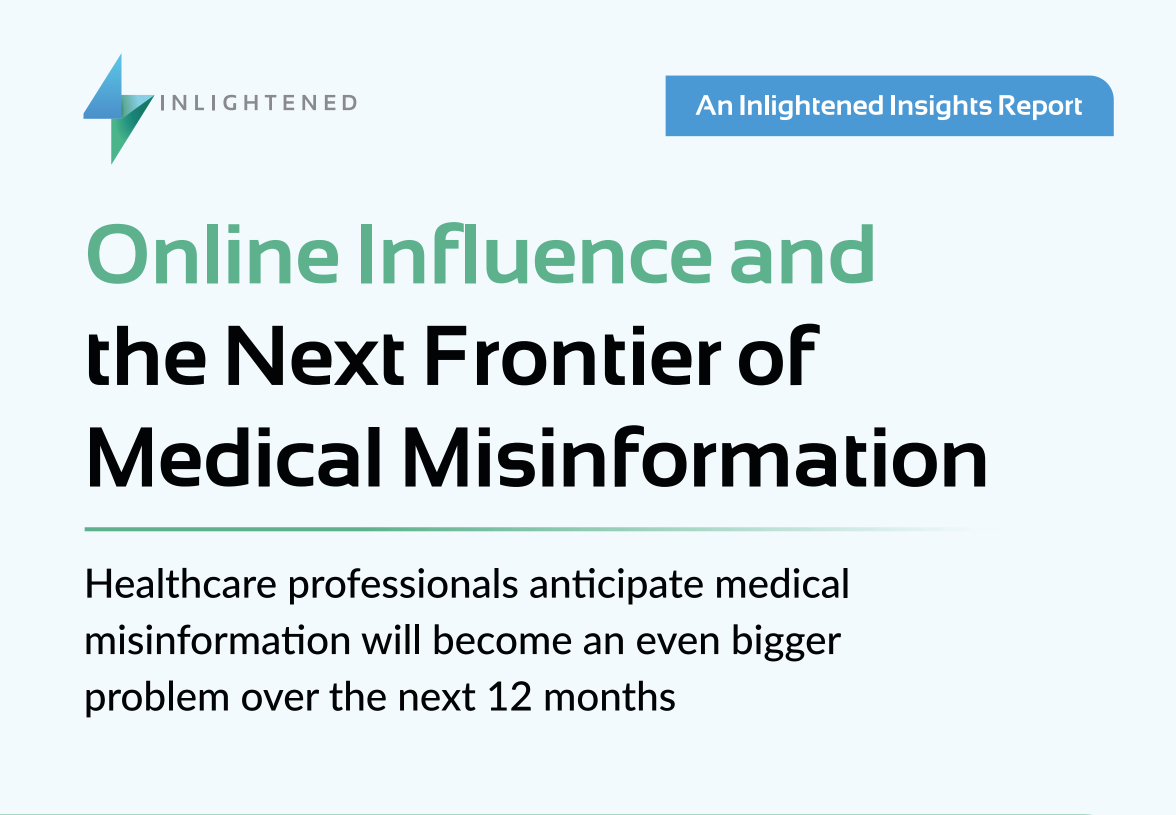
– A new survey from Inlightened reveals that 61% of vetted healthcare professionals are deeply concerned about the rise of online medical misinformation, with 79% warning that it leads patients to accept harmful, unproven treatments. 

– Despite this, many experts are hesitant to engage on social media due to safety concerns and a lack of support, with nearly half citing that the risks outweigh the rewards. The report highlights an urgent need for more scientific voices on platforms like TikTok and YouTube to combat the eroding trust in evidence-based medicine.

The Truth Is Losing: Healthcare Experts Sound Alarm on the Rising Tide of Online Misinformation

We are living in an era where deep-fried chicken is touted as a health food and generative AI can halluncinate medical advice with confident authority. The digital ecosystem, once a tool for democratization, has become a battlefield for truth in medicine—and according to a new report, the experts are worried we are losing the fight.

Inlightened, a platform connecting companies with vetted healthcare professionals (HCPs), released survey findings today that paint a grim picture of the current information landscape. The data confirms what many clinicians feel in the exam room: online influence is not just a nuisance; it is a direct threat to patient safety.

“The findings of this survey highlight the critical moment we are in as an industry and a nation,” said Shelli Pavone, president and co-founder at Inlightened. “As new tools, like LLMs and AI-generated video apps, spin up… the role of those experts will be more important than ever.”

The Quantifiable Cost of Fake News

The survey, conducted in October 2025, queried a randomized sample of clinician experts. The results reveal a near-consensus on the damage being done:

  • 79% of respondents said online misinformation leads to the acceptance or use of potentially harmful, unproven treatments.
  • 78% cited a loss of trust in science-backed, proven treatments.
  • 53% reported that patients “always” or “usually” bring social media information into the consult room—information that one in three doctors says is “rarely” helpful.

This data underscores a fundamental shift in the doctor-patient relationship. Clinicians are no longer just diagnosing disease; they are de-bunking viral myths in real-time.

The Hesitancy of the Experts

If the solution to bad information is good information, why aren’t more doctors flooding the zone? The report uncovers a complex hesitancy among the very people best equipped to fight back.

While 70% of respondents believe that “more scientific and medical voices” are needed on platforms like TikTok and YouTube, actually participating is a different story.

  • 60% of respondents agreed they have a responsibility to engage, but qualified it with “it’s complicated.”
  • 44% of those who stay offline believe the rewards do not outweigh the risks.
  • 32% worry specifically about their safety and their family’s safety.

This “safety gap” effectively silences qualified voices, leaving the digital floor open to influencers who face no such professional or ethical constraints.

The Path Forward

Despite the gloom, the survey points to actionable solutions. Experts aren’t asking for a miracle; they’re asking for infrastructure.

  • 53% said they would be more likely to share trustworthy information if they had an assistant to help with content planning and posting.
  • 57% called for high-level federal officials to publicly support the medical community.

  • LinkedIn
  • Twitter
  • Facebook
  • Email
  • Print

Tagged With: Artificial Intelligence

Tap Native

Get in-depth healthcare technology analysis and commentary delivered straight to your email weekly

Reader Interactions

Primary Sidebar

Subscribe to HIT Consultant

Latest insightful articles delivered straight to your inbox weekly.

Submit a Tip or Pitch

Featured Interview

CliniComp SVP Talks New Era EHR: How AI-Driven, Interoperable Platforms Are Replacing Legacy Health IT Systems

Most-Read

GE HealthCare Acquires Intelerad for $2.3B to Create Cloud-First, AI-Enabled Imaging Ecosystem

GE HealthCare Acquires Intelerad for $2.3B to Create Cloud-First, AI-Enabled Imaging Ecosystem

Humana Partners with Sunrise to Expand Digital Sleep Apnea Diagnostics

Humana and Epic Launch Coverage Finder to Deliver Digital-First Medicare Advantage Check-In

Cleveland Clinic and Khosla Ventures Form Strategic Alliance to Accelerate Healthcare Innovation

Cleveland Clinic and Khosla Ventures Form Strategic Alliance to Accelerate Healthcare Innovation

Northwell Health Selects to Deploy Abridge’s Ambient AI Across 28 Hospitals

Northwell Health to Deploy Abridge’s Ambient AI Across 28 Hospitals

Omada Health Launches "Nutritional Intelligence" with AI Agent OmadaSpark

Omada Health Launches AI-Powered Meal Map to Transform Nutrition for Cardiometabolic Patients

From Overwhelmed to Optimized: How AI Agents Address Staffing Challenges and Burnout in Healthcare

From Overwhelmed to Optimized: How AI Agents Address Staffing Challenges and Burnout in Healthcare

Qualtrics Acquires Press Ganey Forsta for $6.75B to Create the Most Comprehensive AI Experience Platform

Qualtrics Acquires Press Ganey Forsta for $6.75B to Create the Most Comprehensive AI Experience Platform

Pfizer and Trump Administration Announce Landmark Agreement to Lower Drug Costs

Pfizer and Trump Administration Announce Landmark Agreement to Lower Drug Costs

KLAS Report: Epic's Native Ambient Speech Tool Reshapes Customer AI Strategies

KLAS Report: Epic’s Native Ambient Speech Tool Reshapes Customer AI Strategies

Epic Unveils MyChart Central and New APIs to Advance Interoperability at Open@Epic

Epic Outlines Roadmap for Next-Generation Data Sharing at Open@Epic

Secondary Sidebar

Footer

Company

  • About Us
  • Advertise with Us
  • Reprints and Permissions
  • Op-Ed Submission Guidelines
  • Contact
  • Subscribe

Editorial Coverage

  • Opinion
  • Health IT
    • Care Coordination
    • EMR/EHR
    • Interoperability
    • Population Health Management
    • Revenue Cycle Management
  • Digital Health
    • Artificial Intelligence
    • Blockchain Tech
    • Precision Medicine
    • Telehealth
    • Wearables
  • Startups
  • Value-Based Care
    • Accountable Care
    • Medicare Advantage

Connect

Subscribe to HIT Consultant Media

Latest insightful articles delivered straight to your inbox weekly

Copyright © 2025. HIT Consultant Media. All Rights Reserved. Privacy Policy |