
• Skip to main content
  • Skip to secondary menu
  • Skip to primary sidebar
  • Skip to secondary sidebar
  • Skip to footer

  • Opinion
  • Health IT
    • Behavioral Health
    • Care Coordination
    • EMR/EHR
    • Interoperability
    • Patient Engagement
    • Population Health Management
    • Revenue Cycle Management
    • Social Determinants of Health
  • Digital Health
    • AI
    • Blockchain
    • Precision Medicine
    • Telehealth
    • Wearables
  • Life Sciences
  • Investments
  • M&A
  • Value-based Care
    • Accountable Care (ACOs)
    • Medicare Advantage

S&T Researchers Developing 3D-Printed Dressings for Better Wound Care

by Jasmine Pennic 08/01/2023 Leave a Comment

  • LinkedIn
  • Twitter
  • Facebook
  • Email
  • Print
S&T Researchers Developing 3D-Printed Dressings for Better Wound Care
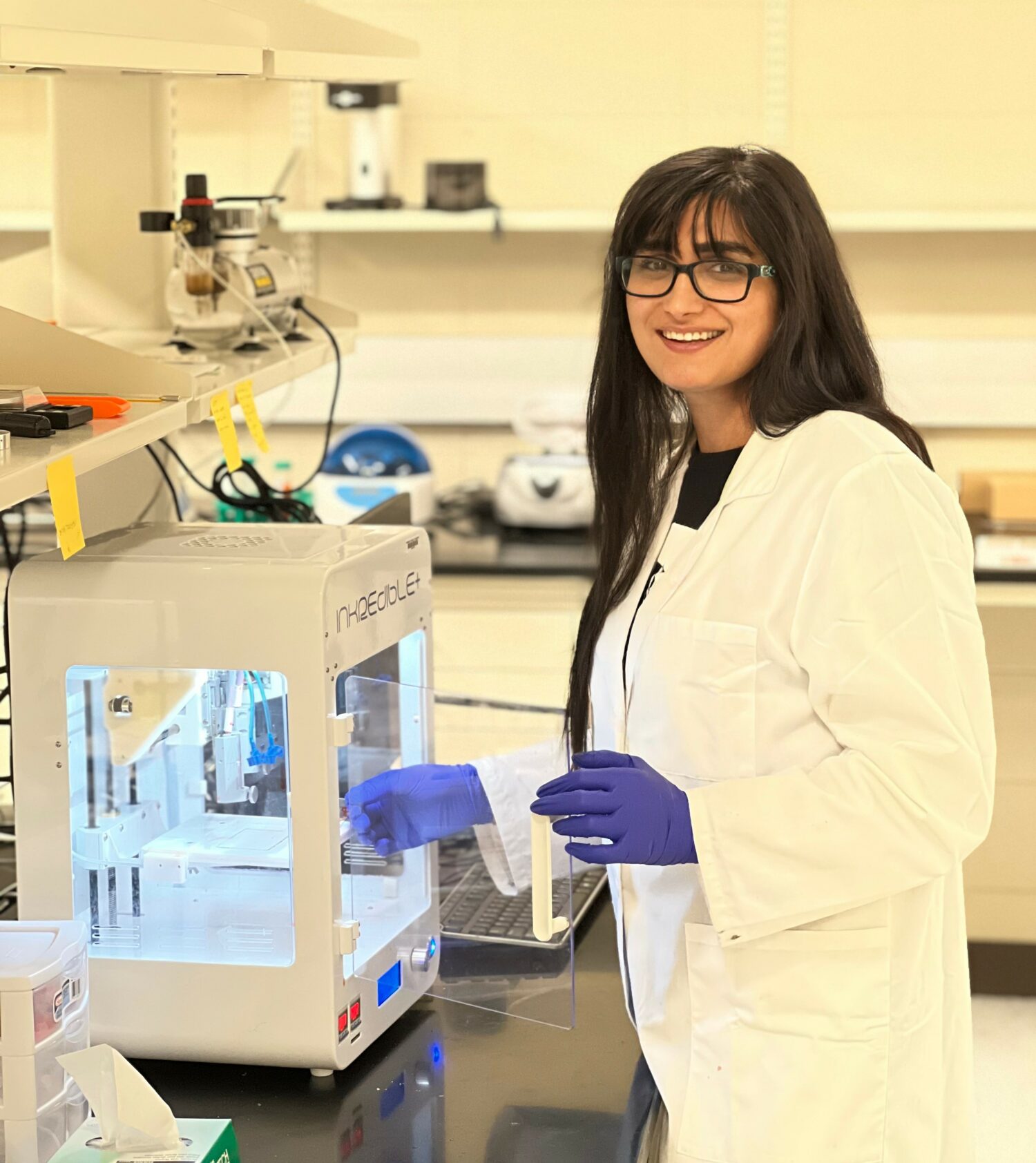
Dr. Fateme Fayyazbakhsh, an assistant research professor of mechanical engineering at S&T

What You Should Know:

– Missouri University of Science and Technology researchers are developing new 3D-printed hydrogel dressings to speed up and improve the healing process for patients with second-degree burns. The research team published an article covering their latest findings in the International Journal of Bioprinting in July.

– Hydrogels are typically part of the care regimen for patients with severe burns, but what separates S&T’s research from standard hydrogels is that the team is focusing on precisely 3D printing dressings that also include bioactive borate glass.

3D-printed Hydrogel Dressings

By 3D printing the dressings and including the glass, the researchers can better control the release of water from the dressing. Instead of coming in bursts, the water is paced out continuously over the course of 10 days, which means the dressing should stay effective on the wound for a longer time. In a study using a murine model, researchers observed that the 3D-printed dressings led to faster wound closures, less scarring, non-adhesive contact of the dressing and easier dressing removal.

“We have developed dressings with bioactive formulations to better address issues that patients with burn injuries regularly face,” says Dr. Fateme Fayyazbakhsh, an assistant research professor of mechanical engineering at S&T and the project’s lead researcher. “The continuous hydration provided by these dressings, along with their non-adhesive and porous texture, show great promise in promoting moist wound healing, reducing pain caused by atraumatic dressing removal, and minimizing scar tissue formation.”

Fayyazbakhsh says the next steps for this research are to continue refining and improving the dressing, while also demonstrating its viability as a treatment option and considering its long-term efficacy. She says the eventual goal is to hold clinical trials with patients and then commercialize the treatment.

“We are making great strides toward one day having the dressings commercialized and providing better treatment for burn patients,” Fayyazbakhsh says.

  • LinkedIn
  • Twitter
  • Facebook
  • Email
  • Print

Tagged With: 3D Modeling, Medical 3D Printing

Tap Native

Get in-depth healthcare technology analysis and commentary delivered straight to your email weekly

Reader Interactions

Primary Sidebar

Subscribe to HIT Consultant

Latest insightful articles delivered straight to your inbox weekly.

Submit a Tip or Pitch

Featured Research Report

2026 Best in KLAS Awards: The Full List of Software & Services Winners

Most-Read

The "Platform" Squeeze: Epic Releases Native AI Charting, Putting Venture-Backed Scribes on Notice

The “Platform” Squeeze: Epic Releases Native AI Charting, Putting Venture-Backed Scribes on Notice

Analysis: Oracle Cerner’s Plans for a National EHR

Oracle May Cut 30k Jobs and Sell Cerner to Fund $156B OpenAI Deal

The $1.9B Exit: Why CommonSpirit is Insourcing Revenue Cycle and Tenet is Betting Big on Conifer AI

The $1.9B Exit: Why CommonSpirit is Insourcing Revenue Cycle and Tenet is Betting Big on Conifer AI

KLAS 2026 Rankings: Aledade and Guidehealth Named Top VBC Enablement Firms

KLAS 2026 Rankings: Aledade and Guidehealth Named Top VBC Enablement Firms

Beyond the Hype: New KLAS Data Validates the Financial and Clinical ROI of Ambient AI

Beyond the Hype: New KLAS Data Validates the Financial and Clinical ROI of Ambient AI

Anthropic Debuts ‘Claude for Healthcare’ and Opus 4.5 to Engineer the Future of Life Sciences

Anthropic Debuts ‘Claude for Healthcare’ and Opus 4.5 to Engineer the Future of Life Sciences

OpenAI Debuts ChatGPT Health: A ‘Digital Front Door’ That Connects Medical Records to Agentic AI

OpenAI Debuts ChatGPT Health: A ‘Digital Front Door’ That Connects Medical Records to Agentic AI

From Genes to Hackers: The Hidden Cybersecurity Risks in Life Sciences

From Genes to Hackers: The Hidden Cybersecurity Risks in Life Sciences

Utah Becomes First State to Approve AI System for Prescription Renewals

Utah Becomes First State to Approve AI System for Prescription Renewals

NYC Health + Hospitals to Acquire Maimonides in $2.2B Safety Net Overhaul

NYC Health + Hospitals to Acquire Maimonides in $2.2B Safety Net Overhaul

Secondary Sidebar

Footer

Company

  • About Us
  • 2026 Editorial Calendar
  • Advertise with Us
  • Reprints and Permissions
  • Op-Ed Submission Guidelines
  • Contact
  • Subscribe

Editorial Coverage

  • Opinion
  • Health IT
    • Care Coordination
    • EMR/EHR
    • Interoperability
    • Population Health Management
    • Revenue Cycle Management
  • Digital Health
    • Artificial Intelligence
    • Blockchain Tech
    • Precision Medicine
    • Telehealth
    • Wearables
  • Startups
  • Value-Based Care
    • Accountable Care
    • Medicare Advantage

Connect

Subscribe to HIT Consultant Media

Latest insightful articles delivered straight to your inbox weekly

Copyright © 2026. HIT Consultant Media. All Rights Reserved. Privacy Policy |