
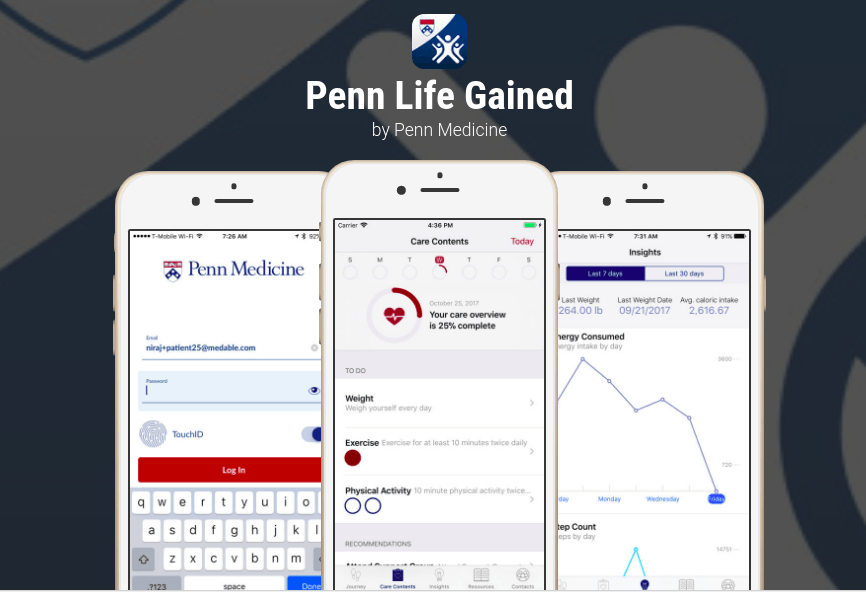
Penn Medicine, today announced it is extending the use of mobile devices as a health tool to improve the patient experience and patient care by launching the Penn Life Gained app specifically for bariatric surgery patients at Penn Medicine, as part of the institution’s focus on mobile health and innovative research strategies. Developed by clinicians in the Bariatric Surgery Program and Penn’s Corporate Information Services team, in partnership with Medable, the app is built using the Apple CareKit framework will allow bariatric surgery patients to collate their health information—from apps including Apple Health App, as well as from third party programs and devices such as MyFitnessPal and LoseIt. This information can then be easily shared with the clinicians in Penn’s Bariatric Surgery Program.
For many patients on the road to bariatric surgery, the process may seem daunting: track steps and exercise, record caloric and water intake, monitor sleep time, alter diet, etc. Pair this daily lifestyle management with clinic appointments, evaluations, and the stress that often comes with any kind of surgery, and patients may become too overwhelmed to move forward with their goals. In fact, half of patients who seek a consultation about the surgery never wind up having the procedure. But with the launch of Penn Medicine’s first-of-its-kind app for bariatric surgery patients, many of these things will be taken care of automatically.
How It Works
Patients in the Bariatric Surgery Program who have an iPhone will be able to download the app via the App Store, and log in using a unique code that they receive from the clinical team. Once fully enrolled, patients can sync information from any other app that they use, such as fitness trackers or food logs along with Apple Health App, so all of their health information will be collected and organized in Penn Life Gained.
Penn Life Gained can easily monitor the patient’s pre- and post-surgery progress, help personalize clinic visits based on data collected from the app, assign “to-do’s” and manage personalized care plans, as well as spot areas of concern very quickly. While easing the overall experience for the patient is paramount, the team is focused on using the app to reduce the program’s attrition rate and 30-day hospital readmissions after surgery, and increase the patients’ overall weight loss.
“In the program right now, less than half of those who complete an initial visit eventually undergo surgery,” said Noel Williams, MD, director of the Penn Metabolic and Bariatric Surgery Program in a statement. “If we can set our patients up with a resource that will break down the mountain of steps and tracking into easier to manage pieces, we believe they will be more likely to achieve their goals. Since we cannot see our patients every day, we’ve created a platform where our clinicians can be there to support them even after they leave the clinic.”
In the days and weeks following surgery, app users will be prompted to share their symptoms, including pain levels. If a patient reports that they are experiencing higher than expected pain levels, the patient is prompted to contact the office, and the clinicians are notified on the clinician app. If patients and the team can proactively identify worsening pain, and see the patient in clinic right away, the team is hoping they can reduce hospital readmissions, which often occur when patients go to the emergency room because of post-operative pain.
“Ultimately we are looking for ways to provide the best care to our patients before, during, and after surgery,” Williams added. “We believe this app will let us proactively help our patients achieve their goals in the program.”
As patients begin to engage with the app, the team plans to evaluate the impact as part of their research endeavors in the months and years to come. Penn Medicine is also continuing its collaboration with Apple and Medable to make enhancements to Penn Life Gained as it becomes more widely used, and to partner on projects within other clinical departments in the future.
