
• Skip to main content
  • Skip to secondary menu
  • Skip to primary sidebar
  • Skip to secondary sidebar
  • Skip to footer

  • Opinion
  • Health IT
    • Behavioral Health
    • Care Coordination
    • EMR/EHR
    • Interoperability
    • Patient Engagement
    • Population Health Management
    • Revenue Cycle Management
    • Social Determinants of Health
  • Digital Health
    • AI
    • Blockchain
    • Precision Medicine
    • Telehealth
    • Wearables
  • Life Sciences
  • Investments
  • M&A
  • Value-based Care
    • Accountable Care (ACOs)
    • Medicare Advantage

SERMO Launches Physician-to-Physician Prescription Drug Ratings Tool

by Fred Pennic 05/10/2017 Leave a Comment

  • LinkedIn
  • Twitter
  • Facebook
  • Email
  • Print

SERMO Launches Physician-to-Physician Prescription Drug Rating Tool

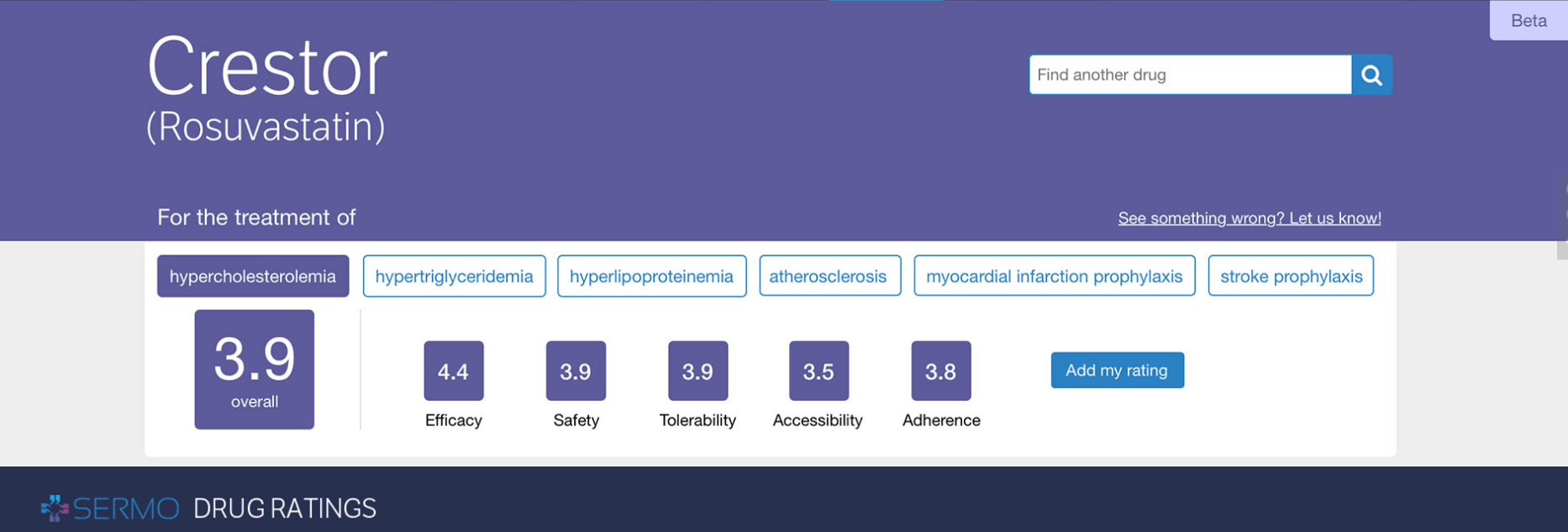
 SERMO, a NYC-based global social network for physicians has unveiled their new peer-to-peer “Drug Ratings” tool sourced exclusively from verified licensed physicians. Integrated into the SERMO social network, the Drug Ratings tool gives physicians a clinical decision support tool where they can research, rate, and share their direct experience on the efficacy, safety, tolerability, accessibility, and adherence of specific drugs in real time.

SERMO built the tool after recognizing that the lack of a doctor-only global database of drug reviews– while there are several drug review sites available that gather information from patients. 74 percent of doctors believe drug reviews from other doctors would help inform their prescribing choices, according to a recent SERMO survey of more than 4,500 doctors, conducted before the tool was released to members.

The survey revealed that 83 percent of doctors feel that opinion or feedback of another physician has changed their perception of a drug, and 52 percent feel they do not have all the information they would want about a drug before prescribing. In fact, 80 percent of doctors trust the recommendations of a very large number of real-world doctors with product experience over the recommendations of a very small number of key opinion leaders/academics.

“To date, there have not been networks for physicians to share important information about experiences with the medications prescribed for patients. This new tool offers a large community of physicians’ access to see the subtle issues involved with medications. Ratings will be an invaluable part of physicians’ daily routines. This level of transparency will enhance patient care,” said Dr. Heidi Moawad, a neurologist who participated in the beta testing of the Drug Ratings tool.

Official clinical trial data and product monographs are only half of the story; aggregate real-world experience from peers is the other half. By supplementing manufacturer information with ratings and commentary, physicians gain a deeper look at treatments before they prescribe to support better treatment decisions.

How SERMO’s Drug Rating Tool Works

Utilizing the SERMO social network, physicians can crowdsource patient cases and seek advice from their peers. Drug Ratings takes this collaboration, known as medical crowdsourcing, to a new level by enabling physicians to instantly access their peers’ aggregated personal experiences with drugs.

Doctors can search for drugs by brand name, generic name, as well as branded generic name and compare different drugs approved by the Food and Drug Administration (FDA) to treat an indication. The Drug Ratings tool is particularly valuable for physicians researching new-to-market drugs, as open discussions on how certain drugs have performed in the real world for early adopters can be quickly reviewed, disseminated, and adopted more broadly.

“Drug Ratings by doctors, for doctors is the next big frontier of real-world medicine. We believe it will change the way physicians prescribe drugs because they will have the ability to weigh thousands of peer insights when making treatment decisions. By facilitating a seamless knowledge exchange between global doctors, Drug Ratings leads to improved decision-making and better patient outcomes,” said Peter Kirk, CEO of SERMO in a statement. “Drug Ratings is transparent and democratized medical knowledge from and for doctors around the world. Manufacturers and insurers have been calling the shots when it comes to the evaluation and adoption of drugs in recent decades; Drug Ratings levels the playing field. It gives doctors back their voice in this important discussion. Consumers have Amazon, Yelp or Trip Advisor. Now physicians have peer-to-peer Drug Ratings.”

  • LinkedIn
  • Twitter
  • Facebook
  • Email
  • Print

Tagged With: healthcare social media, SERMO

Tap Native

Get in-depth healthcare technology analysis and commentary delivered straight to your email weekly

Reader Interactions

Primary Sidebar

Subscribe to HIT Consultant

Latest insightful articles delivered straight to your inbox weekly.

Submit a Tip or Pitch

2026 Predictions & Trends

Healthcare 2026 Forecast: Executives on AI Survival, Financial Reckoning, and the End of Point Solutions

2026 Healthcare Executive Predictions: Why the AI “Pilot Era” Is Officially Over

Most-Read

KLAS Report: Why Hospitals Are Choosing Efficiency Over 'Agentic' AI Hype in 2025

KLAS Report: Why Hospitals Are Choosing Efficiency Over ‘Agentic’ AI Hype in 2025

Advanced Primary Care 2026: Top 6 Investments for Health Systems According to Harvard Medical School

Advanced Primary Care 2026: Top 6 Investments for Health Systems According to Harvard Medical School

AI Nutrition Labels: The Key to Provider Adoption and Patient Trust?

AI Nutrition Labels: The Key to Provider Adoption and Patient Trust?

Kristen Hartsell, VP of Clinical Services, RedSail Technologies

The Pharmacy Closures Crisis: How Independent Pharmacies Are Fixing Pharmacy Deserts

HHS Launches 'OneHHS' AI Strategy to Integrate AI Across CDC, CMS, and FDA for Efficiency and Public Trust

HHS Launches ‘OneHHS’ AI Strategy to Integrate AI Across CDC, CMS, and FDA for Efficiency and Public Trust

From Overwhelmed to Optimized: How AI Agents Address Staffing Challenges and Burnout in Healthcare

From Overwhelmed to Optimized: How AI Agents Address Staffing Challenges and Burnout in Healthcare

The VBC Paradox: Why Hospitals Are Doubling Down on Value-Based Care While Revenue at Risk Lags

The VBC Paradox: Why Hospitals Are Doubling Down on Value-Based Care While Revenue at Risk Lags

Tebra Secures $250M to Challenge Legacy EHRs with AI-Powered Automation

Tebra Secures $250M to Challenge Legacy EHRs with AI-Powered Automation

AstraZeneca Selects Salesforce Agentforce Life Sciences to Deploy AI-Powered Global Customer Engagement

AstraZeneca Selects Salesforce Agentforce Life Sciences to Deploy AI-Powered Global Customer Engagement

Aidoc Partners with NVIDIA MONAI to Scale Open-Source Clinical AI

Aidoc Partners with NVIDIA MONAI to Scale Open-Source Clinical AI

Secondary Sidebar

Footer

Company

  • About Us
  • Advertise with Us
  • Reprints and Permissions
  • Op-Ed Submission Guidelines
  • Contact
  • Subscribe

Editorial Coverage

  • Opinion
  • Health IT
    • Care Coordination
    • EMR/EHR
    • Interoperability
    • Population Health Management
    • Revenue Cycle Management
  • Digital Health
    • Artificial Intelligence
    • Blockchain Tech
    • Precision Medicine
    • Telehealth
    • Wearables
  • Startups
  • Value-Based Care
    • Accountable Care
    • Medicare Advantage

Connect

Subscribe to HIT Consultant Media

Latest insightful articles delivered straight to your inbox weekly

Copyright © 2025. HIT Consultant Media. All Rights Reserved. Privacy Policy |