
• Skip to main content
  • Skip to secondary menu
  • Skip to primary sidebar
  • Skip to secondary sidebar
  • Skip to footer

  • Opinion
  • Health IT
    • Behavioral Health
    • Care Coordination
    • EMR/EHR
    • Interoperability
    • Patient Engagement
    • Population Health Management
    • Revenue Cycle Management
    • Social Determinants of Health
  • Digital Health
    • AI
    • Blockchain
    • Precision Medicine
    • Telehealth
    • Wearables
  • Life Sciences
  • Investments
  • M&A
  • Value-based Care
    • Accountable Care (ACOs)
    • Medicare Advantage

Backed by UPMC, Cancer Diagnostics Startup Cernostics Lands $5M

by HITC Staff 09/06/2016 Leave a Comment

  • LinkedIn
  • Twitter
  • Facebook
  • Email
  • Print

Cernostics

Cernostics, a Pittsburgh, PA-based cancer diagnostics startup has raised $5 million in funding led by UPMC Enterprises, UPMC’s venture capital arm with participation from Novitas Capital. The company plans to utilize the funding to accelerate the introduction of new diagnostic test for people with an esophageal condition called Barrett’s Esophagus that can lead to cancer. The latest round brings the company’s total funding to date to $12.4M. 

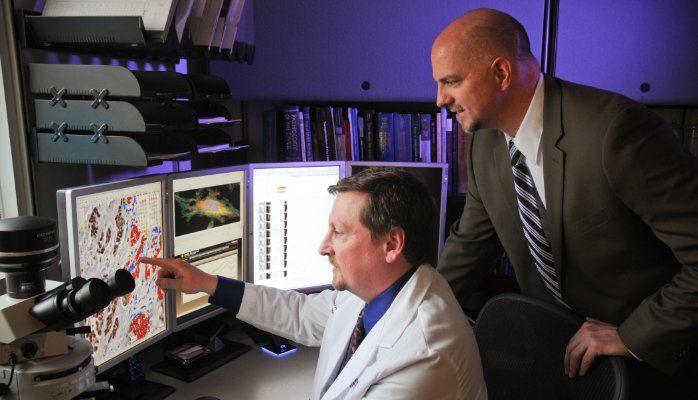
Founded in 2008, Cernostics is an oncology diagnostics company whose technology enables precision medicine. Using digitally scanned images of a biopsy slide, the company’s software provides measurement and analysis of more than 13,000 features for each patient sample—including multiple biomarkers, or proteins.

The company’s cancer diagnostics platform, TissueCypher™ platform  is the first diagnostic test of its kind that predicts the risk of developing esophageal cancer in patients with Barrett’s Esophagus. The clinical assay test combines quantitative analysis of multiple protein-based biomarkers with tissue structure information to predict risk of progression to high grade dysplasia (HGD) and esophageal adenocarcinoma (EAC) in patients with Barrett’s Esophagus. The test is intended for patients with diagnoses at the early end of the Barrett’s spectrum (non-dysplastic (ND), indefinite for dysplasia (IND) or low grade dysplasia (LGD).

This test could enable early intervention to prevent cancer in high-risk patients, and spare low-risk patients frequent and unnecessary endoscopies and treatments.

Previous investors in the company include Geisinger, Ben Franklin Technology Partners of Northeastern Pennsylvania, and the Pittsburgh Life Sciences Greenhouse.

  • LinkedIn
  • Twitter
  • Facebook
  • Email
  • Print

Tagged With: Cancer Diagnostics, Cernostics

Tap Native

Get in-depth healthcare technology analysis and commentary delivered straight to your email weekly

Reader Interactions

Primary Sidebar

Subscribe to HIT Consultant

Latest insightful articles delivered straight to your inbox weekly.

Submit a Tip or Pitch

2026 Predictions & Trends

Healthcare 2026 Forecast: Executives on AI Survival, Financial Reckoning, and the End of Point Solutions

2026 Healthcare Executive Predictions: Why the AI “Pilot Era” Is Officially Over

Most-Read

NYC Health + Hospitals to Acquire Maimonides in $2.2B Safety Net Overhaul

NYC Health + Hospitals to Acquire Maimonides in $2.2B Safety Net Overhaul

KLAS Report: Why Hospitals Are Choosing Efficiency Over 'Agentic' AI Hype in 2025

KLAS Report: Why Hospitals Are Choosing Efficiency Over ‘Agentic’ AI Hype in 2025

Advanced Primary Care 2026: Top 6 Investments for Health Systems According to Harvard Medical School

Advanced Primary Care 2026: Top 6 Investments for Health Systems According to Harvard Medical School

AI Nutrition Labels: The Key to Provider Adoption and Patient Trust?

AI Nutrition Labels: The Key to Provider Adoption and Patient Trust?

Kristen Hartsell, VP of Clinical Services, RedSail Technologies

The Pharmacy Closures Crisis: How Independent Pharmacies Are Fixing Pharmacy Deserts

HHS Launches 'OneHHS' AI Strategy to Integrate AI Across CDC, CMS, and FDA for Efficiency and Public Trust

HHS Launches ‘OneHHS’ AI Strategy to Integrate AI Across CDC, CMS, and FDA for Efficiency and Public Trust

From Overwhelmed to Optimized: How AI Agents Address Staffing Challenges and Burnout in Healthcare

From Overwhelmed to Optimized: How AI Agents Address Staffing Challenges and Burnout in Healthcare

The VBC Paradox: Why Hospitals Are Doubling Down on Value-Based Care While Revenue at Risk Lags

The VBC Paradox: Why Hospitals Are Doubling Down on Value-Based Care While Revenue at Risk Lags

Tebra Secures $250M to Challenge Legacy EHRs with AI-Powered Automation

Tebra Secures $250M to Challenge Legacy EHRs with AI-Powered Automation

AstraZeneca Selects Salesforce Agentforce Life Sciences to Deploy AI-Powered Global Customer Engagement

AstraZeneca Selects Salesforce Agentforce Life Sciences to Deploy AI-Powered Global Customer Engagement

Secondary Sidebar

Footer

Company

  • About Us
  • Advertise with Us
  • Reprints and Permissions
  • Op-Ed Submission Guidelines
  • Contact
  • Subscribe

Editorial Coverage

  • Opinion
  • Health IT
    • Care Coordination
    • EMR/EHR
    • Interoperability
    • Population Health Management
    • Revenue Cycle Management
  • Digital Health
    • Artificial Intelligence
    • Blockchain Tech
    • Precision Medicine
    • Telehealth
    • Wearables
  • Startups
  • Value-Based Care
    • Accountable Care
    • Medicare Advantage

Connect

Subscribe to HIT Consultant Media

Latest insightful articles delivered straight to your inbox weekly

Copyright © 2026. HIT Consultant Media. All Rights Reserved. Privacy Policy |