

• Skip to main content
  • Skip to secondary menu
  • Skip to primary sidebar
  • Skip to secondary sidebar
  • Skip to footer

  • Opinion
  • Health IT
    • Behavioral Health
    • Care Coordination
    • EMR/EHR
    • Interoperability
    • Patient Engagement
    • Population Health Management
    • Revenue Cycle Management
    • Social Determinants of Health
  • Digital Health
    • AI
    • Blockchain
    • Precision Medicine
    • Telehealth
    • Wearables
  • Life Sciences
  • Investments
  • M&A
  • Value-based Care
    • Accountable Care (ACOs)
    • Medicare Advantage

Mayo Clinic, GE Set to Unveil Innovative Compact MRI Scanner

by HITC Staff 06/24/2016 Leave a Comment

  • LinkedIn
  • Twitter
  • Facebook
  • Email
  • Print

Mayo Clinic, GE Set to Unveil Innovative Compact MRI Scanner

On June 28th, Mayo Clinic will unveil a new first of its kind compact 3T magnetic resonance imaging (MRI) scanner developed in collaboration with General Electric’s (GE) Global Research Center. The investigational, research device was developed under a National Institutes of Health Bioengineering Research Partnership between GE Global Research and the Mayo Clinic.

Compact 3T MRI Scanner Overview

The new MRI scanner is designed specifically to perform head scans, as well as small extremities, such as wrists, feet and ankles, which represent approximately 45 percent of the clinical MRI volume at Mayo Clinic. The system was installed earlier this year in Charlton North Building, part of Mayo Clinic’s downtown campus in Rochester, Minnesota.

Improving Patient Experience

One of the goals in designing this new system was to improve the patient experience. Initial feedback from patients and volunteers confirms that the experience in this scanner is more comfortable from the ability of the patient to have his or her arms and torso completely outside of the magnet. In a traditional, whole-body scanner, the patient must lie on a table that goes into the magnet, which can be uncomfortable for patients, particularly those with claustrophobia.


Compact Size Benefits

Due to its compact size, the new system has several potential advantages over conventional, whole-body MRI systems, enabled by the superconducting 3T magnet. The new prototype magnet is approximately one-third the size of a conventional system and requires a fraction of the liquid helium to operate — making it easier to install in space-constrained locations — a common problem in hospitals.

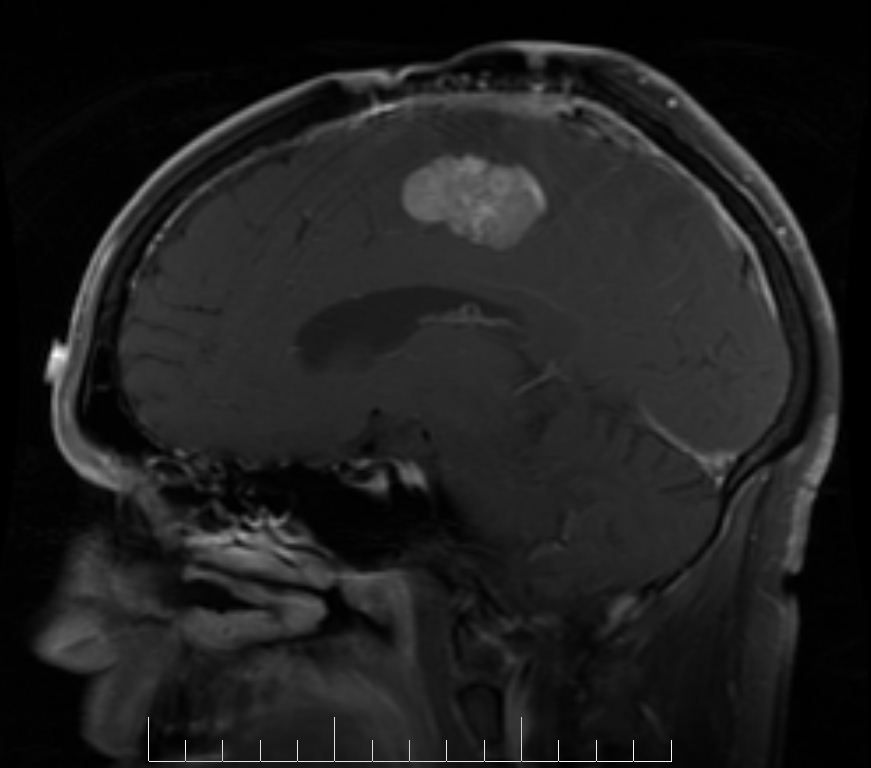
The reduced size also helps lower the electrical power usage while increasing the scan speed dramatically. Initial investigation and evaluation of this novel design has produced high-quality images for a variety of advanced applications, including diffusion MRI, functional MRI and MR Elastography. 

The core team at Mayo also includes Erin Gray, Yunhong Shu, Ph.D., Shengzhen Tao, Josh Trzasko, Ph.D., and Paul Weavers, Ph.D. The GE Global Research Center team is led by co-principal investigator Thomas Foo, Ph.D.

Featured image credit: rmommaerts via cc

  • LinkedIn
  • Twitter
  • Facebook
  • Email
  • Print

Tagged With: Mayo Clinic, MRI Scanner

Tap Native

Get in-depth healthcare technology analysis and commentary delivered straight to your email weekly

Reader Interactions

Primary Sidebar

Subscribe to HIT Consultant

Latest insightful articles delivered straight to your inbox weekly.

Submit a Tip or Pitch

2026 Predictions & Trends

Healthcare 2026 Forecast: Executives on AI Survival, Financial Reckoning, and the End of Point Solutions

2026 Healthcare Executive Predictions: Why the AI “Pilot Era” Is Officially Over

Most-Read

KLAS Report: Why Hospitals Are Choosing Efficiency Over 'Agentic' AI Hype in 2025

KLAS Report: Why Hospitals Are Choosing Efficiency Over ‘Agentic’ AI Hype in 2025

Advanced Primary Care 2026: Top 6 Investments for Health Systems According to Harvard Medical School

Advanced Primary Care 2026: Top 6 Investments for Health Systems According to Harvard Medical School

AI Nutrition Labels: The Key to Provider Adoption and Patient Trust?

AI Nutrition Labels: The Key to Provider Adoption and Patient Trust?

Kristen Hartsell, VP of Clinical Services, RedSail Technologies

The Pharmacy Closures Crisis: How Independent Pharmacies Are Fixing Pharmacy Deserts

HHS Launches 'OneHHS' AI Strategy to Integrate AI Across CDC, CMS, and FDA for Efficiency and Public Trust

HHS Launches ‘OneHHS’ AI Strategy to Integrate AI Across CDC, CMS, and FDA for Efficiency and Public Trust

From Overwhelmed to Optimized: How AI Agents Address Staffing Challenges and Burnout in Healthcare

From Overwhelmed to Optimized: How AI Agents Address Staffing Challenges and Burnout in Healthcare

The VBC Paradox: Why Hospitals Are Doubling Down on Value-Based Care While Revenue at Risk Lags

The VBC Paradox: Why Hospitals Are Doubling Down on Value-Based Care While Revenue at Risk Lags

Tebra Secures $250M to Challenge Legacy EHRs with AI-Powered Automation

Tebra Secures $250M to Challenge Legacy EHRs with AI-Powered Automation

AstraZeneca Selects Salesforce Agentforce Life Sciences to Deploy AI-Powered Global Customer Engagement

AstraZeneca Selects Salesforce Agentforce Life Sciences to Deploy AI-Powered Global Customer Engagement

Aidoc Partners with NVIDIA MONAI to Scale Open-Source Clinical AI

Aidoc Partners with NVIDIA MONAI to Scale Open-Source Clinical AI

Secondary Sidebar

Footer

Company

  • About Us
  • Advertise with Us
  • Reprints and Permissions
  • Op-Ed Submission Guidelines
  • Contact
  • Subscribe

Editorial Coverage

  • Opinion
  • Health IT
    • Care Coordination
    • EMR/EHR
    • Interoperability
    • Population Health Management
    • Revenue Cycle Management
  • Digital Health
    • Artificial Intelligence
    • Blockchain Tech
    • Precision Medicine
    • Telehealth
    • Wearables
  • Startups
  • Value-Based Care
    • Accountable Care
    • Medicare Advantage

Connect

Subscribe to HIT Consultant Media

Latest insightful articles delivered straight to your inbox weekly

Copyright © 2025. HIT Consultant Media. All Rights Reserved. Privacy Policy |