

• Skip to main content
  • Skip to secondary menu
  • Skip to primary sidebar
  • Skip to secondary sidebar
  • Skip to footer

  • Opinion
  • Health IT
    • Behavioral Health
    • Care Coordination
    • EMR/EHR
    • Interoperability
    • Patient Engagement
    • Population Health Management
    • Revenue Cycle Management
    • Social Determinants of Health
  • Digital Health
    • AI
    • Blockchain
    • Precision Medicine
    • Telehealth
    • Wearables
  • Life Sciences
  • Investments
  • M&A
  • Value-based Care
    • Accountable Care (ACOs)
    • Medicare Advantage

Philips Unveils Contactless Monitoring Solution to Measure SpO2 Levels

by HITC Staff 06/07/2016 Leave a Comment

  • LinkedIn
  • Twitter
  • Facebook
  • Email
  • Print

Philips Unveils Contactless Monitoring Solution

Philips announced this week the results of the first published study to demonstrate that absolute oxygen saturation of arterial blood (SpO2), a vital sign that is commonly monitored in hospitalized and other patients, can be accurately measured across multiple patients using contactless technology.

The study, published in the June issue of the journal Anesthesia & Analgesia, used Philips proprietary camera-based monitoring technology to measure the light reflected off the foreheads of 41 healthy adults to calculate SpO2. Through the results of this study, Philips is the first to demonstrate that contactless SpO2 can be calibrated across patients, just like conventional contact probes, allowing accurate measurements without individual adjustments.

In many care settings, monitoring heart rate, arterial blood oxygenation, respiration rate, and activity is a standard part of patient care to detect complications or deterioration. The current method for measuring these key vital signs requires the use of sensors on the skin or devices strapped to the body; however, these contact sensors may cause damage and distress in patients with fragile skin such as newborn babies.

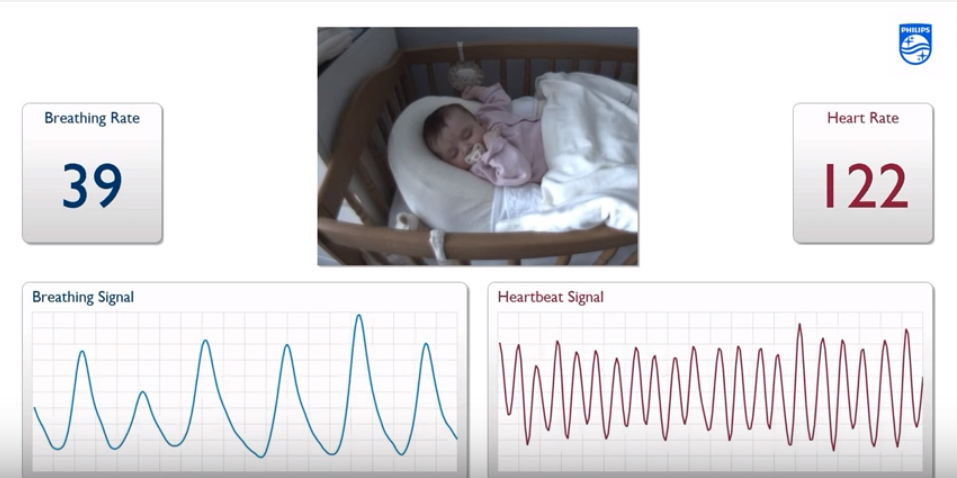
For specific patient populations, including premature infants in the NICU, a contactless alternative would provide potential advantages such as avoiding skin damage in fragile patients and freedom to select a more physiologically central location with a possible faster response rate1,2. The technology works by detecting tiny ‘micro-blushes’ (changes in skin color) in the face which aren’t visible to the human eye. While measuring arterial blood oxygenation is a standard part of care, for patients with fragile skin – like newborns – measuring this vital sign can lead to distress or damage. Philips’ contactless monitoring algorithms can calculate an accurate pulse rate by quantifying these changes.

Over the past 10 years, an increasing number of papers3 have published on the topic of contactless monitoring in the measurement of pulse or respiration rate; however, only a handful have explored SpO24 and this is the first study that has been able to convincingly demonstrate that calibrated contactless monitoring of absolute blood oxygen levels is possible. In this recent study, calibration of contactless, camera-based pulse oximetry was performed on a population of 41 healthy adults and the results are promising for the successful use of contactless monitoring for absolute blood oxygen levels in care settings without individual adjustments.

In addition to the successful results of this study, Philips’ contactless monitoring solutions show promise for accurately measuring key vital signs such as heart rate and respiration rate. 

“Vital signs monitoring is crucial across all types of care settings, but for patient populations with specific conditions, managing their care in a less intrusive way is critical in order to avoid unnecessary distress,” said Carla Kriwet, CEO of Philips Patient Care & Monitoring Solutions. “Contactless monitoring solutions will offer clinicians with a way to accurately measure vital signs for patients in a non-obtrusive way, and provide them with the data needed to know when to intervene.”

  • LinkedIn
  • Twitter
  • Facebook
  • Email
  • Print

Tagged With: Contactless Monitoring Solution, Philips

Tap Native

Get in-depth healthcare technology analysis and commentary delivered straight to your email weekly

Reader Interactions

Primary Sidebar

Subscribe to HIT Consultant

Latest insightful articles delivered straight to your inbox weekly.

Submit a Tip or Pitch

2026 Predictions & Trends

Healthcare 2026 Forecast: Executives on AI Survival, Financial Reckoning, and the End of Point Solutions

2026 Healthcare Executive Predictions: Why the AI “Pilot Era” Is Officially Over

Most-Read

KLAS Report: Why Hospitals Are Choosing Efficiency Over 'Agentic' AI Hype in 2025

KLAS Report: Why Hospitals Are Choosing Efficiency Over ‘Agentic’ AI Hype in 2025

Advanced Primary Care 2026: Top 6 Investments for Health Systems According to Harvard Medical School

Advanced Primary Care 2026: Top 6 Investments for Health Systems According to Harvard Medical School

AI Nutrition Labels: The Key to Provider Adoption and Patient Trust?

AI Nutrition Labels: The Key to Provider Adoption and Patient Trust?

Kristen Hartsell, VP of Clinical Services, RedSail Technologies

The Pharmacy Closures Crisis: How Independent Pharmacies Are Fixing Pharmacy Deserts

HHS Launches 'OneHHS' AI Strategy to Integrate AI Across CDC, CMS, and FDA for Efficiency and Public Trust

HHS Launches ‘OneHHS’ AI Strategy to Integrate AI Across CDC, CMS, and FDA for Efficiency and Public Trust

From Overwhelmed to Optimized: How AI Agents Address Staffing Challenges and Burnout in Healthcare

From Overwhelmed to Optimized: How AI Agents Address Staffing Challenges and Burnout in Healthcare

The VBC Paradox: Why Hospitals Are Doubling Down on Value-Based Care While Revenue at Risk Lags

The VBC Paradox: Why Hospitals Are Doubling Down on Value-Based Care While Revenue at Risk Lags

Tebra Secures $250M to Challenge Legacy EHRs with AI-Powered Automation

Tebra Secures $250M to Challenge Legacy EHRs with AI-Powered Automation

AstraZeneca Selects Salesforce Agentforce Life Sciences to Deploy AI-Powered Global Customer Engagement

AstraZeneca Selects Salesforce Agentforce Life Sciences to Deploy AI-Powered Global Customer Engagement

Aidoc Partners with NVIDIA MONAI to Scale Open-Source Clinical AI

Aidoc Partners with NVIDIA MONAI to Scale Open-Source Clinical AI

Secondary Sidebar

Footer

Company

  • About Us
  • Advertise with Us
  • Reprints and Permissions
  • Op-Ed Submission Guidelines
  • Contact
  • Subscribe

Editorial Coverage

  • Opinion
  • Health IT
    • Care Coordination
    • EMR/EHR
    • Interoperability
    • Population Health Management
    • Revenue Cycle Management
  • Digital Health
    • Artificial Intelligence
    • Blockchain Tech
    • Precision Medicine
    • Telehealth
    • Wearables
  • Startups
  • Value-Based Care
    • Accountable Care
    • Medicare Advantage

Connect

Subscribe to HIT Consultant Media

Latest insightful articles delivered straight to your inbox weekly

Copyright © 2025. HIT Consultant Media. All Rights Reserved. Privacy Policy |