
• Skip to main content
  • Skip to secondary menu
  • Skip to primary sidebar
  • Skip to secondary sidebar
  • Skip to footer

  • Opinion
  • Health IT
    • Behavioral Health
    • Care Coordination
    • EMR/EHR
    • Interoperability
    • Patient Engagement
    • Population Health Management
    • Revenue Cycle Management
    • Social Determinants of Health
  • Digital Health
    • AI
    • Blockchain
    • Precision Medicine
    • Telehealth
    • Wearables
  • Life Sciences
  • Investments
  • M&A
  • Value-based Care
    • Accountable Care (ACOs)
    • Medicare Advantage

Intel Leverages IoT, Big Data with Open-Source Cancer Cloud

by Jasmine Pennic 08/21/2015 Leave a Comment

  • LinkedIn
  • Twitter
  • Facebook
  • Email
  • Print

SONY DSC

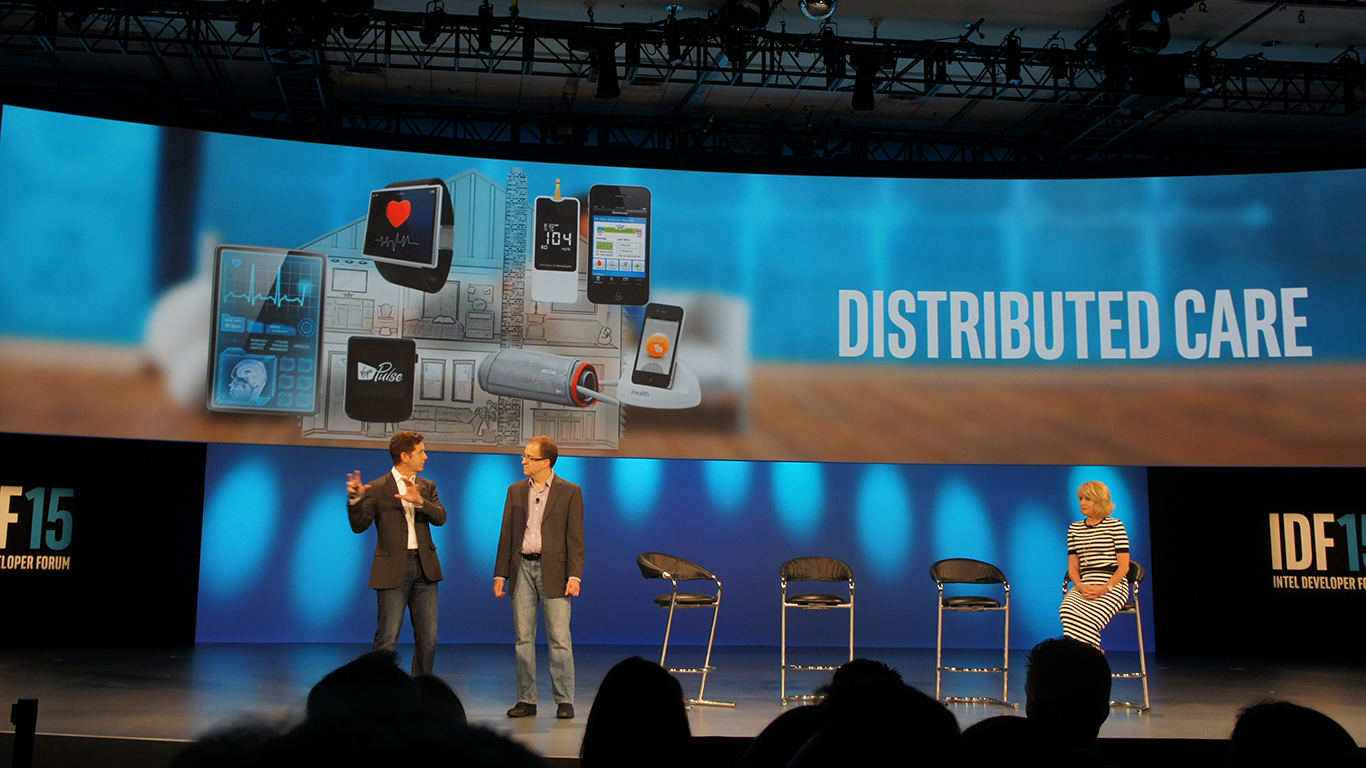
This week at the Intel Devleoper Forum, Intel announced a collaboration with Knight Cancer Institute at Oregon Health & Science University called the Collaborative Cancer Cloud that uses analytics to advance cancer care via genomics analysis and targeted treatment plans. The precision medicine analytics platform allows institutions to securely share patient genomic, imaging and clinical data for potentially lifesaving discoveries. It will also enable large amounts of data from sites all around the world to be analyzed in a distributed way, while preserving the privacy and security of that patient data at each site.

“Precision medicine – taking into account individual differences in people’s genes, environments, and lifestyles – is one of the biggest of the big data problems and is on the cusp of a remarkable transformation in medicine. We view genomics as the first wave of precision medicine, and we’re working with our partners to drive adoption of genomic sequencers, genomic appliances, and cloud-based genomic analytics. With the Collaborative Cancer Cloud, we are combining next generation Intel technologies and bio-science advancements to enable solutions that make it easier, faster, and more affordable for developers, researchers, and clinicians to understand any disease that has a genetic component, starting with Cancer, said Eric Dishman, Intel’s general manager of of Health & Life Sciences in the official announcement.

Intel is expecting to open up the federated, secure Collaborative Cancer Cloud network to additional institutions in 2016 to accelerate the precision treatment options for clinicians to share with their patients. Intel also hopes to advance personalized research in other diseases that are known to have a genetic component, including Alzheimer’s, diabetes, autism, and more.

The end result is to empower researchers and clinicians with the ability to deliver personalized cancer treatments based on their genome within 24 hours by 2020. 

 

  • LinkedIn
  • Twitter
  • Facebook
  • Email
  • Print

Tap Native

Get in-depth healthcare technology analysis and commentary delivered straight to your email weekly

Reader Interactions

Primary Sidebar

Subscribe to HIT Consultant

Latest insightful articles delivered straight to your inbox weekly.

Submit a Tip or Pitch

2026 Predictions & Trends

Healthcare 2026 Forecast: Executives on AI Survival, Financial Reckoning, and the End of Point Solutions

2026 Healthcare Executive Predictions: Why the AI “Pilot Era” Is Officially Over

Featured Research Report

Digital Health Funding Hits $14.2B in 2025: A Year of AI Exuberance and Market Bifurcation

Most-Read

Trump Unveils 'The Great Healthcare Plan': A Global Price-Matching Pivot to Settle the Affordability Crisis

Price Reset 2026: How Trump’s ‘Great Healthcare Plan’ Slashes Drug Costs at Trumprx.gov

Anthropic Debuts ‘Claude for Healthcare’ and Opus 4.5 to Engineer the Future of Life Sciences

Anthropic Debuts ‘Claude for Healthcare’ and Opus 4.5 to Engineer the Future of Life Sciences

OpenAI Debuts ChatGPT Health: A ‘Digital Front Door’ That Connects Medical Records to Agentic AI

OpenAI Debuts ChatGPT Health: A ‘Digital Front Door’ That Connects Medical Records to Agentic AI

From Genes to Hackers: The Hidden Cybersecurity Risks in Life Sciences

From Genes to Hackers: The Hidden Cybersecurity Risks in Life Sciences

Utah Becomes First State to Approve AI System for Prescription Renewals

Utah Becomes First State to Approve AI System for Prescription Renewals

NYC Health + Hospitals to Acquire Maimonides in $2.2B Safety Net Overhaul

NYC Health + Hospitals to Acquire Maimonides in $2.2B Safety Net Overhaul

KLAS Report: Why Hospitals Are Choosing Efficiency Over 'Agentic' AI Hype in 2025

KLAS Report: Why Hospitals Are Choosing Efficiency Over ‘Agentic’ AI Hype in 2025

Advanced Primary Care 2026: Top 6 Investments for Health Systems According to Harvard Medical School

Advanced Primary Care 2026: Top 6 Investments for Health Systems According to Harvard Medical School

AI Nutrition Labels: The Key to Provider Adoption and Patient Trust?

AI Nutrition Labels: The Key to Provider Adoption and Patient Trust?

Kristen Hartsell, VP of Clinical Services, RedSail Technologies

The Pharmacy Closures Crisis: How Independent Pharmacies Are Fixing Pharmacy Deserts

Secondary Sidebar

Footer

Company

  • About Us
  • 2026 Editorial Calendar
  • Advertise with Us
  • Reprints and Permissions
  • Op-Ed Submission Guidelines
  • Contact
  • Subscribe

Editorial Coverage

  • Opinion
  • Health IT
    • Care Coordination
    • EMR/EHR
    • Interoperability
    • Population Health Management
    • Revenue Cycle Management
  • Digital Health
    • Artificial Intelligence
    • Blockchain Tech
    • Precision Medicine
    • Telehealth
    • Wearables
  • Startups
  • Value-Based Care
    • Accountable Care
    • Medicare Advantage

Connect

Subscribe to HIT Consultant Media

Latest insightful articles delivered straight to your inbox weekly

Copyright © 2026. HIT Consultant Media. All Rights Reserved. Privacy Policy |