
• Skip to main content
  • Skip to secondary menu
  • Skip to primary sidebar
  • Skip to secondary sidebar
  • Skip to footer

  • Opinion
  • Health IT
    • Behavioral Health
    • Care Coordination
    • EMR/EHR
    • Interoperability
    • Patient Engagement
    • Population Health Management
    • Revenue Cycle Management
    • Social Determinants of Health
  • Digital Health
    • AI
    • Blockchain
    • Precision Medicine
    • Telehealth
    • Wearables
  • Life Sciences
  • Investments
  • M&A
  • Value-based Care
    • Accountable Care (ACOs)
    • Medicare Advantage

Verizon Unveils QR Code Login That Eliminates Usernames and Passwords for Healthcare

by Jasmine Pennic 08/26/2014 Leave a Comment

  • LinkedIn
  • Twitter
  • Facebook
  • Email
  • Print

Verizon Unveils QR Code Login That Eliminates Usernames and Passwords for Healthcare Verizon’s QR Code Login by their Universal Identity Services enables healthcare providers to help address strict HIPAA compliance mandates.

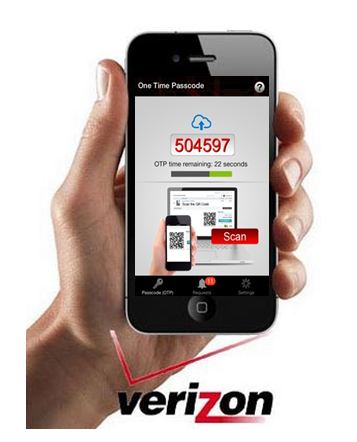
We’ve all heard time and again that passwords are a nightmare and we need strong multifactor authentication solutions to help reduce HIPAA violated security breaches. Today, Verizon has announced a new type of login enabled by their Universal Identity Services that will eliminate usernames and passwords. The Universal ID grants to access to provider portals or other types of online healthcare sites and also enables healthcare providers to help address strict HIPAA compliance mandates. According to the “Verizon 2014 Data Breach Investigations Report,” two out of three data breaches are attributable to lost or stolen user names and passwords, or both — and based on recent news reports, things aren’t getting better. “Lost and stolen passwords remain the No. 1 way that systems are compromised,” said Tracy Hulver, chief identity strategist for Verizon. “We continue to see user names and passwords fail as a secure way to log in, no matter how complex the password. With Verizon’s QR code login, we are making progress in protecting users without increasing the hassle, headache or expense for the user and the enterprise.” A new feature of Verizon’s Universal Identity Services portfolio, the QR code login is ideal for healthcare to help reduce fraud, phishing attacks and can even reduce unnecessary expenses associated with help desk support and password resets. How the QR Code Works Users will be able to enroll for a Verizon Universal ID directly from a participating Web page. After registering, users can download to their smartphone a mobile app that scans a dynamically generated QR code on the login page. Once the user’s identity is confirmed, he or she is authenticated to the website. The QR code login can be used alone, as a “scan and go”, or combined with a PIN number or password for healthcare transactions that require stronger security. “The beauty of the QR code is its flexibility,” added Hulver. “It can be used alone or with other stronger measures to give enterprises and their users just the right level of security simply and easily.” Making security stronger and affordable Verizon’s Universal Identity Services provide multifactor authentication that is delivered from the cloud enabling faster, simpler, secure user access—anytime from virtually anywhere and any device. Universal Identity Services offers three levels of identity strength, from a basic identity to a very strong identity. For example, to simply access an online account a consumer can use a basic strength identity, but to perform a financial transaction or access sensitive records, a stronger ID can be established that requires the user to provide additional data for identity verification. Since the entire service is enabled by Verizon’s secure cloud, enterprises do not need to invest in a new infrastructure. Plus, there are no hard tokens to buy or replace.  

  • LinkedIn
  • Twitter
  • Facebook
  • Email
  • Print

Tagged With: Universal Identity Services, Verizon Healthcare

Tap Native

Get in-depth healthcare technology analysis and commentary delivered straight to your email weekly

Reader Interactions

Primary Sidebar

Subscribe to HIT Consultant

Latest insightful articles delivered straight to your inbox weekly.

Submit a Tip or Pitch

2026 Predictions & Trends

Healthcare 2026 Forecast: Executives on AI Survival, Financial Reckoning, and the End of Point Solutions

2026 Healthcare Executive Predictions: Why the AI “Pilot Era” Is Officially Over

Most-Read

HHS Launches 'OneHHS' AI Strategy to Integrate AI Across CDC, CMS, and FDA for Efficiency and Public Trust

HHS Launches ‘OneHHS’ AI Strategy to Integrate AI Across CDC, CMS, and FDA for Efficiency and Public Trust

Kristen Hartsell, VP of Clinical Services, RedSail Technologies

The Pharmacy Closures Crisis: How Independent Pharmacies Are Fixing Pharmacy Deserts

From Overwhelmed to Optimized: How AI Agents Address Staffing Challenges and Burnout in Healthcare

From Overwhelmed to Optimized: How AI Agents Address Staffing Challenges and Burnout in Healthcare

The VBC Paradox: Why Hospitals Are Doubling Down on Value-Based Care While Revenue at Risk Lags

The VBC Paradox: Why Hospitals Are Doubling Down on Value-Based Care While Revenue at Risk Lags

Tebra Secures $250M to Challenge Legacy EHRs with AI-Powered Automation

Tebra Secures $250M to Challenge Legacy EHRs with AI-Powered Automation

AstraZeneca Selects Salesforce Agentforce Life Sciences to Deploy AI-Powered Global Customer Engagement

AstraZeneca Selects Salesforce Agentforce Life Sciences to Deploy AI-Powered Global Customer Engagement

Aidoc Partners with NVIDIA MONAI to Scale Open-Source Clinical AI

Aidoc Partners with NVIDIA MONAI to Scale Open-Source Clinical AI

RapidAI Secures FDA Clearance for Five New Deep Clinical AI Modules, Expanding Enterprise Imaging Platform

RapidAI and AWS Deepen Partnership to Scale Clinical AI in Healthcare

Greece and Sword Health to Build AI-Powered Healthcare Front Door

Greece and Sword Health to Build AI-Powered Healthcare Front Door

GE HealthCare Acquires Intelerad for $2.3B to Create Cloud-First, AI-Enabled Imaging Ecosystem

GE HealthCare Acquires Intelerad for $2.3B to Create Cloud-First, AI-Enabled Imaging Ecosystem

Secondary Sidebar

Footer

Company

  • About Us
  • Advertise with Us
  • Reprints and Permissions
  • Op-Ed Submission Guidelines
  • Contact
  • Subscribe

Editorial Coverage

  • Opinion
  • Health IT
    • Care Coordination
    • EMR/EHR
    • Interoperability
    • Population Health Management
    • Revenue Cycle Management
  • Digital Health
    • Artificial Intelligence
    • Blockchain Tech
    • Precision Medicine
    • Telehealth
    • Wearables
  • Startups
  • Value-Based Care
    • Accountable Care
    • Medicare Advantage

Connect

Subscribe to HIT Consultant Media

Latest insightful articles delivered straight to your inbox weekly

Copyright © 2025. HIT Consultant Media. All Rights Reserved. Privacy Policy |