
• Skip to main content
  • Skip to secondary menu
  • Skip to primary sidebar
  • Skip to secondary sidebar
  • Skip to footer

  • Opinion
  • Health IT
    • Behavioral Health
    • Care Coordination
    • EMR/EHR
    • Interoperability
    • Patient Engagement
    • Population Health Management
    • Revenue Cycle Management
    • Social Determinants of Health
  • Digital Health
    • AI
    • Blockchain
    • Precision Medicine
    • Telehealth
    • Wearables
  • Life Sciences
  • Investments
  • M&A
  • Value-based Care
    • Accountable Care (ACOs)
    • Medicare Advantage

Study: Integration of eICU Telemedicine Program Improves Patient Outcomes

by Jasmine Pennic 11/11/2016 Leave a Comment

  • LinkedIn
  • Twitter
  • Facebook
  • Email
  • Print

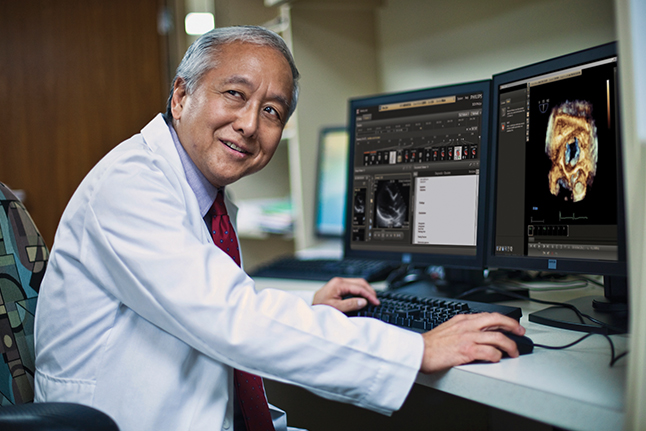
IntelliSpace Cardiovascular Philips

As the adoption and growth of the ICU telemedicine increases, more research is being conducted to analyze operational factors that affect patient outcomes. Philips has announced its involvement in a study appearing in CHEST that shows ICUs that were more fully integrated with the remote team were associated with shorter lengths of ICU and hospital stays. This suggests that more teamwork and direct intervention allows for quicker patient intervention to manage evolving instability and prevent complications.

The study examined how eICU and bedside clinical teams at a major health system worked to deliver care. Results of the study show ICUs that were more fully integrated with the remote team were associated with shorter lengths of ICU and hospital stays, suggesting that more teamwork and direct intervention allows for quicker patient intervention to manage evolving instability and prevent complications.

“As health systems seek to better manage their populations to improve outcomes while lowering costs, telemedicine offers a way to continuously monitor patients even as we face a shortage of healthcare providers,” said Brian Rosenfeld, MD, Chief Medical Officer, Hospital to Home, Philips. “Studies like this one demonstrate what we have known for years, which is that the value of leveraging a centralized telemedicine care model, based on leading Philips technology and program design, standardizes workflows and delivers the improved LOS outcomes when the on-site and remote teams are working together to support patient care.”


The retrospective, comparative study entitled, “ICU Telemedicine Co-Management Methods and Length of Stay,” analyzed 14,362 adult patients who were discharged from eight adult medical and surgical ICUs from a single health care system in 2012. Each of the eight participating units were classified into one of three ICU telemedicine co-management groups based on how the remote eICU and bedside teams worked together: 1) direct intervention from the eICU staff with timely communication to the bedside team; 2) monitoring from the remote eICU with notification to the bedside team of the need for intervention; and 3) a mix of both of these methods.


Key findings include:


·  More direct remote eICU physician intervention resulted in significantly short ICU lengths of stay.


· The direct intervention model had the largest ratio of remote eICU physician orders (11 per patient stay), while the monitor and notify approach average less than one eICU physician order per patient stay, as care delivery was primarily assumed by the bedside staff.


· The direct intervention group had an ICU LOS that was 42% less than predicted by Acute Physiology and Chronic Health Evaluation (APACHE), while the monitor and notify group was only 18% less than predicted by APACHE (p < 0.001).

· For hospital length of stay, the direct intervention group was 32% less than predicted by APACHE, while the monitor and notify group was 17% less than predicted by APACHE (p < 0.001).

The Philips eICU program is part of a suite of enterprise telemedicine solutions delivered by Philips to help improve outcomes, provide better value and expand access to care. These programs help address multiple cohorts within a population ranging from highest cost patients with intensive ambulatory care and acute needs, to discharge transition and chronic patient management, to prevention and healthy living  for the general population. These programs use a proactive care model to clinically transform the delivery of care to address growing clinician shortages while helping to improve patient outcomes.

  • LinkedIn
  • Twitter
  • Facebook
  • Email
  • Print

Tap Native

Get in-depth healthcare technology analysis and commentary delivered straight to your email weekly

Reader Interactions

Primary Sidebar

Subscribe to HIT Consultant

Latest insightful articles delivered straight to your inbox weekly.

Submit a Tip or Pitch

Featured Insights

Aligning IT & Clinical Teams: How to Reduce Friction and Improve Communication

Most-Read

CB Insights Q2 2026 State of Digital Health Report: Fewest Deals in Over a Decade as Median Sizes Rise

CB Insights Q2 2026 State of Digital Health Report: Fewest Deals in Over a Decade as Median Sizes Rise

mount-sinai-launches-epic-chart-with-art-nursing-ambient-ai

Mount Sinai Medical Center Extends Epic’s Ambient AI to Inpatient Nursing

M&A: Tempus AI to Acquire Personalis for $1.5B to Expand Precision Oncology and MRD Monitoring

M&A: Tempus AI to Acquire Personalis for $1.5B to Expand Precision Oncology and MRD Monitoring

Why Brain Health Is Entering Its Infrastructure Era

Brain Health’s Infrastructure Era: Proving Clinical Outcomes with Integrated Neuromotor Tracking

Why Catholic Health Inked a $500M Care Alliance with GE HealthCare to Automate Outpatient Triage

Catholic Health Inks $500M Care Alliance with GE HealthCare to Automate Outpatient Triage

KLAS Global HIT Trends 2026 Report: Artificial Intelligence Becomes the Top Investment Priority

KLAS Global HIT Trends 2026 Report: Artificial Intelligence Becomes the Top Investment Priority

Optum Partners with Anthropic to Deploy Claude Across Healthcare Claims and Revenue Workflows

Optum Partners with Anthropic to Deploy Claude Across Healthcare Claims and Revenue Workflows

Rock Health H1 2026 Digital Health Funding Recap: Startups Hit $7.4B in Venture Rebound

Rock Health H1 2026 Digital Health Funding Recap: Startups Hit $7.4B in Venture Rebound

M&A: ResMed to Sell MatrixCare Business to Frazier Healthcare Partners for $450M

M&A: ResMed to Sell MatrixCare Business to Frazier Healthcare Partners for $450M

The Real Risk in Healthcare AI Isn’t the Model. It’s the Data. 

Clinical Data Fidelity: The Real Blindspot in Healthcare AI Strategy

Secondary Sidebar

Footer

Company

  • About Us
  • 2026 Editorial Calendar
  • Advertise with Us
  • Reprints and Permissions
  • Op-Ed Submission Guidelines
  • Contact
  • Subscribe

Editorial Coverage

  • Opinion
  • Health IT
    • Care Coordination
    • EMR/EHR
    • Interoperability
    • Population Health Management
    • Revenue Cycle Management
  • Digital Health
    • Artificial Intelligence
    • Blockchain Tech
    • Precision Medicine
    • Telehealth
    • Wearables
  • Startups
  • Value-Based Care
    • Accountable Care
    • Medicare Advantage

Connect

Subscribe to HIT Consultant Media

Latest insightful articles delivered straight to your inbox weekly

Copyright © 2026. HIT Consultant Media. All Rights Reserved. Privacy Policy |