

What You Should Know
- Digital health and rehabilitation platform Medbridge released The 2026 Rehab Therapy Benchmark Report —based on a parallel survey of 2,880 rehabilitation professionals (2,670 clinicians and 210 practice and health system leaders across physical therapy, occupational therapy, speech-language pathology, and athletic training) conducted from August 24 to September 22, 2026.
- While outcomes collection has become widespread—with 75% of clinicians and 89% of organizational leaders reporting routine patient outcomes collection—63% of clinicians state that collected outcomes data is not easy to access at the point of care.
- Only 35% of clinicians report that outcomes data often or always changes the care they deliver, with 31% citing clinical time constraints as a primary barrier to applying collected metrics.
The Outcomes-to-Action Divide: Key Survey Findings Across 2,880 Rehab Professionals
Medbridge’s parallel survey methodology highlights a sharp operational gap between organizational reporting compliance and bedside clinical utility:
- High Collection, Low Usability: While 75 percent of frontline clinicians and 89 percent of organizational leaders report routinely collecting patient outcomes data, 63 percent of clinicians state that the data is not easy to access within their daily workflow.
- Limited Clinical Impact and Time Constraints: Only 35 percent of clinicians report that outcomes data often or always changes the care they deliver, while 31 percent cite acute clinical time constraints as a primary barrier preventing them from applying outcomes insights during visits.
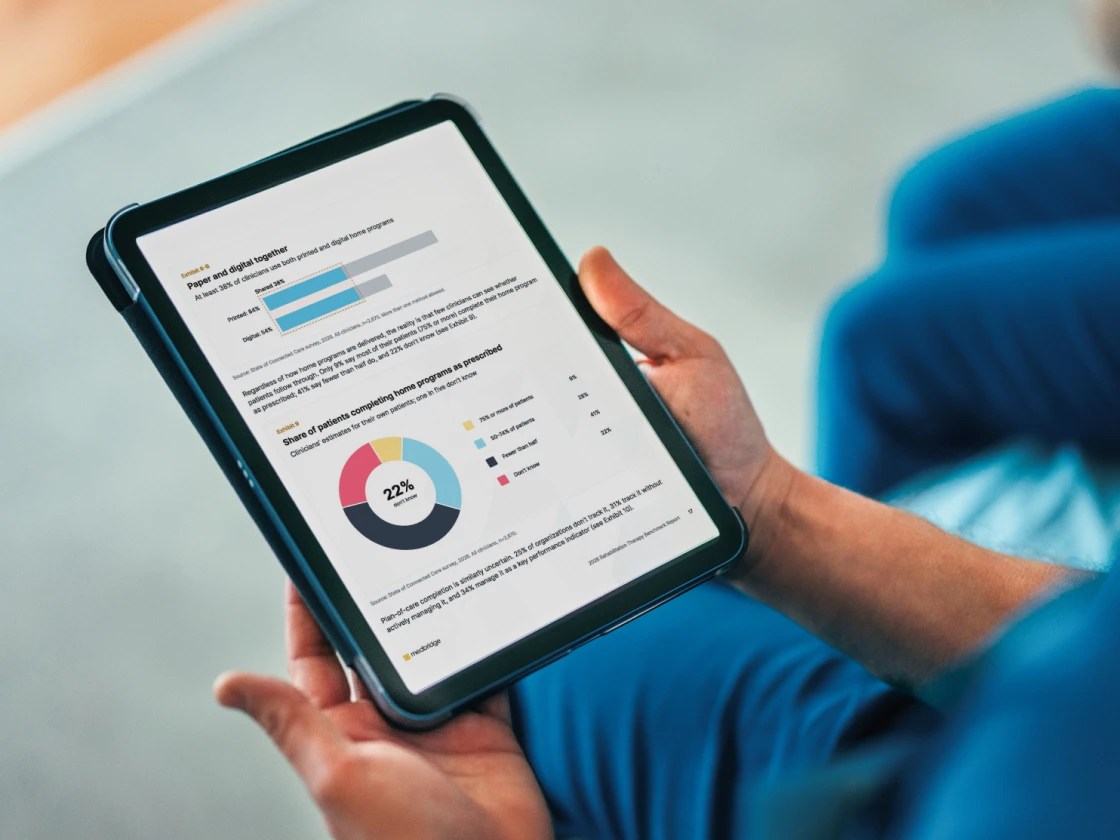
- Between-Visit Blind Spots and Paper Reliance: Nearly half of all respondents (47 percent) either do not know whether patients complete their full plan of care or fail to track completion altogether. Simultaneously, 84 percent of clinicians still distribute home exercise programs on paper—offering zero visibility into home adherence—and only 9 percent believe most of their patients complete home programs as prescribed, citing tracking friction and unclear accountability.
- Growing Commercial Value in Payer Negotiations: Despite internal usability gaps, outcomes data has become an essential lever for reimbursement defense and growth. Thirty-five percent of rehab leaders have already leveraged outcomes data to win or defend a payer contract, and 61 percent are actively participating in or exploring at least one alternative care or value-based payment model.