

Healthcare has entered a new phase of its AI journey.
The industry’s early focus was understandable. Organizations wanted to identify practical use cases that could reduce administrative burden, improve productivity, and demonstrate measurable return on investment. AI-assisted documentation, coding assistance, prior authorization, and revenue cycle management have all generated meaningful momentum, proving that the technology can solve real operational challenges.
But as healthcare organizations deploy more AI capabilities, the challenge is no longer identifying valuable use cases. Increasingly, it’s ensuring those capabilities work together to support clinicians, patients, and care teams.
The reason is simple. Every new AI application addresses a specific task. One summarizes a patient visit. Another predicts readmission risk. Others identify care gaps, assist with scheduling, automate coding, manage referrals, or support patient outreach. Viewed individually, each of these capabilities can deliver measurable value. Viewed collectively, however, they risk becoming the next generation of disconnected healthcare technology.
The industry has spent the better part of two decades integrating siloed systems, connecting disparate data sources, and reducing fragmentation. Without a broader strategy, AI could unintentionally recreate that same complexity under a different name.
From Applications to Orchestration
For years, healthcare technology strategy has revolved around applications. Organizations selected best-of-breed solutions for scheduling, imaging, revenue cycle, analytics, population health, patient engagement, and countless other functions. Every new capability often meant another tool to implement, another interface for clinicians to navigate, and another integration project for IT teams to manage.
Artificial intelligence changes that equation.
The future is unlikely to be powered by a single AI platform capable of solving every clinical and operational challenge. Instead, healthcare organizations will increasingly rely on specialized intelligent services, each designed to perform a particular function exceptionally well. Some agents may focus on clinical documentation, while others continuously monitor quality measures, identify emerging patient risks, coordinate referrals, support medication adherence, automate prior authorization, or manage post-discharge follow-up.
Each of these services may be highly effective on its own, but their greatest value will emerge only when they operate as part of a coordinated ecosystem. That requires something healthcare has never truly had before: an intelligent orchestration layer capable of sharing context, coordinating decisions, and ensuring every AI capability achieves an outcome.
In many ways, orchestration, not any individual AI model, will become healthcare’s new operating system.
Intelligence Should Flow, Not Stop
Consider something as routine as a primary care visit. Today, information often moves through a series of disconnected manual processes. Intake forms are reviewed separately from prior clinical notes. Behavioral health screenings may exist in different systems than medication histories. Care managers frequently discover important issues only after the visit has ended, while referrals, follow-up activities, and patient outreach often depend on inbox messages, phone calls, or delayed documentation. Each handoff introduces another opportunity for delay, duplication, or missed intervention.
Now imagine that same encounter in an orchestrated environment. Before the appointment begins, an intake agent reviews new patient information and recognizes that a behavioral health screening may be appropriate. That insight is immediately shared with another specialized agent that facilitates patient assessment through secure digital engagement. The results are incorporated into the clinician’s workflow before the patient even enters the exam room.
At the same time, other intelligent services review medication adherence, recent laboratory results, preventive care gaps, and social factors that may influence care. A care coordination agent prepares personalized follow-up recommendations and identifies community resources before the visit concludes. After the encounter, documentation is completed automatically, referrals are initiated, patient education is tailored to the individual’s needs, and ongoing outreach begins without requiring staff to manually transfer information from one system to another.
No single AI application manages this entire process. Instead, multiple specialized services collaborate continuously, each contributing its expertise while sharing context across the patient’s care journey. That coordination—not simply automation—is where healthcare begins creating transformational value.
The EHR Doesn’t Disappear. Its Role Evolves.
This shift also requires healthcare organizations to rethink the role of the electronic health record (EHR).
For years, the EHR has functioned as both the system of record and the primary interface through which clinicians complete nearly every digital task. As new capabilities emerged, organizations naturally expected them to be embedded directly into the EHR itself.
Artificial intelligence challenges that assumption.
The EHR continues to serve as the trusted clinical record, the transactional backbone, and the repository for patient information. Increasingly, however, it becomes infrastructure rather than the center of every workflow.
Much of the intelligence clinicians rely on will originate outside the EHR. Specialized AI services will gather information, synthesize relevant context, coordinate operational activities, and surface recommendations at the appropriate moment. The EHR still records the outcome, but it no longer owns the workflow.
In many respects, the EHR of the future begins to resemble what technology platforms in other industries have already become: a highly reliable database and API layer that supports experiences built elsewhere. That’s an architectural shift with profound implications for healthcare technology strategy.
A Different Question for Healthcare Leaders
This evolution changes the questions healthcare leaders should be asking.
Rather than evaluating AI one application at a time, organizations should consider how intelligence will operate across the enterprise. Can multiple AI services securely exchange context? How will decisions be governed? Where should human oversight remain essential? How will organizations establish trust when recommendations originate from several coordinated systems rather than a single application? And how should success be measured across an orchestrated workflow instead of an isolated use case?
These are no longer procurement questions. They are strategic questions about how healthcare will operate in the years ahead.
The organizations that answer them well will build environments where intelligence works together seamlessly across clinical, operational, and administrative workflows, supporting care rather than complicating it.
The Next Decade Will Be About Coordination
Artificial intelligence will undoubtedly continue to improve. Models will become more capable, new applications will emerge, and existing workflows will grow more efficient. Those advances matter, but they represent only part of the opportunity.
The organizations that truly transform care will redesign care delivery around a fundamentally different operating model, one in which specialized intelligence works continuously behind the scenes, information flows without friction, and clinicians spend less time coordinating technology and more time caring for patients.
Healthcare doesn’t need another collection of disconnected AI applications. It needs an operating system that allows intelligence itself to become coordinated.
That is the opportunity now emerging, and it may ultimately prove to be artificial intelligence’s greatest contribution to healthcare.
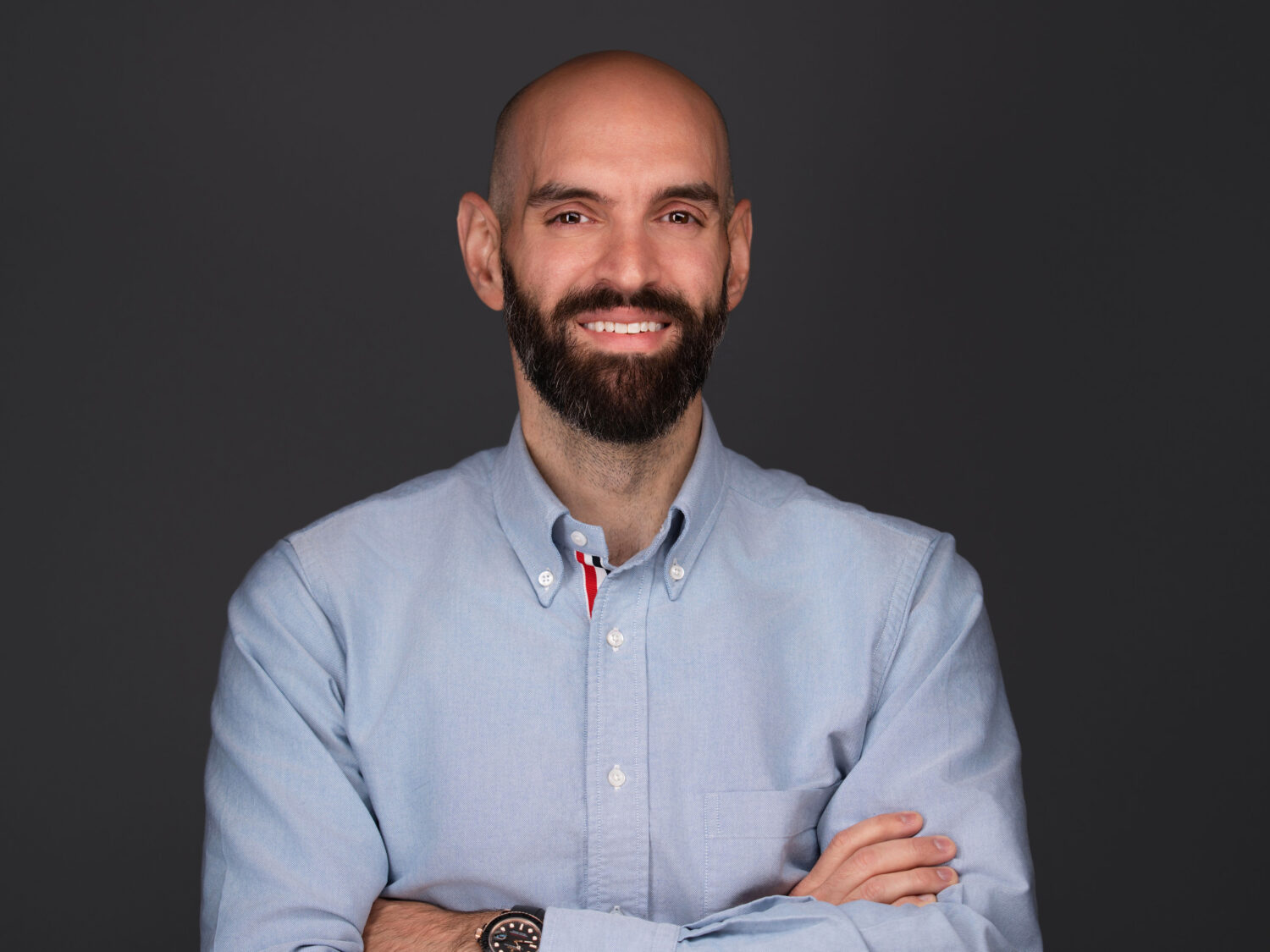
About Michael Meucci
Michael Meucci is President and Chief Executive Officer at Arcadia, where he is focused on helping Arcadia customers — and, by extension, the healthcare industry — embrace technology and use data to create happier, healthier days for all.
As a transformative leader throughout his progressive 15+ year career at Arcadia, Michael has been a central figure in the organization’s rapid success. His breadth of experience includes serving in multiple C-suite functions (CEO, COO, and Chief Growth Officer) and senior roles in sales and product management.
As CEO, Michael is responsible for Arcadia’s continued growth in its core and adjacent markets, as well as building successful, sustainable customer partnerships that drive real value. Most recently, he co-led the evolution of Arcadia’s technology platform to enable accelerated digital transformation, data-driven decision-making, and improved patient and financial outcomes for payers and providers.
