

What You Should Know
- NVIDIA has released an open-source, GPU-accelerated Medical Physics Simulation framework as part of NVIDIA Isaac for Healthcare to model anatomy-device interactions and accelerate medical robotics development.
- By running 8,192 parallel simulation environments natively on GPUs, the platform reduces robotic policy training times from over five hours down to under two minutes.
- The framework combines classical physics (friction, contact, rigid/flexible mechanics via NVIDIA Warp and Newton) with real-time generative AI physics (Cosmos-H Dreams) to simulate complex visual scene dynamics.
- Open-source availability provides transparency into data, neural models, and weights, enabling developers to build verifiable evidence for regulatory review processes.
- Surgical robotics leaders—including CMR Surgical, Johnson & Johnson MedTech, Medtronic, XCath, and Inner Logic—are actively utilizing the framework for surgical digital twins, endovascular policy training, and synthetic regulatory data.
Hybrid Physics and GPU Parallelization
To eliminate this data acquisition wall and convert simulation into standardized, reusable infrastructure, NVIDIA has launched its open-source Medical Physics Simulation framework within NVIDIA Isaac for Healthcare.
Engineered on GPU-accelerated computing architectures, the platform bridges classical physics modeling and generative AI physics to let teams train, evaluate, and stress-test physical AI policies long before touching physical hardware.
The framework solves the physical AI data deficit by integrating two distinct simulation paradigms into a unified, GPU-native architecture:
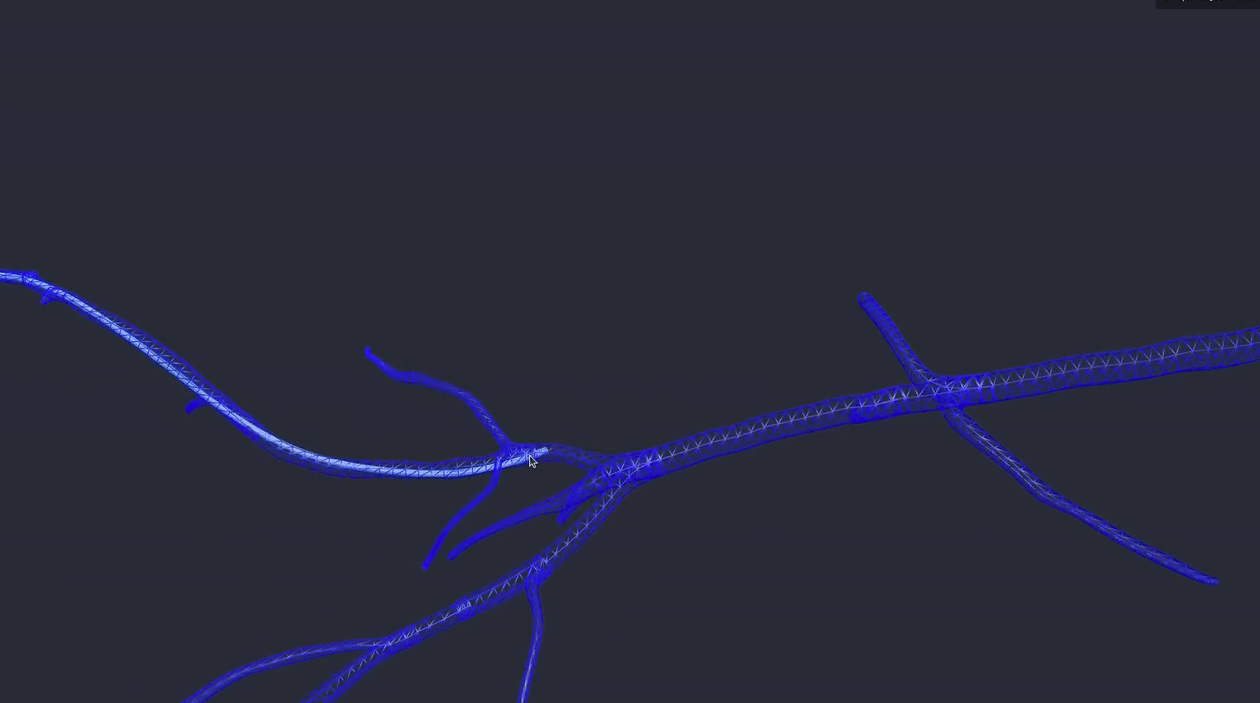
- Classical Physics Simulation (NVIDIA Warp & Newton): Models explicit physical parameters, including rigid and flexible body dynamics, instrument contact, friction, and tissue resistance (crucial for catheters, guidewires, and endoscopes).
- Generative AI Physics Simulation (Cosmos-H Dreams): Predicts complex visual scene dynamics and soft-tissue deformation learned from procedural clinical data.
- Sensor & Modality Emulation: Integrates real-time virtual imaging—such as simulated fluoroscopy, X-ray, and ultrasound—directly into reinforcement learning loops.
- Massive Parallel Execution: Scales up to 8,192 parallel robot-training environments on GPU, slashing policy training times from over 5 hours to under 120 seconds.
“Open source models allow us to build on shared knowledge, accelerating responsible innovation and, ultimately, gives us the potential to deliver more consistent care and better outcomes for patients worldwide,” stated Chris Fryer, Chief Technology Officer at CMR Surgical.
